- 10/11/2025
- Category: Press Release
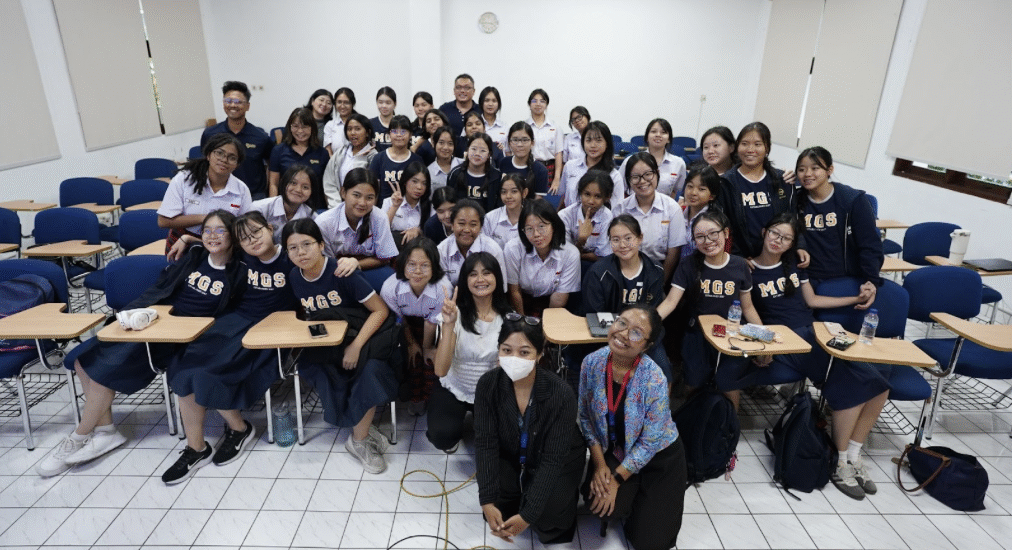
Yogyakarta, 5 November 2025 – The Center for Digital Society (CfDS) welcomed students from Methodist Girls School (MGS) Singapore and SMA Stella Duce 1 Yogyakarta on 5 November 2025 at the Faculty of Social and Political Sciences (FISIPOL), Universitas Gadjah Mada (UGM), Yogyakarta. This visit was part of the MGS ASEAN Programme (MAP), an initiative aimed at enhancing high school students’ digital literacy and critical understanding of technological developments in the Southeast Asian region.
In this visit, CfDS collaborated with MGS Singapore and Stella Duce 1 Yogyakarta to discuss both the potential and challenges brought by Generative Artificial Intelligence (GenAI) in the field of education. The discussion also highlighted the active role of young people in shaping an educational ecosystem that is adaptive, yet remains inclusive and ethical.
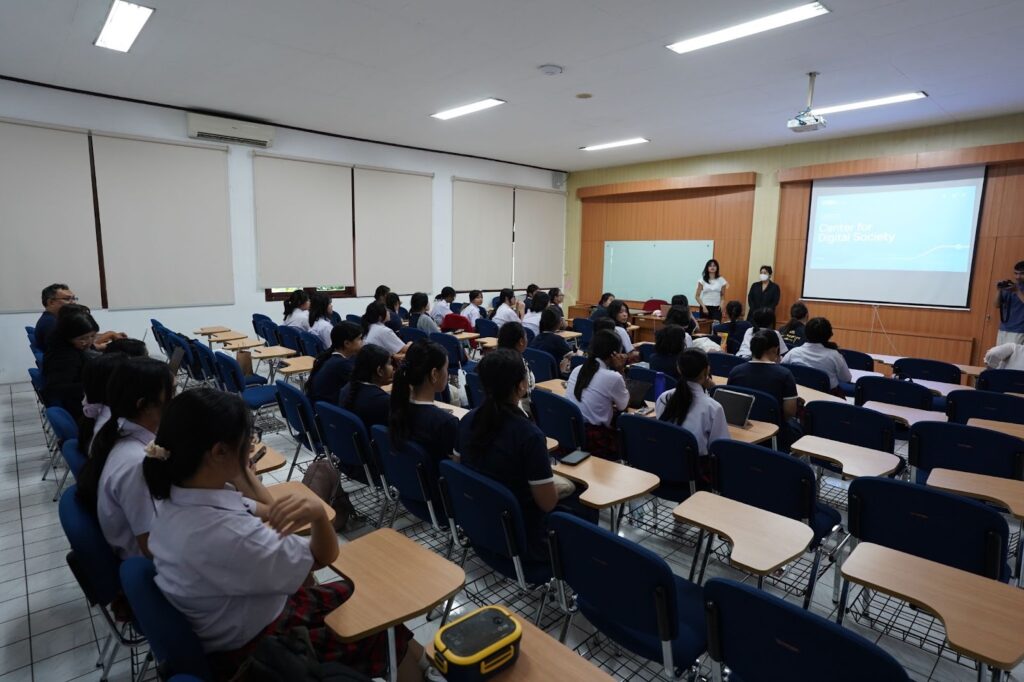
The event began with a brief introduction to CfDS, followed by a final project presentation session by the students. Carrying the main theme “AI in Education,” the participants presented the results of their group discussions with CfDS researcher, Ayom Mratita Purbandani. In this activity, the students from MGS and SMA Stella Duce 1 collaborated to review a case study presented by CfDS during an online session on August 4, which discussed the implementation of AI in education. This collaboration demonstrated that the activity was not merely a visit, but part of a more comprehensive and interactive learning program.
In this session, the participants were encouraged to view GenAI technology more critically through five main topics: 1) the utilization and regulation of GenAI in classrooms; 2) misinformation and disinformation in digital spaces; 3) AI technology and the digital divide; 4) policies surrounding the handling of misinformation and disinformation; and 5) the digital future from the youth perspective. In general, the students discussed the role of AI technology, which holds great potential to support the learning process. However, they also identified emerging challenges, such as technological dependence and unequal access. Therefore, through this dialogue, they emphasized the importance of balancing innovation with the cultivation of critical values in facing AI development. The students’ reflections will later be published on the CfDS website as a special edition commentaries.
The event concluded with a campus tour of FISIPOL UGM, providing participants with first-hand experience of the university’s academic ecosystem. This collaboration demonstrates CfDS’s commitment not only to research but also to creating inclusive learning spaces to strengthen digital literacy and ethical awareness of technology among younger generations on a global level. The support given to both schools also marks an initial step for CfDS to further strengthen the role of education in shaping a responsible digital society.
Writer: Muhammad Alfasya Syabil Sholatar
Editor: Dhivana Anarchia Ria Lay
