- 30/10/2025
- Category: Commentaries

Author: Achmed Faiz Yudha Siregar
Editor: Iradat Wirid
The global discourse surrounding digital wellbeing is often reduced to individual efforts to manage screen time or engage in digital detox. Such a narrow conceptualisation overlooks the structural, social, and economic dimensions shaping contemporary digital life. In the context of rapid digital transformation, particularly in developing countries such as Indonesia, digital wellbeing should be re-evaluated within a broader and more inclusive framework. This reconceptualisation is critical for informing public policy. When digital wellbeing is measured exclusively through the lens of individual addiction or stress, government interventions may focus predominantly on restricting digital access. Recognising digital wellbeing as a multidimensional construct encompassing social inclusion, digital competence, and security shifts policy priorities towards empowerment and protection. Relevant initiatives, including the Indonesia Digital Society Index (IMDI) and the national digital literacy curriculum, can thereby be designed to ensure that technology improves the quality of life for citizens rather than exacerbating existing risks.
Despite an Internet penetration rate of approximately 80.66% by mid-2025 (APJII, 2025), Indonesian society continues to face substantial challenges in digital competence and cyber security. This article argues that expanding the concept of digital wellbeing beyond individual health to include social cohesion and economic resilience is essential for safeguarding national stability. Digital wellbeing is increasingly defined as an intentional effort to maintain a balanced relationship with technology, and is now widely recognised as a complex, multidimensional construct incorporating affective, cognitive, and social components. Global frameworks, including the Living Well Digitally initiative (DWIF) developed by the Centre for Trusted Internet & Community (CTIC) and the DQ Institute, emphasise holistic wellbeing supported by competence, social connection, emotional regulation, and safety and security (CTIC, 2024).
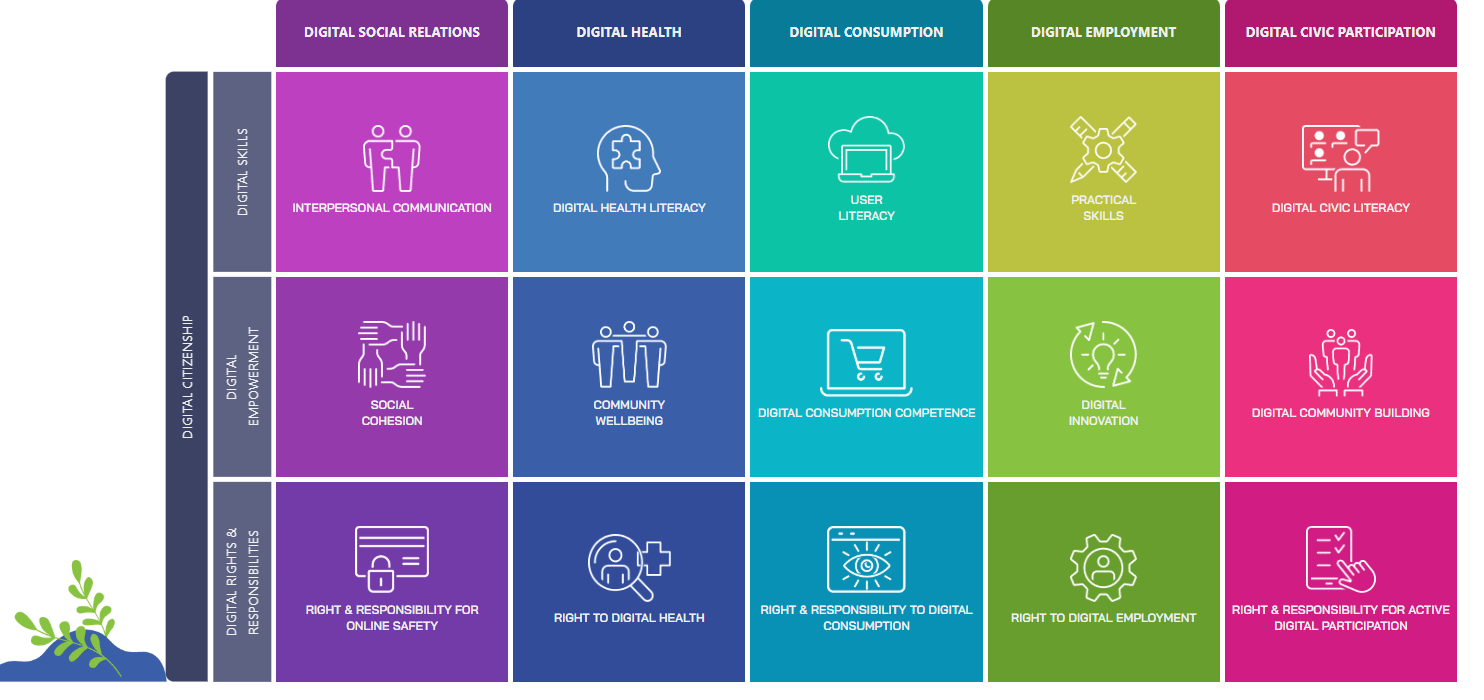
Figure 1. Digital Wellbeing Indicator Framework (DWIF)
Source: DQ Institute (2024)
Changing Paradigms of Digital Wellbeing in Indonesia
Indonesia provides a clear example of shifting perceptions of digital wellbeing. Generation Z (born 1997–2012) and Millennials (1981–1996) dominate the country’s digital landscape, with Internet adoption rates reaching 93.17% and 87.02% respectively. These figures position Indonesia among the most dynamic and youthful digital populations globally. Nevertheless, the national IMDI score for 2024 stands at only 43.34 (0–100 scale), signalling significant vulnerabilities in digital skills and empowerment. Although infrastructure and ecosystem scores are relatively higher (52.70), digital skills and empowerment (25.66) and digital employment (38.09) scores indicate that high connectivity has not yet translated into productive or safe use.
This contrast reveals a critical paradox: high digital access does not guarantee meaningful digital participation. The resulting challenges are not merely technical but structural, since digital technologies are distributed unevenly and generate unequal benefits. There are also profound socio-relational implications, given that technology mediates civic engagement, economic opportunity, and community cohesion. Research by Chen, Ebrahimi and Cheng (2025) demonstrates that digital wellbeing is shaped by interlinked affective (digital stress), cognitive (fulfilment of intrinsic needs), and social (online connectedness) elements. Their network analysis identifies cognitive factors relating to autonomy and competence as the most central components of digital wellbeing today. Individualistic approaches therefore fail to capture social fragmentation or digital isolation occurring at a community scale.
Two key questions arise in the Indonesian context:
- Why does high Internet penetration coexist with low levels of digital competence?
- How can digital wellbeing in Indonesia be reconceptualised to include social relationships, economic security, and civic participation?
A Multidimensional Approach to Digital Wellbeing in Indonesia
The most recent DWIF framework provides a broader, policy-relevant approach to defining digital wellbeing. It identifies five core domains: Digital Social Relations, Digital Health, Digital Consumption, Digital Employment, and Digital Civic Participation. Each domain contains three progressive layers: Digital Skills, Digital Empowerment, and Digital Rights & Responsibilities.
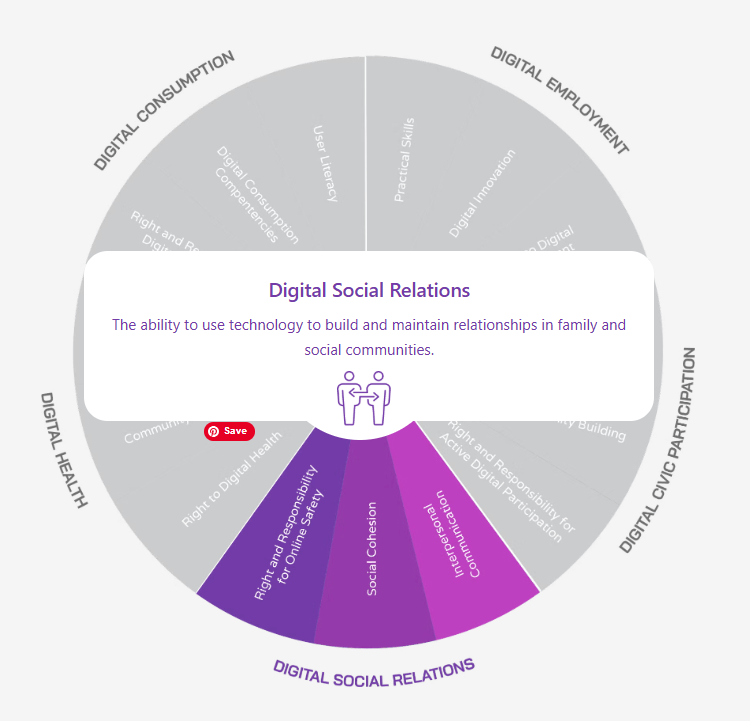

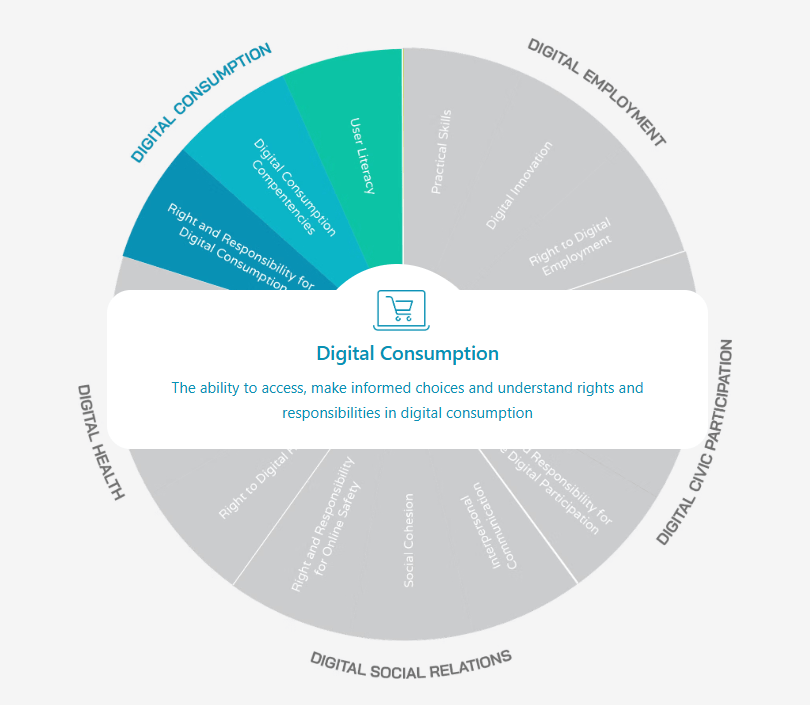
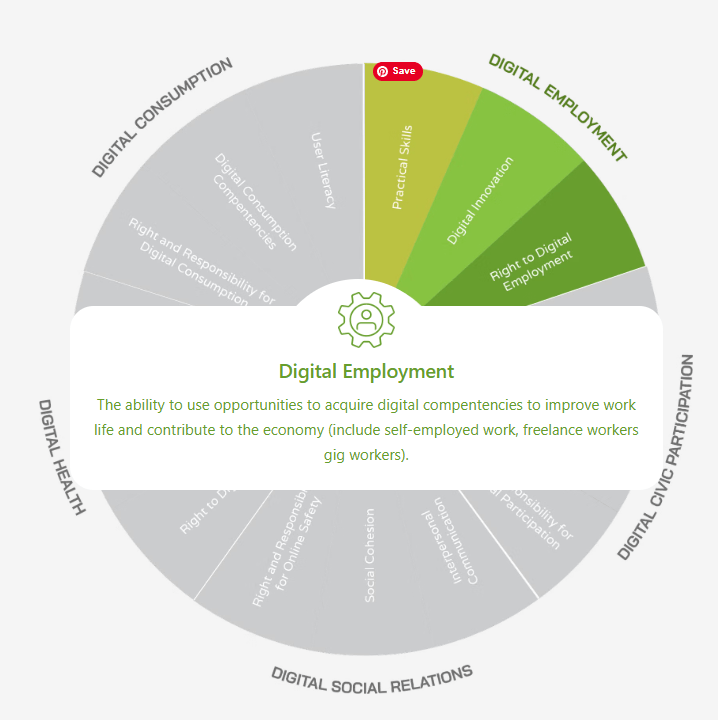
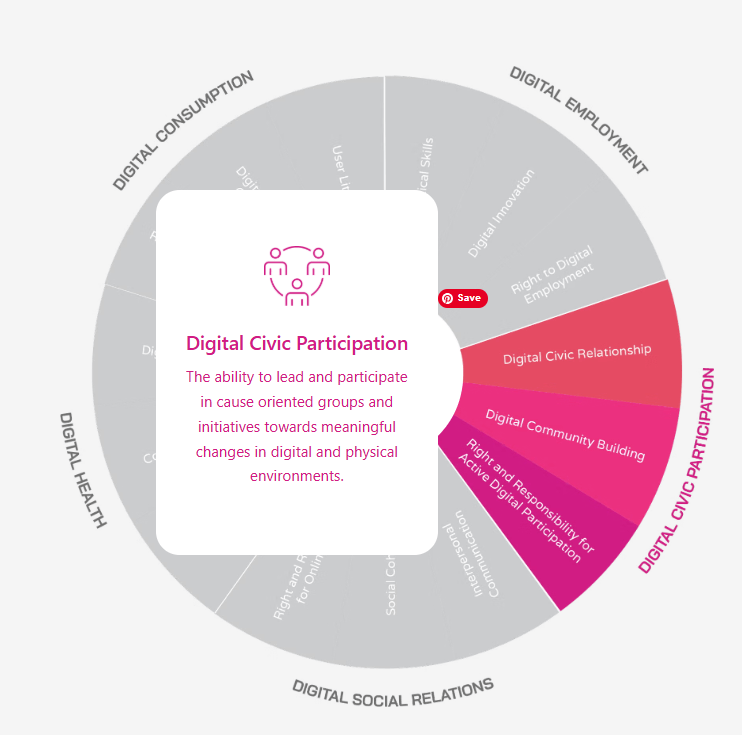
Figure 2. What Are the Domains of Digital Wellbeing?
Source: CTIC (2024)
• Addresses social relations through indicators of communication, social cohesion, and responsibility for online safety.
• Connects wellbeing to economic agency by considering practical skills, innovation, and the right to digital employment.
• Recognises civic engagement through measures of digital literacy, community building, and active participation.
• Highlights consumption and protection by assessing user competence and rights within the digital marketplace.
Indonesian policy has historically emphasised access (e.g. infrastructure expansion, affordable data plans), while overlooking competence, empowerment, and participation. The low IMDI empowerment score confirms that access alone is insufficient. Policies focused merely on individual behaviour, such as screen-time reduction, risk ignoring deep social and economic vulnerabilities, including job precarity, exploitative digital markets, and online polarisation. Studies in Indonesia show that insufficient digital competence can exacerbate misinformation, isolation, and inequality (Alamsyah and Sagama, 2024; Brooks et al., 2023).
The “access–competence paradox” therefore highlights the need to understand digital wellbeing not as a function of connectivity alone, but as a product of empowered, meaningful, and secure participation.
Manifestations of Digital Wellbeing in Indonesia: Social, Economic, and Civic Case Studies
Case Study 1: Digital Health Literacy
In Makassar, the study “Assessing Digital Health Literacy in Indonesia: A Case Study” revealed that health workers have low levels of digital literacy, particularly in data acquisition, management, and electronic data exchange. Since the COVID-19 pandemic, the need for digital health information systems has grown, yet human resources remain underprepared (Setiadi et al., 2022; Kurnia et al., 2023). Skills and empowerment layers within the Digital Health domain remain weak despite existing access.
Case Study 2: Digital Literacy and Youth Wellbeing
Research on a digital mental health literacy intervention for children aged 11–15 across three urban areas in Java found positive acceptance of the digital tool, yet no significant improvement in outcomes, indicating interventions require local, cultural and resource adaptations (Brooks et al., 2023).
Case Study 3: Digital Gaps in Education (Social & Competence Domains)
UNICEF’s report “Strengthening Digital Learning across Indonesia” identifies connectivity challenges, platform limitations, and skill gaps among teachers and students in regions such as Papua, East Nusa Tenggara, West Sulawesi, and East Java (UNICEF, 2021). These findings reflect social relations and skills dimensions within the DWIF framework.
Case Study 4: Digital Employment & Economic Empowerment
The IMDI 2024 Employment pillar score of approximately 38 suggests that many citizens have yet to derive productive benefits from digital transformation. Research indicates that informal digital workers experience job instability, low wages, and limited worker protection, signalling that the Digital Employment domain remains underdeveloped in Indonesia.
Strategic Policy Recommendations
- Expand Multidimensional Measurement
IMDI and national literacy indicators should incorporate empowerment and civic dimensions alongside access and infrastructure. - Sustainable, Context-Specific Digital Literacy Education
Digital literacy curricula across education systems must include communication ethics, online safety, digital innovation, and civic engagement, supported through continuous community-based learning. - Economic Empowerment through Digital Skills
Policy should support transitions from digital consumption to digital production through skills programmes, incentives for digital micro-enterprise, and access to capital. - Strengthening Social Cohesion and Civic Digital Participation
Digital policy must promote inclusive communities, counter disinformation and polarisation, and encourage active participation in digital governance. - Structural Interventions in Digital Health and Consumption
Digital literacy for both providers and users must be strengthened to ensure technology improves, rather than compromises, wellbeing.
Conclusion
Interpretations of digital wellbeing that focus solely on individual behaviour, stress, or screen time are insufficient in the Indonesian context. A multidimensional perspective, such as that offered by DWIF, reveals that digital wellbeing depends on access, competence, social integration, economic security, civic participation, and the protection of digital rights.
Indonesia’s extensive connectivity must be accompanied by strategies that promote empowerment. Case studies highlight that without skills and agency, digitalisation can reinforce inequality rather than reduce it. Moving forward, policies must adopt holistic indicators, ensure contextual education, promote digital economic participation, and strengthen social and civic digital systems.
Living well digitally in Indonesia entails not simply measuring how long people use technology, but evaluating the inclusiveness, safety, and value of digital participation. Technology should serve as a medium for empowerment, social cohesion, and economic resilience.
Reference:
- Alamsyah, A. & Sagama, Y. (2024) ‘Empowering Indonesian internet users: An approach to counter online toxicity and enhance digital well-being’, Intelligent Systems with Applications, 22(4): 200394. doi: 10.1016/j.iswa.2024.200394. ResearchGate
- Asosiasi Penyelenggara Jasa Internet Indonesia (APJII) (2025) Survei pengguna internet Indonesia. Available at: https://survei.apjii.or.id/ [Accessed 1 Oct 2025].
- Brooks, H., et al. (2023) ‘Evaluating a prototype digital mental health literacy intervention for children and young people aged 11–15 in Java, Indonesia: A mixed methods, multi‐site case study’, Child and Adolescent Psychiatry and Mental Health, 18, 142. PMC 10294420. PMC
- Chen, S., Ebrahimi, O. V. & Cheng, C. (2025) ‘New perspective on digital well-being by distinguishing digital competency from dependency: Network approach’, Journal of Medical Internet Research, 27, e70483. doi: 10.2196/70483. JMIR Publications+2JMIR Publications+2
- Centre for Trusted Internet & Community (CTIC) (2024) Living Well Digitally. Available at: https://ctic.nus.edu.sg/living-well-digitally/ [Accessed 20 Oct 2025].
- DQ Institute (2024) “Digital Well-Being Indicator Framework.” Available at: https://www.dqinstitute.org/news-post/living-well-digitally-global-initiative-launched-by-nus-centre-for-trusted-internet-and-community-and-powered-by-dq/ [Accessed 01 Oct 2025].
- Intimedia (2024) ‘Trends in Internet Penetration in Indonesia by Generation Groups in 2024’, Intimedia, 27 September. Available at: https://intimedia.id/read/trends-in-internet-penetration-in-indonesia-by-generation-groups-in-2024 (Accessed: 1 October 2025).
- Kurnia, S. et al. (2023) ‘Assessing Digital Health Literacy in Indonesia: A Case Study in Makassar’, in International Conference on Information Systems Icis 2023 Rising Like A Phoenix Emerging from the Pandemic and Reshaping Human Endeavors with Digital Technologies.
- Setiadi, D., et al. (2022) “Assessing Digital Health Literacy in Indonesia: A case study in Makassar,” Health Informatics Journal.
- UNICEF (2021) Strengthening Digital Learning across Indonesia: A Study Brief. UNICEF Indonesia.
- Kominfo & BPSDM Kemdikbud (2024) “Peluncuran Hasil Pengukuran Indeks Masyarakat Digital Indonesia (IMDI) 2024.”
