- 03/11/2025
- Category: Commentaries
Author: Muhammad Ilyan Faris
Editor: Bangkit Adhi Wiguna
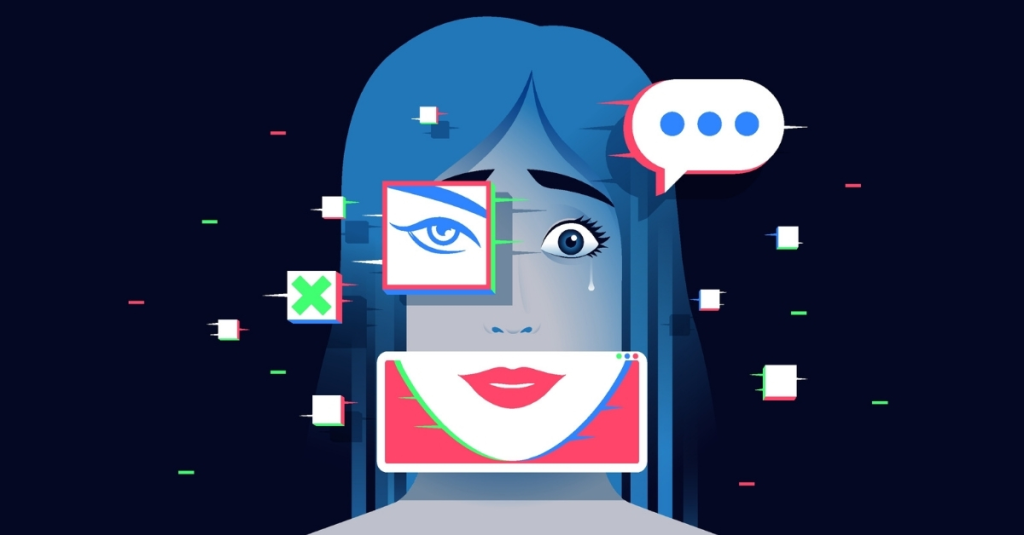
On the 26th of June 2025, the Danish Government attempted to give citizens copyright of their identity in order to counter the rise of deepfakes.[1] They announced that an amendment bill to the Danish Copyright Law is in the works, the amendment being a copyright protection on peoples features.[2] With cross-party and wide public support, this bill is expected to be passed by the end of the year.[3] The bill is one of the first in Europe that will ease people that are affected by deepfake content in requesting its removal from online platforms.[4] The law is a much needed precedent towards the goal of digital protection over people’s body sovereignty, yet it is not without its critiques. Many argue not on the goal, but on the process of achieving it. This bill raises questions about whether copyright and intellectual property rights is the correct avenue for fighting the misuse of Generative AI (GenAI) in creating and disseminating these deepfakes. But first, what exactly are deepfake crimes or misuse?
How deepfakes went from entertainment to endangerment
Deepfakes in the bill is defined as “a very realistic digital representation of a person, including their appearance and voice.” [5] It relies on a deep learning algorithm called General Adversarial Networks (GANs) that uses available data and samples to generate fake images.[6] Unlike general machine learning algorithms, deepfakes rely on deep learning, using deep neural networks through the utilization of autoencoders. The procedure firstly trains neural networks to encode and decode data (in this case images and videos), then the encoder is to take that initial data input, condense it into a latent code that retains critical features. [7] Then, the decoder reconstructs the data and fabricates the original images and video, this is the reason why deepfakes are indeed highly convincing content. It also works with reinforcement learning mechanisms. There exists a reward and punishment mechanism —carrot and stick method— inside the networks, where the model will keep getting better at producing and identifying fabricated visual content.
Originally deepfake was considered as just a form of entertainment, anticipated to be enjoyed by those who made them and those who are portrayed in them. Film production companies especially utilize deepfake technology to edit scenes to cut costs and time as well. [8] Nowadays, Deepfakes has been used by bad actors in many areas: harassment such as adult imagery generation, disinformation, finance, and frauds. It has increased especially due to advances in GenAI.[9] A recent case is in South Korea, where the proliferation of GenAI and its tools has been used to produce pornography. Over 900 students, staff, and teachers in schools fell victim to deepfake crimes.[10] Or take for example last year in Hong Kong where an employee transferred HK$200m (£20m) to their boss through a video conference call, only their boss in the video is a deepfake.[11]
In Indonesia, a video showing the then presidential candidate Prabowo Subianto speaking Arabic circulated across the web in 2024. It was a deepfake to court more muslim voters. A fact checking attempt was conducted by Tempo that showed that the original video was from November 2023, it was also discovered that 96% of the video is a result of deepfake AI. [12] [13] Deepfake and AI usage in elections is nothing new, in the 2010s it is recorded that AI-driven algorithms were used in Facebook for targeted political advertising such as in the Cambridge Analytica scandal. But in Indonesia, AI powered electoral campaigns are quite impactful. In a survey regarding the aforementioned Prabowo speaking Arabic video, 28% of respondents believed that the speech genuinely occurred. [14] [15] The need for direct regulations regarding deepfakes are needed in Indonesia, especially in the electoral sector.
How countries mitigate deepfake threats
With Deepfake crimes that are propelled by the proliferation of GenAI, the urgency of having a law that protects and guarantees our bodily features such as our face, voice and gestures is present. The Danish government has realised that legislation lags behind technology. [16] The proposed amendment is enforced by way of “severe fines” to platforms who do not comply with the request of removal from users. The changes are felt in section 65 and section 73a, the former being an expanded measure of protection towards artists, while the latter answers realistic audio and imitations for individuals. [17] Other countries have similar legislation to combat the rise of deepfakes. In the US, the “Take It Down Act” was passed in May this year where it prohibits anyone from knowingly publishing deepfakes that are intended to cause harm. [18] In the EU, the Artificial Intelligence Act (AIA) was approved by the European Parliament in 2024 and introduced deepfake regulations. It requires that anyone that uses AI to create deepfakes must disclose it. [19] Globally, the urgency to create legislation as an answer to the numerous questions raised by the coming of AI has been felt, including in Indonesia.
Indonesia is lagging behind in AI-related legislation as many have pointed out. [20] So far, laws that are in effect in AI related cases are adjacent to AI, but not made with AI in mind, such as The Electronic Information and Transactions Law (UU ITE) and the revamped Criminal Code (KUHP) in Indonesia. It encompasses the mechanisms of prosecution based on the intent and content of a crime, yet AI based crimes are merely cohered to said existing legislation not with a specific law regarding AI misuses like in the Danish case. [21]Unfortunately, they are outdated and tend to be used for other purposes. The government this year has released a White Paper regarding the National AI Road Map, outlining the nation’s plan regarding AI. [22] Regarding law and regulations, it discusses the threats of AI whether it be Algorithmic Bias or Deepfakes, ethics in AI, and a need for regulations. Indeed on these issues good AI governance is the solution according to the government, yet, an explicit saying of a specific regulation regarding AI is not found. Indonesia should learn from other countries that AI development is not just about technical innovation and profits, but also about the innovation of regulation to match the pace of technology. To develop protection, and not ways to make a quick buck.
The limitation of right-based regulation
The amendment is not without its critiques however. Copyright and Intellectual Property Rights regimes commodify the subject of their protection, not to outlaw commodities or creative content but to facilitate a market where money is exchanged from said commodities. The proposed bill can be interpreted that deepfakes are just a new commodity and licensing opportunity. [23] Such is the case in the briefly mentioned Cambridge Analytica scandal, where the consulting firm acquired tens of millions of user data from Facebook. They did this by having a researcher be allowed by Facebook to deploy an app on the platform that masqueraded as a psychology quiz app, yet harvest users data without their consent. [24] Indeed the 87 million users consented to sharing their data to the app, but most feel that they did not consent to being used for political purposes. [25] This in turn, sparked major concerns regarding data breaches and data instrumentalization in the contemporary era. There also lies a loophole in the sense that if something is inspired by an original thing, its status of violation is grey. In this context if a deepfake is generated not based on an original work but merely imitating, then its legality is vague. [26]
Nevertheless, the Danish amendment is a long overdue legislation and instrument for the purpose of mitigating and combating the rise of Deepfakes. Yet, as it is a new frontier, we should keep an eye on the dynamics in Denmark regarding the proposed law. Other countries and international organizations should also take note of the process and debates regarding this bill, in the hopes that they can produce a new legislation that explicitly targets AI related crimes.
[1] Bryant, M. (2025). Denmark to tackle deepfakes by giving people copyright to their own features. [online] the Guardian. Available at: https://www.theguardian.com/technology/2025/jun/27/deepfakes-denmark-copyright-law-artificial-intelligence.
[2] Nierenberg, A. (2025). Denmark Aims to Use Copyright Law to Protect People From Deepfakes. The New York Times. [online] 10 Jul. Available at: https://www.nytimes.com/2025/07/10/world/europe/denmark-deepfake-copyright-ai-law.html.
[3] Patishman, H. (2025). Global Legal Actions Against AI Deepfakes: Five Laws of 2025. [online] Regula. Available at: https://regulaforensics.com/blog/deepfake-regulations/.
[4] Willige, A. (2025). Deepfake legislation: Denmark takes action. [online] World Economic Forum. Available at: https://www.weforum.org/stories/2025/07/deepfake-legislation-denmark-digital-id/.
[5] Bryant, M. (2025).
[6] Putra, M.I.D. (2024b). Unmasking Deceptions: Urging the Law to Take a Role in Mitigating and Tackling the Malicious Deepfake – Center for Digital Society. [online] DigitalSociety. Available at: https://digitalsociety.id/2024/02/21/97-cfds-case-study-unmasking-deceptions-urging-the-law-to-take-a-role-in-mitigating-and-tackling-the-malicious-deepfake/17924/ [Accessed 20 Sep. 2025].
[7] Alanazi, S. and Asif, S. (2024). Exploring deepfake technology: creation, consequences and countermeasures. Human-Intelligent Systems Integration, 6. doi:https://doi.org/10.1007/s42454-024-00054-8.
[8] Alanazi and Asif, (2024)
[9] Rueda Molins, L. (2025). The rise of deepfakes: What digital platforms and technology organizations should know. [online] Available at: https://www.deloitte.com/content/dam/assets-zone2/uk/en/docs/industries/technology-media-telecommunications/2025/deloitte-the-rise-of-deepfakes-january.pdf [Accessed 23 Sep. 2025].
[10] Seo, Y. and Valerio, M. (2025). Deepfake porn is destroying real lives in South Korea. [online] CNN. Available at: https://edition.cnn.com/2025/04/25/asia/south-korea-deepfake-crimes-intl-hnk-dst.
[11] Milmo, D. (2024). Company worker in Hong Kong pays out £20m in deepfake video call scam. The Guardian. [online] 5 Feb. Available at: https://www.theguardian.com/world/2024/feb/05/hong-kong-company-deepfake-video-conference-call-scam.
[12] Tim Cek Fakta Tempo (2025). Keliru, Video dengan Klaim Prabowo Berpidato Menggunakan Bahasa Arab dan Mandarin [online] Tempo.co. Available at: https://cekfakta.tempo.co/fakta/2794/keliru-video-dengan-klaim-prabowo-berpidato-menggunakan-bahasa-arab-dan-mandarin [Accessed 14 Oct. 2025].
[13] Jalli, N. and Wihardja, M.M. (2024). Election Integrity in the Age of Artificial Intelligence: Lessons from Indonesia | FULCRUM. [online] FULCRUM. Available at: https://fulcrum.sg/election-integrity-in-the-age-of-artificial-intelligence-lessons-from-indonesia/.
[14] Confessore, N. (2018). Cambridge Analytica and Facebook: the Scandal and the Fallout so Far. The New York Times. [online] 4 Apr. Available at: https://www.nytimes.com/2018/04/04/us/politics/cambridge-analytica-scandal-fallout.html.
[15] Jalli and Wihardja, (2024)
[16] Bryant, M. (2025).
[17] Levi, S.D. and Ghaemmaghami, M. (2025). ‘Take It Down Act’ Requires Online Platforms To Remove Unauthorized Intimate Images and Deepfakes When Notified. [online] Skadden.com. Available at: https://www.skadden.com/insights/publications/2025/06/take-it-down-act.
[18] Levi and Ghaemmaghami, (2025)
[19] Moreno, F.R. (2024). Generative AI and deepfakes: a human rights approach to tackling harmful content. International review of law computers & technology, [online] 38(3), pp.1–30. doi:https://doi.org/10.1080/13600869.2024.2324540.
[20] Putra, M.I.D. (2024a). Regulasi AI di Indonesia belum cukup, perlu aturan yang lebih spesifik. [online] The Conversation. Available at: https://theconversation.com/regulasi-ai-di-indonesia-belum-cukup-perlu-aturan-yang-lebih-spesifik-219827.
[21] SiP Law Firm (2025). Deepfake Crimes in Indonesia: Legal Challenges and Criminal Liability in the AI Era. [online] Sip Law Firm. Available at: https://siplawfirm.id/deepfake-crimes-in-indonesia/#:~:text=Fraud%20Using%20Deepfake%20Technology&text=Deepfakes%20can%20facilitate%20identity%20fraud,to%20solicit%20money%20or%20goods.
[22] PDSI KOMDIGI (2019). Kementerian Komunikasi dan Digital. [online] Komdigi.go.id. Available at: https://www.komdigi.go.id/berita/siaran-pers/detail/konsultasi-publik-buku-putih-peta-jalan-kecerdasan-artifisial-nasional-dan-konsep-pedoman-etika-kecerdasan-artifisial [Accessed 20 Oct. 2025].
[23] Hugenholtz, P.B. (2025). Deepfake Bills in Denmark and the Netherlands: Right idea, wrong legal framework. [online] Kluwer Copyright Blog. Available at: https://legalblogs.wolterskluwer.com/copyright-blog/deepfake-bills-in-denmark-and-the-netherlands-right-idea-wrong-legal-framework/ [Accessed 23 Sep. 2025].
[24] Confessore, (2018)
[25] Kozlowska, I. (2018). Facebook and Data Privacy in the Age of Cambridge Analytica – The Henry M. Jackson School of International Studies. [online] The Henry M. Jackson School of International Studies. Available at: https://jsis.washington.edu/news/facebook-data-privacy-age-cambridge-analytica/.
[26] Abramovitch, S. (2025). More layers than their pastries: Denmark’s deepfake copyright proposal. [online] Gowlingwlg.com. Available at: https://gowlingwlg.com/en/insights-resources/articles/2025/denmark-deepfake-copyright-proposal [Accessed 23 Sep. 2025].
