- 11/06/2025
- Category: Commentaries
Author: Tjok Istri Sintawati
Editor: Bangkit Adhi Wiguna
Digital Activism: A Brief Explanation
Digital activism was generally carried out by people on X with the use of hashtags, but some time ago the media that also became an arena for activism was Instagram. One of the actions carried out was slideshow activism through ‘carousel’ posts, namely activism that focused on producing content in a PowerPoint style or consisting of a series of slides including short text and visual elements[1]. Currently, a new practice has even emerged, namely using the Add Yours feature, which is widely used by Indonesian people such as during #AllEyesonGaza, Peringatan Darurat, and #TolakRUUTNI.
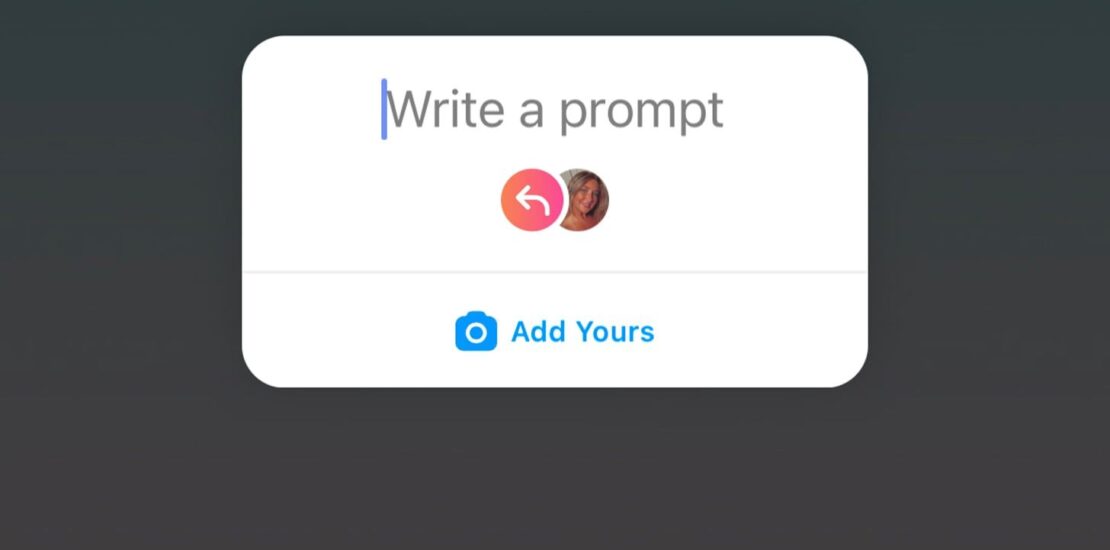
Add Yours itself is a feature developed by Instagram and released in 2021 and is now starting to become a new tool used in digital activism. The Add Yours feature allows anyone to participate in public story threads uploaded by users.[2] After users share content that uses the Add Yours sticker, anyone can use the user’s template, add their touch, and re-upload it. The Add Yours feature is used by Instagram users for various things that then become new trends.
Referring to George & Leidner[3] explanation, digital activism by using the Add Yours feature itself can be classified as one form in metavoicing method. Metavoicing itself is characterized by the actions of sharing, retweeting, reposting, and commenting on other users’ uploads. In digital activism hierarchies, metavoicing becomes part of digital spectator activities–consists of several characteristics including initiating political discussions, attempting to convince others, and exposing oneself to political stimuli–which is said to require the least effort but also contributing the most number to digital activism.[4]
Add Yours Feature as a New Tool in Digital Activism
The use of the Add Yours feature on Instagram in digital activism is generally used to mobilize public attention to take action and generate behavioral changes in a targeted group. The actors who become the initiators are not only from NGOs, activists, or the media but also the general public. They usually package information into important points that are expressed in the form of infographics, posters, or other eye-catching graphic designs to then be used as Add Yours templates. This strategy is in accordance with the character of the content of the Instagram social media itself which emphasizes communication through visual means.[5] The culture of searching and sharing credible information is also a factor that drives digital activism among young people.[6] As one of the main goals of digital activism is to increase the scale of activism, packaging content concisely using forms of visual communication can have implications for the success of the effort.
In amplifying Instagram-based digital activism, the Add Yours feature can be an alternative to making content that was initially personal into part of a broader collective movement. This also aims to expand the scale of digital activism. Through the Add Yours feature, other users can share content collectively and strengthen campaign messages.[7] Based on the use of the Add Yours feature, it is actually not much different from the hashtag feature. Both are used to reach wide audiences, even at the global level, thus gaining support and public participation in the activism being carried out.
The main difference between Add Yours and hashtags lies in the technicalities. The Add Yours feature on Instagram is only available in Instagram Story and Reels formats, while hashtags can also be used in Instagram posts. In activism using Add Yours itself, there are several template formats that are commonly used. This template format, for example, tends to aim to spark discourse and public responses to express their opinions regarding current issues, in contrast to other formats which aim to produce uniformity of uploads from users and are expected to amplify the specific goals of activism.
There are certain patterns that emerge in digital activism using the Add Yours feature, especially in activism that mobilizes massive public participation. Add Yours activism on Instagram usually occurs after a polemic about an issue has been buzzing on X. Digital activism that begins on X is generally related to urgent socio-political issues, such as controversial government policies or even government’ slow responses toward particular problems. The platform’s text-based nature enables users to upload content quickly and in real time, compared to Instagram, which is visually oriented and typically requires a more complex content creation and editing process. In many cases, activism on Instagram itself initially began with slideshow activism carried out by key actors such as activists or NGOs which focus on specific issues. At the same time, to expand the scale of activism, the Add Yours feature was then utilized to reach wider community participation, often aligning with key commemorative days such as International Women’s Day, Earth Day, and International Labor Day.
The Effectiveness of the Add Yours Feature in Digital Activism: Reflecting on the #TolakRUUTNI Activism
The Add Yours feature is currently widely used as a tool in digital activism, particularly in relation to criticism of government policies. This raises questions about its effectiveness in mobilizing public perception. Baringhorst[8] explains the metrics that can be used to measure its digital activism effectiveness: namely gaining awareness of political representatives regarding the issues raised, generating credibility from a person or organization that is a provocateur, and generating changes in people or groups that are the targets of activism. The case of #TolakRUUTNI digital activism can be used to test the measurement, as one of the latest digital activism gaining national-scale public attention.
In terms of gaining awareness from political representatives, digital activism using the Add Yours feature, such as the recent #TolakRUUTNI, seems to have succeeded in gaining the government’s initial attention. Sufmi Dasco Ahmad, who serves as deputy chairman of the Indonesian House of Representatives (DPR), and member of Commission 1 of the DPR, namely Tubagus Hasanuddin, responded to the movement to reject the TNI Bill carried out by the public.[9] However, if examined further, the responses given did not attempt to accommodate important points that were of concern to the public. Sufmi explained that the three articles included in the TNI Bill; namely Article 3, Article 47, and Article 53; were solely carried out to accommodate provisions in other institutional regulations and to dismiss public concerns about the potential for the TNI’s increasing dual function.[10]
In terms of credibility, digital activism using the Add Yours feature succeeded in providing credibility to certain actors who initiated the movement. In the #TolakRUUTNI activism, there were several accounts that later became the main sources for the public in amplifying activism through the Add Yours feature. Some of them are the accounts @fatih_wibisana, Pandji Pragiwaksono, What Is Up, Indonesia? (WIUI), Amnesty International Indonesia, Konde.co, to Tempo. These names consist of NGOs, media, public figures, and civil society. In this case, credibility tends to be obtained by actors from NGOs and media supported by their consistency in voicing crucial issues in society.
Furthermore, in terms of change, digital activism using the Add Yours feature that has been carried out such as #TolakRUUTNI still seems to require more discipline and rigid organization in order to bring about policy change. The community upheaval through a series of #TolakRUUTNI activism has not achieved the main goal of activism, namely to cancel the policy. The Draft Law on Amendments to Law Number 34 of 2004 concerning the Indonesian National Armed Forces (RUU TNI) was still ratified by the DPR at the 15th plenary session held on Thursday, March 20, 2025 amidst polemics and public rejection.[11] However, on the other hand, this activism can be said to be successful in terms of spreading awareness in public, for example, regarding the dangers of the dual function of the ABRI if it is re-implemented in Indonesia. To maximize the impact of digital activism, the presence of actors who are actively committed to monitoring issues[12] as well as developing and combining various methods of both online and offline activism[13] always plays an important role.
Conclusion
The Add Yours feature is a new tool that can be used by the public as an alternative in carrying out digital activism. In terms of effectiveness, the Add Yours feature has proven to be able to amplify the issues raised in activism and gaining public participation to voice out toward the issues. However, more discipline and rigid organization are still needed to achieve larger goals such as changing or canceling government policies.
-
Dumitrica, D. and Hockin-Boyers, H., 2023. Slideshow activism on Instagram: constructing the political activist subject. Information, Communication & Society, 26(16), pp.3318-3336. ↑
-
Instagram (2024) Instagram Stories Tips & Tricks: Add yours, mentions, layouts and more, Instagram Stories Tips & Tricks: Add Yours, Mentions, Layouts and More. Available at: https://about.instagram.com/blog/tips-and-tricks/instagram-story-tips-tricks. (Accessed: 02 May 2025). ↑
-
George, J.J. and Leidner, D.E., 2019. From clicktivism to hacktivism: Understanding digital activism. Information and organization, 29(3), p.100249. ↑
-
Ibid. ↑
-
Amnesty International Australia. (2020). Using Digital Tools for Activism: Level 2: Fundamental activist skills. ↑
-
Suwana, F. (2019) ‘What motivates digital activism? the case of the save KPK movement in Indonesia’, Information, Communication & Society, 23(9), pp. 1295–1310. ↑
-
Novianty, S.M., Puspita, R. And Sasrit, F., ” Digital Activism Through’add Yours’button On Instagram (Case Study Of Peringatan Darurat In Indonesia). ↑
-
Baringhorst, S., 2009. Introduction. Political Campaigning in Changing Media Cultures-Typological and Historical Approaches. Political Campaigning on the Web, Bielefeld, pp.9-30. ↑
-
Tempo.co. (2025). Respons Istana hingga Dasco Soal Masyarakat Sipil Tolak RUU TNI. Available at: https://www.tempo.co/politik/respons-istana-hingga-dasco-soal-masyarakat-sipil-tolak-ruu-tni-1220947 (Acessed 9 May 2025). ↑
-
Ibid. ↑
-
Tempo.co. (2025). Fakta-fakta RUU TNI Disahkan Walau Tuai Penolakan. Available at: https://www.tempo.co/politik/fakta-fakta-ruu-tni-disahkan-walau-tuai-penolakan–1222777 (Acessed 9 May 2025). ↑
-
Li, Y., Bernard, J.G. and Luczak-Roesch, M., 2021. Beyond clicktivism: What makes digitally native activism effective? An exploration of the sleeping giants movement. Social media + Society, 7(3), pp.1-22. ↑
-
Madison, N. and Klang, M., 2020. The case for digital activism: Refuting the fallacies of slacktivism. Journal of Digital Social Research, 2(2), pp.28-47. ↑
