- 21/08/2024
- Category: Commentaries
Author: Ayom Mratita Purbandani
Editor: Hafiz Noer
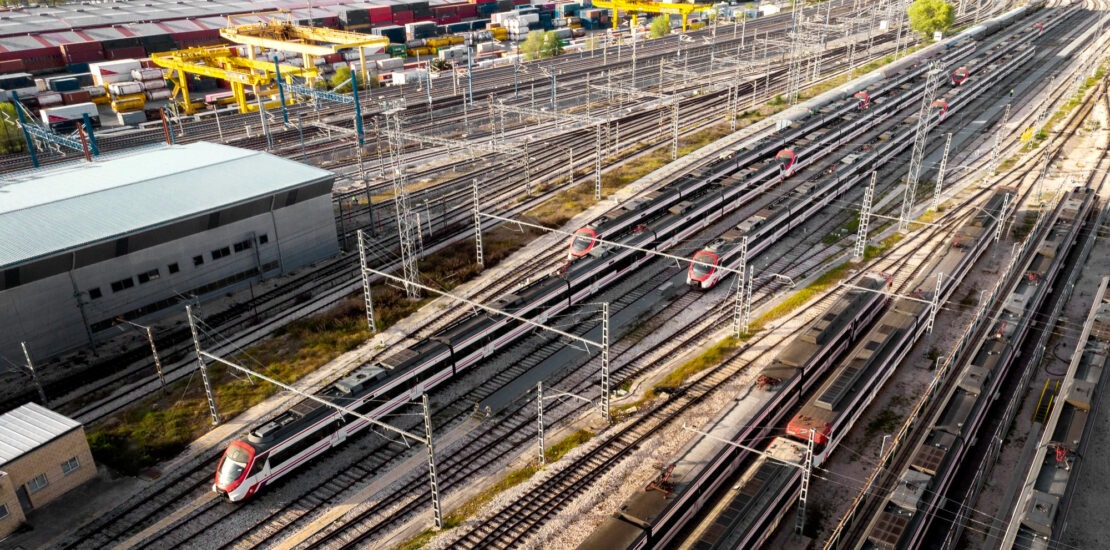
The high-speed rail technology represents one of the largest transportation projects in Indonesia. As this megaproject has been announced, “futurism” has consistently been emphasized as an inherent characteristic. KCIC’s motto also expresses this claim, and is the motto of the joint venture between an Indonesian state-owned enterprise consortium and a Chinese railway company consortium: “More than just connectivity, KCIC is here to build the future.” Futurism describes an ambitious vision of transforming high-speed rail into a hub for smart mobility by transforming the transportation landscape. Consequently, the Indonesian high-speed rail has become the tangible embodiment of the smart mobility expectations in envisioning the future of urban areas.
It is implemented through the Jakarta-Bandung High-Speed Rail project, officially named “Whoosh.”—an acronym for Waktu Hemat, Operasi Optimal, Sistem Hebat (Translated to Time-saving, Optimal Operation, Great System). With its initiation in 2015, KCJB has gained significant attention, due to the ambiguity of its achievements. Initially cancelled in the same year, the project was later endorsed by President Jokowi through a Presidential Regulation (Perpres) to mainstream the project and include it in the national strategic projects (PSN). This ambitious project will utilize Chinese high-speed trains type KCIC 400 AF or CR400 AF, the latest generation of high-speed trains. It will be capable of travelling at speeds of 350 km/h (KCIC, 2019). KCJB intends to transform the transportation landscape into a smart mobility hub by connecting two major cities of national importance.
With the high-speed rail, smart mobility is expected to be accelerated and dominant transportation modes, systems, and urban mobility governance will be disrupted and strengthened. Smart mobility presents an optimistic view of urban transportation systems based on a future-looking narrative. Any concept labelled as “smart,” combining innovation and technology, has an almost unquestionable expectation that better decision-making and information management will lead to better cities. This article highlights smart mobility claims within the framework of the megaproject for high-speed rail.
The performativity of smart mobility expectations
Over the past decade, “smart” solutions have become increasingly important for innovation pathways. As shown by the enthusiasm for everything related to smart labels, there is a high social expectation for smart solutions. Borup et al. (2006) suggest that these sociological expectations are generally performative rather than descriptive, particularly during experiments without any practical utility or value. Smart mobility is characterized by the ability to recognize urban infrastructure through calculation and quantification, and reconfigure urban mobility systems for sustainability and efficiency (Krivý., 2018).
With these components in mind, efficiency, convenience, and zero emissions are KCJB’s top offerings. The efficiency of high-speed rail, however, is not solely determined by its technical capabilities, such as its high speed and short travel times, but also by its multimodal connectivity. Multimodal connectivity refers to the integration of various transportation modes that allow passengers to seamlessly transfer from one mode to another.
This multimodal connectivity enables passengers to travel from their origin to their destination. The study titled “High-Speed Rail Station Interconnectivity and Ridership” by Hualiang Teng et al. (2022) evaluates the relationship between multimodal connectivity by developing a linear regression model that considers transportation services, service facilities, transfer times, and service intervals to identify aspects of multimodal connectivity in high-speed rail.
Based on data analysis from four countries; France, Spain, Japan, and China, four key characteristics determine multimodal connectivity by high-speed rail: 1) the level of integration between various transportation modes, such as buses, subways, and high-speed rail, is crucial for efficient multimodal connectivity; 2) the availability of parking facilities and transfer time efficiency play an important role in determining comfort and accessibility; 3) the location of high-speed rail stations (e.g., city center or suburban areas) can impact the availability of certain transportation modes and facilities; 4) operational factors, such as arrival intervals, affect the efficiency and convenience of multimodal connections (Teng et al., 2022). Ideally, high-speed rail is capable of implementing these four key determinants if it aims to accelerate smart mobility between Jakarta and Bandung.
Notes on efficiency and sustainability
As a prerequisite, accessibility remains a significant challenge for the high-speed rail project, since the transit-oriented development (TOD) was only introduced at the end of the project’s development process (Dwi, 2023). With a total distance of 142.3 kilometers between four stations (Halim, Karawang, Padalarang, and Tegalluar), accessibility coverage at strategic points is still limited. In February, the Jakarta-Cikampek toll road closed toll access to Halim Station in preparation for the transition to KM 1+842 (Laksono, 2024). As for Karawang Station itself, passenger boarding and alighting won’t begin until 2025 (Sulistyo, 2024).
Smart mobility also emphasizes sustainability. An urban mobility concept that is sustainable considers the impacts on the environment, society, and the economy. Energy efficiency, zero emissions, connectivity, and interregional integration are assessed as sustainability aspects of KCJB. Meanwhile, the ecological footprint during the construction phase of the concept of sustainability is often overlooked. WALHI (2023) In a press release, WALHI cited 23 cases of permits, environmental concerns, and social issues related to the KCJB project. A total of 133 families have been damaged socio-ecologically by the blasting method during the construction of 11 tunnels in the Tipar Silih Asih Complex, dozens of hectares of rice fields and irrigation channels were damaged by the project as a disposal area, as well as forced relocations and large-scale land use changes in Depok Village, Purwakarta Regency. Long-term blasting can trigger faults that could result in much greater damage. As shown in this list, sustainability is not just about the end goals of the project, but also about the ecological footprint of the construction process. The issuance process of the environmental impact assessments (AMDAL) remains in question due to this factor (Sanjaya & Sari, 2020).KCJB’s explanation on efficiency and sustainability components reinforces that smart mobility has uncontested performative expectations. An attractive imagining underpins these grand performative expectations, attracting stakeholders to support them (Kemp & Martens, 2007). This power, in turn, legitimizes the support, investment, and coordinating roles required in interlocking projects (van Lente, 2012). The purpose of this transformational trajectory is more to worship newness than to optimize existing urban mobility options.
