- 24/12/2022
- Category: Critical Questions
Author: Mario Hartanto
Editor: M Perdana Karim
Not long ago, the telecommunication industry was filled with the merger process of Indosat Ooredoo and Tri, two of many leading telecommunication operators in Indonesia[i]. Along with the process, now the entity called Indosat Ooredoo Hutchison and supported by the Ministry of Communication and Informatics. The Merger process between telecommunication operators it’s not a new thing that happens in Indonesia. Previously XL and Axis merged in 2014 to provide better service[ii]. It is predicted that this phenomenon will increase among telecommunication operators in the future, especially with government support. Why is that? This article will unravel how telecommunication operators are perceived and the ideal version of it.
Q1: How does the proliferation of telecommunication operators in Indonesia affect the telecommunication service in Indonesia?
It begins with the enactment of Constitution No. 36 issue 1999 regarding the telecommunication system that enhances the liberalization of the telecommunication industry in Indonesia[iii]. After that, many operators emerged to compete in the industry. Even in 2004, 11 mobile operators and brands across Indonesia[iv]. While this is linked to a more competitive market and lower tariff formula, this phenomenon also affects the quality of telecommunication services that exists.
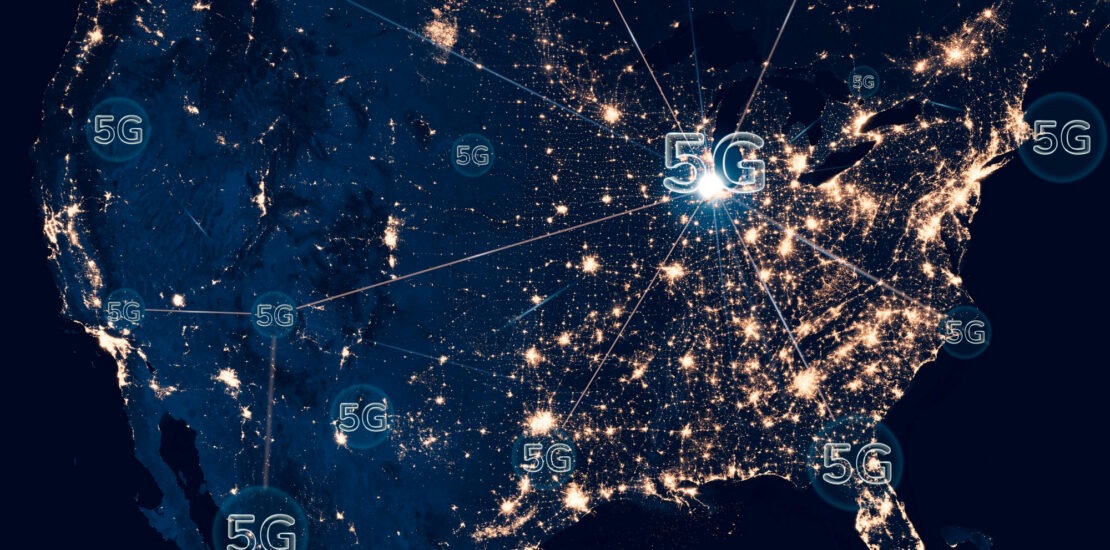
Indonesia, as a country, has a centralized radio frequency to broadcast the network. These frequencies are shared with many telecommunication operators through several spectrums. The more companies that provide telecommunications services means that, the smaller operator will get a network spectrum. This sharing issue also hinders the development of 5G networks in Indonesia[v]. Too many frequency alternatives lead to a higher cost of 5G, particularly in building infrastructure and equipment. With a situation like this, Indonesia is considered left behind compared to other South East Asia countries such as Thailand, Malaysia, the Philippines, Singapore, and Vietnam.
Q2: Is there an ideal model that can apply in Indonesia?
With the number of telecommunication providers in the market, Indonesia can re-evaluate how the system goes for telecommunication industries. Along with the bustling market competition in Indonesia, the merrier it gets means that it threatens the quality of services. But essential to acknowledge that competition is still important to avoid the monopoly economy of telecommunication.
To find the perfect balance, we can look at another country’s situation. Compared to Indonesia, many countries tend to have fewer operators. In the United States, only three operators dominate AT&T, Verizon, and T-Mobile[vi], whereas, in Hungary, there are only two significant operators: Telenore Hungary and Vodavone[vii]. Even if we look at the Philippines, which already adopted 5G, the land implemented duopoly economics on mobile phone providers between Globe Telecom and PLDT[viii]. Given the examples and experience, the Indonesian model’s ideal remains more future mergers and acquisitions. Rudiantara, Minister of Communication and Informatics, said that hopefully, in five years to come, there will only be three-four telecommunication operators.[ix]
Q3: How is the ideal model of telecommunication impacting digital literacy?
While we live in an interconnected world through the Internet, there is still a big gap between countries and regions. Data from International Telecom Union (ITU) states that in 2015, 34% of households in developing countries had internet access, whereas more than 80% in developed countries[x]. This digital gap also influences how the digital literacy level in Indonesia’s society is unequally distributed. Therefore, Indonesia needs to implement 5G networks to improve digital literacy. Research involving a slice of the 5G network shows that it connects the unconnected 3.5 billion people worldwide. The ideal model of telecommunication helps accelerate the implementation of the 5G network because it gives more spectrum allocation to support the infrastructure.
Conclusion
In conclusion, Indonesia is facing too many telecommunication operators that affect the internet quality services in the short term and hinder the development of the 5G network in the country. Therefore, the government supports the merger and acquisition step through the Ministry of Communication and Informatics to improve the internet and, hopefully, digital literacy in years to come.
[i] Yakti, A. (2022). Hari Ini, Indosat – Tri Resmi Merger jadi Indosat Ooredoo Hutchison. Retrieved February 8, 2022, from Tempo.co: https://bisnis.tempo.co/read/1546239/hari-ini-indosat-tri-resmi-merger-jadi-indosat-ooredoo-hutchison#:~:text=TEMPO.CO%2C%20Jakarta%20%2D%20Per,(H3I)%20atau%20Tri%20Indonesia.
[ii] Panji, A. (2014). XL dan Axis Resmi Jadi Satu Perusahaan. Retrieved February 9, 2022, from Kompas.com: https://tekno.kompas.com/read/2014/04/08/1717055/XL.dan.Axis.Resmi.Jadi.Satu.Perusahaan
[iii] Siagian, P. J., & TItus, A. (2012). ANALYSIS ON THE EFFECTIVENESS OF AXIS MOBILE INTERNET STRATEGY AND IDENTIFICATION OF AREAS FOR FUTURE IMPROVEMENTS. THE INDONESIAN JOURNAL OF BUSINESS ADMINISTRATION, 1(2), 87-92. Retrieved February 2022
[iv] Hutajulu, S. (2020). Two scenarios for 5g deployment in Indonesia. Technological Forecasting & Social Change, 1-11. doi:https://doi.org/10.1016/j.techfore.2020.120221
[v] Admaja, A. F. (2015). Kajian Awal 5G Indonesia. Buletin Pos dan Telekomunikasi, 13(2), 97-114.
[vi] Statista. (2021). Statista. Retrieved February 11, 2022, from https://www.statista.com/statistics/201048/total-operating-revenues-of-us-telecommunication-providers/
[vii] Medve, F. (2021). Statista. Retrieved February 11, 2022, from https://www.statista.com/topics/7510/telecommunications-industry-in-hungary/#:~:text=Telecommunication%20companies&text=Telenor%20Hungary%20and%20Vodafone%20are,in%20the%20Hungarian%20telecommunications%20industry.
[viii] Cluster, L. (n.d.). Retrieved February 10, 2022, from https://dlca.logcluster.org/spaces/flyingpdf/pdfpageexport.action?pageId=33784067
[ix] din/dew. (2022). Kominfo.go.id. Retrieved February 10, 2022, from https://kominfo.go.id/index.php/content/detail/4717/Menkominfo%3A+5+Tahun+Lagi+Hanya+Ada+4+Operator+Seluler/0/sorotan_media
[x] Noll, J., Dixit, S., Radovanovic, D., Morshedi, M., Holst, C., & Winkler, A. S. (2018). 5G Network Slicing for Digital Inclusion. International Conference on Communication Systems and Networks. doi:10.1109/COMSNETS.2018.8328197
