- 23/09/2020
- Category: Commentaries
The 2016 US elections witnessed the growing concerns about the negative effect of fake news towards the voting behavior of US citizens. A groundbreaking study conducted by Allcott and Gentzkow concluded that fake news might have been pivotal in the election of President Trump.[i] Shifting to the national context, the previous Jakarta Governor Election exposed similar instance; a digital initiative Turn Back Hoax recorded more than 1,900 alleged-hoax reports three months before the election. In light of this finding, social media has been accused as the culprit by providing these fake news a channel to proliferate. Fake news is particularly problematic in the period leading to and during the election as it imposes social costs by making it more challenging for voters to decide which candidates they prefer.[ii] In the next general election in 2019, Indonesians are expected to be drenched in the tide of false news, as they will have to vote for both legislature and the executive simultaneously for the first time.
The threat of fake news in Indonesia will most likely penetrate through social media. A survey conducted by Asosiasi Penyelenggara Jasa Internet Indonesia (APJII) in 2016 confirmed that 97,5% or 129.3 million of Indonesian internet users are using social media to attain information, including political news.[iii] This finding reaffirms the essential role of social media in addition to other conventional media in the candidates’ political campaigns. Facebook, in particular, has been increasingly prone to the explosion of hoaxes. In fact, fake news has significantly outperformed real news during the final weeks of the 2016 US election campaign.[iv] The reason behind this phenomenon might lie in the structure of the platform, in which contents can be easily transmitted among people with neither a built-in fact-checking mechanism nor assessment from the editor. In many instances, an individual user with no reputation or track record can achieve as many audiences as giant news companies such as Fox News, CNN, or the New York Times.
As a response, social media platforms have been actively looked for a solution. Most of the proposed resolutions fall into three general categories—the hiring of human editors, crowdsourcing, and technological or algorithmic solutions— each with its advantage and drawback.[v] Responding to such concern, the Indonesian Ministry of Communication and Informatics appears to opt for an algorithm by partnering with the social media giant, Facebook. The ministry has recently verified that the US-based social media company has established a task force which has the duty to stop the spread of fake news in Indonesia ahead of the 2019 presidential election.[vi] Regardless, many believed that algorithm alone is not sufficient to tackle the circulation of hoaxes. An internet based non-profit organization, ICT Watch, for instance, believes that the social media users have a bigger role in the fight than they think. The organization’s spokesperson said there is an urgent need for the “silent majority to speak up and raise their voice on social media.”[vii] Besides, the algorithm is unlikely to be useful on a private social media such as WhatsApp and LINE, in which the presence of fake news inside these platforms is also extremely prevalent.
In short, providing voters with the actual projection of the world is critical to ensure that each voter has an informed decision concerning the candidates they are about to elect. With social media overtaking the position as the most prominent source of news, a digital rationale is immensely crucial for every voter to develop in processing the vast amount of information swarming on their newsfeeds. Politics relies heavily on public perception; hence the necessity for people to obtain the accurate perception is paramount. Observing the current national trend of social media behavior does not show any indication that we are going to win the war easily. Social media surely has its responsibility to provide technological measures that will shield users from the threat of hoax, but that alone is not enough. Increasing awareness on digital literacy to users is therefore indispensable as part of the fight against fake news, and will eventually contribute to the bigger struggle for truth.
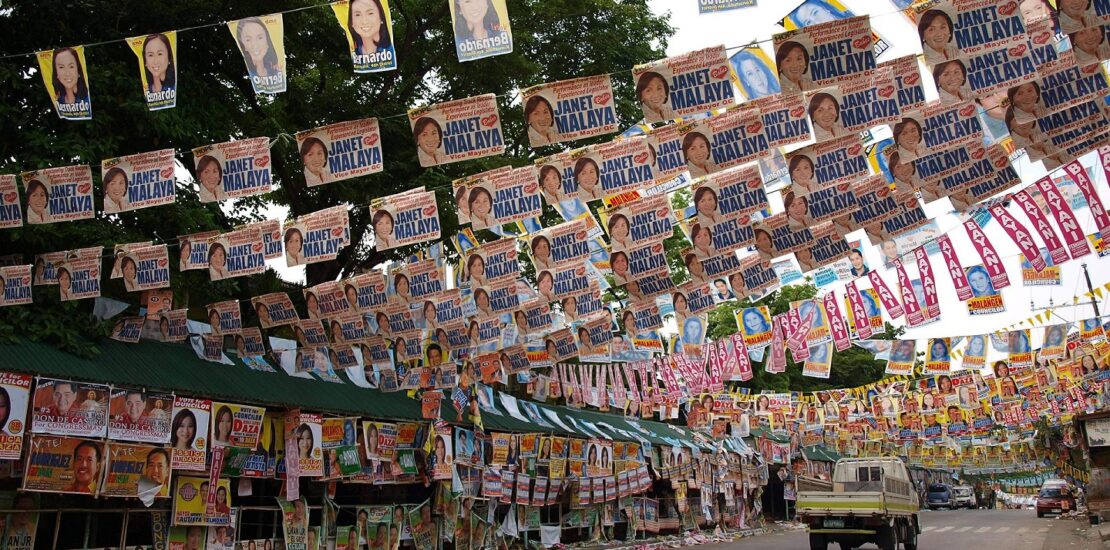
Picture: Pixabay
[i] Allcott, H. and Gentzkow, M. (2017). Social Media and Fake News in the 2016 Election. Journal of Economic Perspectives, 31(2), pp.211-236.
[ii] Ibid
[iii] Asosiasi Penyelenggara Jasa Internet Indonesia (2016). Penetrasi dan Perilaku
Pengguna Internet Indonesia: Survey 2016
[iv] Woolf, N. (2017). How to solve Facebook’s fake news problem: experts pitch their ideas. [online] the Guardian. Available at: https://www.theguardian.com/technology/2016/nov/29/facebook-fake-news-problem-experts-pitch-ideas-algorithms [Accessed 5 Aug. 2017].
[v] Ibid
[vi] La Batu, S. (2017). Facebook forms team to tackle hoaxes in Indonesia. [online] The Jakarta Post. Available at: http://www.thejakartapost.com/news/2017/08/02/facebook-forms-team-to-tackle-hoaxes-in-indonesia.html [Accessed 5 Aug. 2017].
[vii] BBC News (2017). How fake news and hoaxes have tried to derail Jakarta’s election – BBC News. [online] BBC News. Available at: http://www.bbc.com/news/world-asia-39176350 [Accessed 6 Aug. 2017].
Picture source: pexels.com
