
- 10/09/2020
- Category: Commentaries
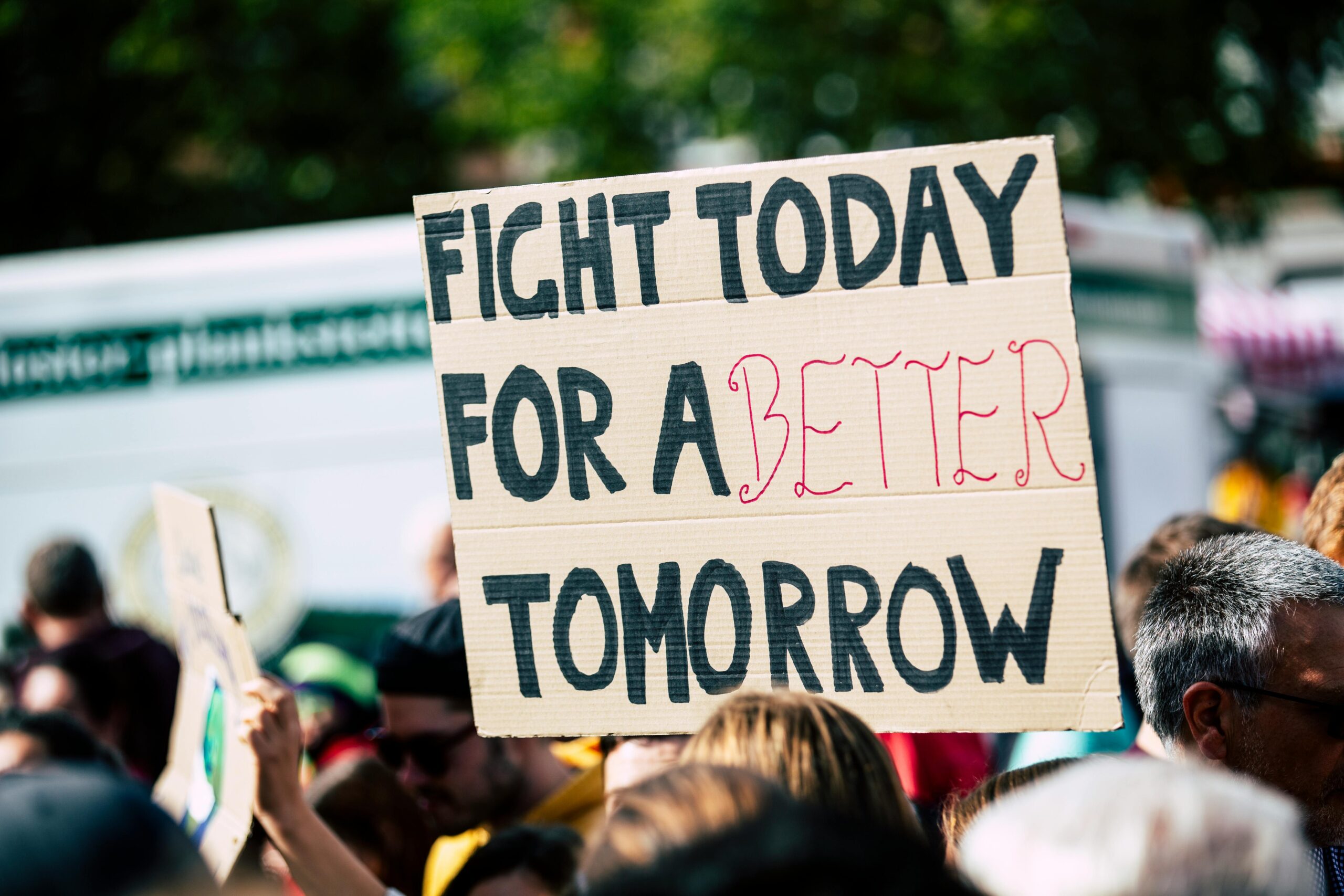
The term Social Justice Warrior (SJW) is quite familiar with social media users. At first, I did not realize, let alone understand what SJW is. I know that when there is a thread that discusses social issues, there are always two camps at war. One camp is considered pretentious and wants to climb the social ladder. At the same time, the other is the opposing camp, which are camps that have opinions that counter the nature of the thread being discussed. Interestingly, in social media debates, the same sentence always appears, “Dasar SJW!” which is pinned on a group that wants to support or fight for social issues.

Figure 1: Some example of netizens’ scathing comments for SJW

The debate phenomenon between the SJW group and their antipathies caught my attention personally. First, social media is a place to share opinions[i], which means that it can be understood that the content uploaded is derived from experiences and subjective thoughts. Second, arguing about sensitive issues on social media platforms is somewhat inappropriate. Because this activity only ends as a fight of opinions and (of course!) not reaching a mutual agreement to resolve problems. Third, this is somewhat sad, considering that not all SJWs are pure vanguards of marginal issues. Some of them (apparently) are groups of people who are considered as social climbers[ii].
Returning to this phenomenon, I highlight one thing when I saw the debate between these two groups on social media. The pattern can almost always be ascertained like this: one party voices an opinion against the other trying to refute the argument. Of course, a person has the right to voice their own opinions. However, do we always HAVE to respond to a person’s opinion or argument? Is this sort of discourse genuinely worth it for us?
I conducted a search related to the SJW antipathy group’s motivation in responding to the SJW group’s opinion. Apart from that, I also held a discussion with Social Psychology researchers at UGM regarding the question, “Why can this anti-empathic group attack the SJW group so much?” Our discussion finally ended up with relatively fundamental psychological theories: learning theory. Although the answer is relatively short, the learning theory summarizes several pathways to a person’s attitudes and behavior – in this case, referring to the behavior of the SJW anti-empathic group.
Social Cognition
The first view that can answer the motivation for the SJW antipathy group’s aggressive behavior can be explained through Social Cognition Theory[iii]. In this theory, it is explained that human behavior is the result of previous learning. These forms of learning are not based on what is obtained through formal educational institutions. However, they are more flexible, namely based on what they see around them. Mimicking attitudes and behavior is considered a form of social learning in this theory. The learning process through observation and duplication of behavior is deemed to be efficient. Humans learn which responses get reinforcement and also punishment.
Cognitive processes can be influenced by motivation or affection, where affection is related to a person’s past experiences and the schemes they have to form individual attitudes and behavior concepts. However, the relationship between the scheme in the past and the behavior it exhibits – that is, the negative and offensive behavior of SJW antipathies – does not have to be related. Alias, it could only be with specific triggers that eventually trigger offensive actions from SJW antipathies.
Group Emotions
The emergence of a person’s behavior may be caused by the emergence of group emotions felt by the individual. Group emotions are not just a combination of personal feelings in the same group, but it is purely an emotion of groups. This offensive behavior can be seen by a behavioral pattern that is carried out simultaneously and is supportive. Group emotion is a part of Social Identity Theory[iv], especially regarding Social Category Theory. This theory describes groups, groups, or social categories that exist in a society that provide responses or responses that are more or less the same or uniform[v].
When discussing specifically the offensive behavior of the SJW antipathies, this could be because the individuals in it identify or associate themselves with the group. By associating themselves with groups, these individuals have the same values as the group and ultimately dislike other or opposing groups. So it is not surprising when in a thread, someone has found people who have similar values that they can increasingly dislike other groups that are considered to have different values. Then this dislike of affection will be manifested in behavior that can take various forms, including the behavior of attacking the “opponent” group.
If we want to pull it out to make it more neutral, I think several things are important to review. The first is related to the use of the internet and social media. Social media is a place to share opinions, and opinions are based on subjective experiences. With this nature, opinions are value-free. We cannot state the wrong and right opinions. Thus, what we need to understand again is that the nature of social media is flexible. The control is from ourselves, both as the creator of content and the consumer of content.
The open-minded factor also plays an integral role in suppressing the emergence of coachman debates on social media. Returning to the subjective nature of social media, the debates that have emerged have no universal basis. Which again goes back to the flexible nature of social media. Thus, we as individuals would be better off if we were open-minded and tried to understand why people had (possibly) opposing opinions. We also do not need to respond, especially if we already understand that it is relatively trivial.
Apart from that, it needs to be understood that people who play social media have many characteristics. So, self-regulation is needed to ensure people to behave wisely. It is almost impossible for us to “arrange” for others to behave according to the norm. After all, social norms and personal values can, of course, be very different. So, in this case, we need to refrain from getting involved in unnecessary debates.
Author: Dhalia Ndaru Herlusiatri Rahayu
Editor: Amelinda Pandu Kusumaningtyas
[i] Nugraheni, Y. dan Yuni W, A. (2017). Social Media Habit Remaja Surabaya. Jurnal Komunikatif. 1. p. 13-30
[ii] Damarjati, D. (2019). Apakah SJW Sama Seperti Orang Pansos via Medsos? Detiknew. [online] https://news.detik.com/berita/d-4760978/apakah-sjw-sama-seperti-orang-pansos-via-medsos/1 (Diakses pada 28 Juli 2020)
[iii] Bandura, A. (2001). Social Cognitive Theory: An Agentic Perspective. Annual Review of Psychology. 52. p. 1-26.
[iv] Tajfel, H. (1974). Social identity and intergroup behaviour. Social Science Information, 13 (2), p. 65–93.
[v] Ibid. p. 69
