- 23/04/2020
- Category: Commentaries
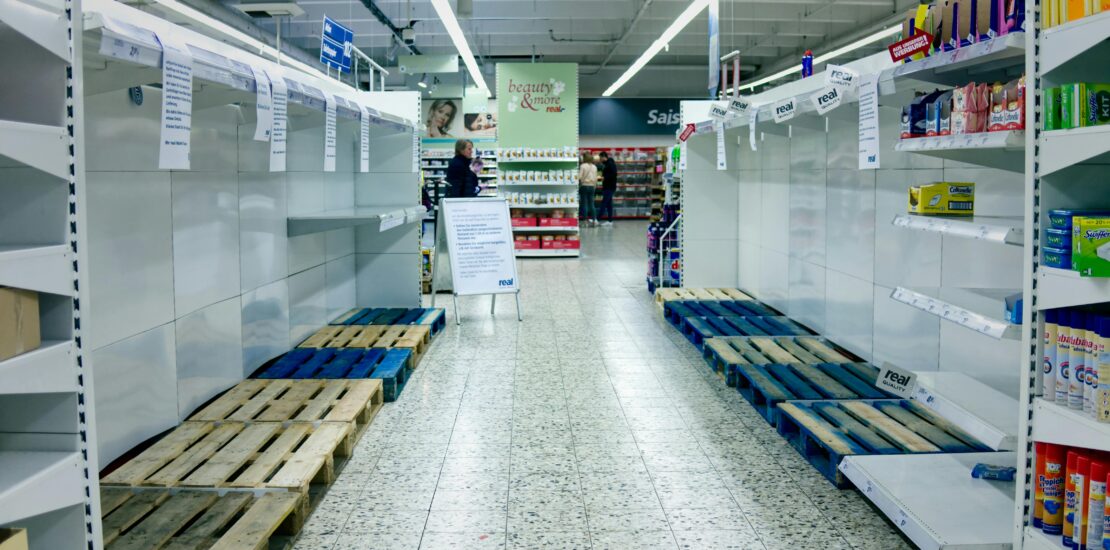
After Indonesia’s President, Joko Widodo, confirmed two positive cases of Coronavirus (COVID-19), people began to panic buying. CNBC Indonesia has listed that there were 3 (three) panic buying episodes.
The first panic buying episode provoked after the President confirmed the first two positive cases in Indonesia. The second episode was a response to the Work from Home (WFH) policy. As the number of Corona cases has reached more than 300 cases, people become even more anxious[i]. Thus lead to the third panic buying episode.
Because of panic buying, hand sanitizers, masks, and groceries are hard to find. To stabilize the market, the government has to issued a buying restriction policy.
Now the question is, what pushes people to buy so many things beyond their buying habit during this pandemic?
There’s a series of mental processes that lay behind someone’s decision to panic buying. We need to understand that every individual has an automatic nature to respond to the stimulus. Every stimulus is neutral until they get conditioned. In the context of this pandemic, any news relating to COVID-19 could be the neutral stimulus. Before the pandemic, we might not react dramatically to news about scarce groceries. However, now that we are in the middle of an epidemic, some negative news could stimulate us to respond beyond our habit. People feel the urge to hoard groceries, hand sanitizers, and masks, to make sure that they could survive throughout the pandemic[ii].
So, why do people panic buying? COVID-19 is a new type of virus that we never deal with before. Hence, this pandemic has put us into a situation that we have never been to before. We have not yet established any concept or survival system to save and protect us from this pandemic. Our knowledge regarding this pandemic is still limited, thus making us prone to anxiety.
Currently, due to the current circumstance, many of us are having anxiety. Panic behavior, hard to sleep, and worry are several symptoms of anxiety[iii]. We may encounter these symptoms due to our lack of knowledge of COVID-19. These symptoms might also lead us to panic buying as a way to survive through the pandemic.
People are in fear of the possibility of daily needs, masks, and hand sanitizer shortages. People also have no idea until when the lockdown policy will last. Many are scared that they would not be allowed to grocery shopping during the quarantine. All of these conditions have triggered people’s anxiety. People are then buying groceries, masks, and hand sanitizers in a massive amount of quantity so they would be secure during the pandemic[iv] [v].
Respond to the stimulus (or stimuli) is not only influenced by single conditioning. Many conditionings could happen simultaneously and induce people to respond differently. Technology could be the next factor that causes panic buying behavior. People are trying to find out more about COVID-19 through the internet. Unfortunately, exposing ourselves to the unpleasant news related to COVID-19 might conditioning us to panic buying. Besides, not all information that we can find online is credible and reliable. Hoaxes are spread across WhatsApp Group and received without rechecked by the readers. Often, readers believe that false information was accurate. It could escalate the anxiety in our society[vi].
Another technological factor that might cause panic buying behavior is our online relationship with others[vii]. Today we are living in a society that has an ‘Update Culture.’ Many of us enjoy sharing every little and simple thing about our life with other people on the internet through social media platforms. Some also like to share their shopping and buying habits through Instagram, Facebook, and so on. During this period, updating our monthly shopping in our social media accounts might trigger some of the followers’ anxiety. The content and the pandemic situation might urge them to think that they also need to buy as much as they could.
From the explanation above, we can conclude that panic buying is a result of simultaneous factors: the nature of respond-stimulus, and technology. So, how do we overcome this phenomenon? The first thing that we can do is only consume information from reputable and credible sources to minimize our anxiety. Here are some other ways that could also be followed:
1. Limit the information related to COVID-19. Too much information makes us unable to see what’s essential and what’s not. We’re going to feel stressed when we received too much COVID-19 reporting, especially the bad ones.
2. Make sure the source of the information you get is valid and reliable. It’s challenging to differentiate the fact and the hoax. To avoid consuming hoax and fake news, just read information from credible sources.
3. Discuss with the expert. If you are still feeling uneasy and uninformed, even after reading information from credible sources, you might also consider joining online discussions presented by experts. There are many online-discuss events nowadays, and most of them are free for everyone.
4. Obey the government directives. The government has tried to put the best to deal with this pandemic. Therefore, it would be better for us to support their policies for our safety.
5. Be wise when using social media. We can actively involve in preventing the emergence of new panic buying episodes by being more considerate while using social media. We need to be wiser before sharing out activities on social media, particularly about our shopping behavior. Things that we share might trigger others’ anxiety.
Author: Dhalia Ndaru Herlusiatri Rahayu
Editor: Treviliana Eka Putri
Read more article written by Dhalia Ndaru Herlusiatri Rahayu
[i] Putri, C. A. (2020). Peritel Blak-Blakan Ada 3 Kali Panic Buying Gegara Corona. [online] CNBC Indonesia. Availabel at: https://www.cnbcindonesia.com/news/20200320104453-4-146366/peritel-blak-blakan-ada-3-kali-panic-buying-gegara-corona [Accessed 10 April 2020]
[ii] Lufkin, B. (2020). Virus corona dan psikologi panic buying: Semata antisipasi atau kepanikan irasional? [online] BBC Indonesia. Available at: https://www.bbc.com/indonesia/vert-cap-51887198 [Accessed 31 Mar. 2020]
[iii] McKeever, A. (2020). Coronavirus is spreading panic. Here’s the science behind why. [online] National Geographic. Available at: https://www.nationalgeographic.com/history/reference/modern-history/why-we-evolved-to-feel-panic-anxiety/ [Accessed 31 Mar. 2020]
[iv] Taha, S., Matheson, K., Cronin, T., dan Anisman, H. (2014). Intolerance of Uncertainty, Appraisals, Coping, and Anxiety: The Case of the 2009 H1N1 Pandemic. British Journal of Health Psychology. 19. p. 592-605
[v] Mishra, S., Gregson, M., & Lalumière, M. (2012). Framing Effects and Risk-Sensitive Decision Making. British journal of psychology (London, England: 1953). 103. 83-97. 10.1111/j.2044-8295.2011.02047.x.
[vi] Witte, M. D. (2020). People’s Uncertainty about the novel coronavirus can lead them to believe misinformation, says Stanford scholar. [online] Stanford News. Available at: https://news.stanford.edu/2020/03/16/fake-news-coronavirus-appealing-avoid/ [Accessed 9 Apr 2020]
[vii] Rieper, K. (2020). Social Media Could be Fueling a Panic Buying Response, Says Baylor Expert on Consumerism and Technology. [online] Baylor University Media and Public Relations. Available at: https://www.baylor.edu/mediacommunications/news.php?action=story&story=218089 [Accessed 10 April 2020]
