
- 17/10/2018
- Category: Commentaries
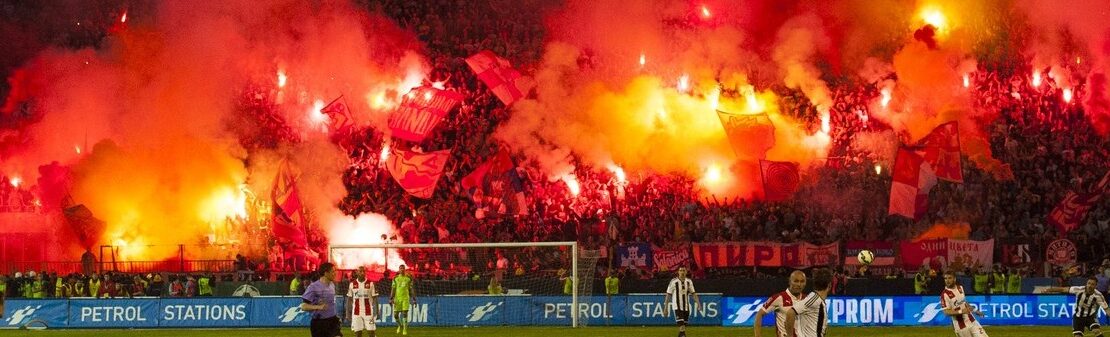
The devastating news of the death of a football fan after a match between Persija and Persib last August was dreadful, but it was not the first time. In the past decade, there have been more than 50 incidents of death related to football supporters in Indonesia[1]. Looking at the recent case of Haringga Sirla, the perpetrators are not the sole guilty party here. It is argued that there are structural problems within the government and institutions that deal with football, the society, and most importantly the way information spreads in relations to football supporters. Hence, there are two aspects of the incidents that need to be addressed; how football and football supporters are governed, and the role of social media in spreading violence and inflicting real-life incidents. The two combinations could be the key to avoid more cases of death in football supporters.
Indonesia’s Government Response on Haringga Sirla’s Case
The disciplinary commission of PSSI (Persatuan Sepakbola Seluruh Indonesia) has sanctioned Persib, the match’s organizing committee, and its supporters with a hefty penalty[2]. The focal point of the incidents, the supporters, are also banned from supporting their club until the middle of the 2019 season. While these bans may effectively stop the former perpetrators from doing the same thing in other events, questions arise on how the bans can actually address the issue of violence among football ‘hooligans’.
Learning from the UK: Addressing Football Hooliganism
The case of football and violence is not peculiar to Indonesia’s footballing world and ‘hooligans’. We should not forget the devastating Hillsborough tragedy in 1989 where 96 people died in a match between Liverpool vs Nottingham Forest in the UK. It took 23 years to reveal the main culprit of the tragedy. Later on, it was found that the police are the ones who are responsible for the wave of the crowd that came into the stadium, causing the death of many[3]. While the Hillsborough and Haringga’s case are different in some ways—such as in the number of victims and the perpretators of the incidents – but both cases pointed out one missing aspect that could at least, prevent and minimize the same thing to happen in the future: the Government action.

Horror of Hillsborough Disaster. (Cr:Irishexaminer)
The government of the UK quickly took charge in transforming football policy after the Hillsborough incident. On June 2018. the government, through its home office, had banned 1,200 supporters with a record of football-related violence from going to the 2018 World Cup in Russia[4]. This comes as a response from the threat of violence that might occur between Russian fans and England fans. Officer Holt[5] of the British Police Service wrote on the significance of reform in football policing and how the event is held. Holt suggested that the commander of police and on-duty officers in charge of the match should have a thorough understanding of the venue, crowd movements, and potentially violent incidents or provocative actions in order to avoid more tragedies. Moreover, the use of technology has made it easier for the police and the event organizers to control the crowd. Video surveillance, ticket holder monitoring, and warnings made prior to the match to ticket holders through social media have all decreased the risk of violence and increase control for the police. The transformation has also been made at a national level. Multiple laws on football banning, public order, and criminal justice have been made in the UK specifically for football matches[6].
Drawing from the UK Government policy the football association of Indonesia (PSSI) along with the parliament should apply a more holistic policy of matches, better utilisation of technology, and a solid partnership with the police force.
Social Media and Football Hooliganism
In addition to government’s action in organizing the match, social media also plays a detrimental role in creating perceptions and planting ideas for the supporters. Provocative posts with images, videos, and mere tweets are all bound to be turned into a motivation to induce violence to the opposition supporters. Studies found a connection between social media use and the increase of aggression among football supporters[7]. The number of posts that attacks rival clubs has exponentially rose alongside violent acts by supporters. The provocative acts in the digital world were being translated into real-world violence. The use of social media is hardly in the realms of government as free speech often clashes with the argument of controlled content on the internet. The Indonesian Government already have a regulation that ban the spread of harmful contents under the electronic information and transaction act or UU ITE[8]. Despite the controversies surrounding the law on spreading hoax and harmful contents, the law posed as a solution to the use of social media in spreading aggression for supporters.
Football, as any other kind of sport, does not fall at fault in the incidents surrounding it. Proper management by the organizers, police, and government regulations followed by the responsible use of social media by the supporters are the main solutions to the long-lasting bloodshed around the stadium.
Editor: Lia Wulandari & Treviliana Eka Putri
Read another article written by Muhammad Fakhri Abdurrahman or article about negative content.
[1] Nathaniel, F. (2018). ‘Sanksi Komdis untuk Persib Usai Kejadian Haringga Sirla’ [Online] Tirto.id. Available at: https://tirto.id/sanksi-komdis-pssi-untuk-persib-usai-kejadian-haringga-sirla-c4ab. [Accessed 5 October 2018]
[2] Nathaniel, F. (2018). ‘Sanksi Komdis untuk Persib Usai Kejadian Haringga Sirla’ [Online] Tirto.id. Available at: https://tirto.id/sanksi-komdis-pssi-untuk-persib-usai-kejadian-haringga-sirla-c4ab. [Accessed 5 October 2018]
[3] Holt, A. (2012). ‘ Hillsborough: how football policing had to be profoundly transformed’ (Online) The Guardian. Available at: https://www.theguardian.com/commentisfree/2012/sep/14/hillsborough-football-policing-transformed [Accessed 4 October 2018]
[4] Oppenheim, M. (2018). ‘World Cup 2018: More than 1,200 British football hooligans banned from going to Russia by Home Office’[Online] Independent. Available at:https://www.independent.co.uk/sport/football/world-cup/world-cup-2018-british-football-hooligans-ban-russia-home-office-a8396826.html. [Accessed 4 October 2018]
[5] Holt, A. (2012). ‘ Hillsborough: how football policing had to be profoundly transformed’ [Online] The Guardian. Available at: https://www.theguardian.com/commentisfree/2012/sep/14/hillsborough-football-policing-transformed [Accessed 4 October 2018]
[6] Crown Prosecution Service (2018). ‘Football Related Offences and Football Banning Orders’ [Online] Available at: https://www.cps.gov.uk/legal-guidance/football-related-offences-and-football-banning-orders. [Accessed 5 October 2018]
[7] Hanifan, A., Nathaniel F. (2018). ‘Provokasi di medsos bikin suporter Indonesia makin agresif membunuh’ [Online] Tirto.id. Available at: https://amp.tirto.id/provokasi-di-medsos-bikin-suporter-indonesia-makin-agresif-membunuh-c2xD. Accessed on 5 October 2018.
[8] Saputra, A. (2016). ‘UU ITE Perubahan: ini 6 konten yang terancam penjara’ [Online]. Detik News. Available at: https://news.detik.com/berita/d-3356295/uu-ite-perubahan-berlaku-ini-6-konten-yang-terancam-penjara. [Accessed 5 October 2018]
