
- 31/07/2017
- Category: Commentaries
Tourism is a fiercely competitive, specialized, rapidly evolving commercial sector. Tourism development can affect the business climate and patterns of growth of the national economy.[i] Characterized by its fierce competition, suppliers of tourism products and services need to know and anticipate changes in the motivations that determine tourists to buy a holiday package. Continuous changes and different ways of doing business have presented the urgent need to innovate. Hence, continuous innovation must become part of the fundamental DNA of the tourism companies that will ultimately survive.[ii] Besides that, accurate prediction and estimation of the tourism demand are very important in the making decision regarding investments in both the public and private sectors.[iii] In this age of technology, the international tourism industry is rapidly adopting Triple ‘T’: Travel, Tourism, and Technology. Technological advancement continues in providing vast opportunities to travel and tourism industries.
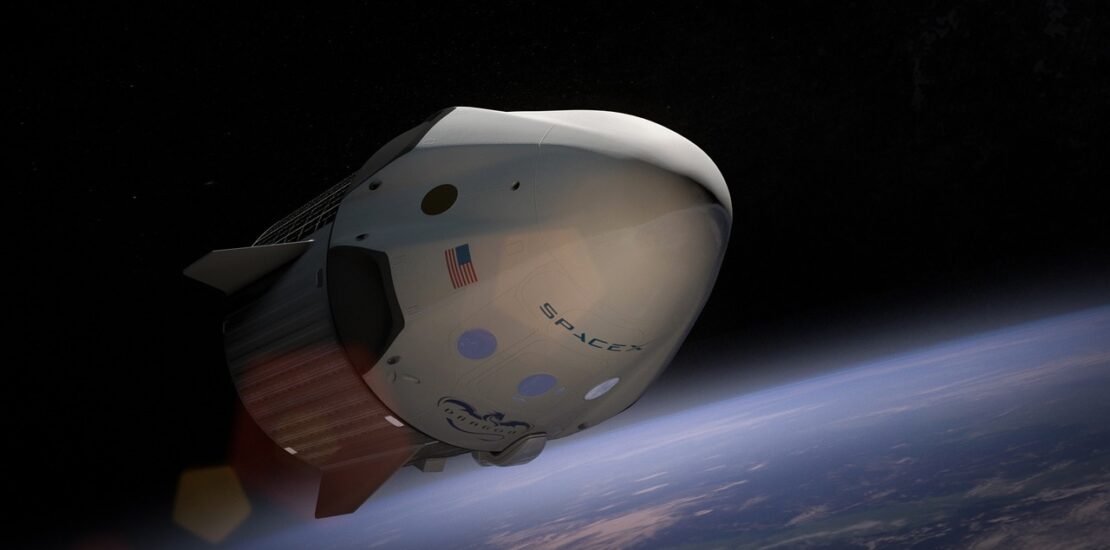
Innovation and technological change are central to improving business and destination competitiveness, to improving tourist’s experience. The tourism industry has invaded outer space. “Space Tourism” describes the new industry in which ordinary people can buy tickets to travel to space and back.[iv] With further breaking the barriers by several significant technological breakthroughs, space tourism looks closer to reality. In November 2016, The China Academy of Launch Vehicle Technology (CALVT), a state-sponsored Chinese company, announced plans for a reusable, rocket-powered vehicle to send commercial tourists to space flying up to a height of 130 km. After giving passengers an opportunity of roughly eight minutes of weightless spaceflight and an incredible view of the planet, the craft would return to Earth and land on a runway like a conventional aircraft. As a comparison to CALVT project, Swiss start-up “SolarStratos” unveiled its “solar plane” to send people up to a height of around 25km. The “SolarStratos” aircraft offers clean solar and electric aviation for the equivalent environmental footprint of an electric car. Another offer comes from Jeff Bezos, Amazon CEO, with his “Blue Origin” project aiming to fly 100 suborbital flights a year with his “New Shepard” shuttle by 2018. This rocket will pass just beyond the Kármán line, 100 km above sea level, while the International Space Station is 354 km above Earth. “New Shepard” is intended to let six passengers experience weightlessness before it lands by parachute. Besides the spaceship experience, four private companies — Cohu Experience, Axiom Space, Fun Academy, and Edge of Space –formally announced the “Space Nation Astronaut Program”, a training program and contest that gives everyone the opportunity to travel to space. [v] Over the past few years, a growing amount of professional work has been done about space travel, and it’s now clear that setting up commercial space-tourism services is a realistic target for business today.
Everyone is fascinated by space, about what lies beyond this world which we call home. Space tourism is something that is no longer simply an absurd joke. It will be a mainstream holiday option when it’s becoming a reality within a few decades. Would you travel into space?
picture: Pixabay
[i] Ashley, Caroline, et. Al. (2007). ‘The role of the tourism sector in expanding economic opportunity.’ Available at: https://sites.hks.harvard.edu/m-rcbg/CSRI/publications/report_23_EO%20Tourism%20Final.pdf. [Accessed 19 July 2017]
[ii] UNWTO. (2011). ‘Technology in tourism.’ Available at: http://cf.cdn.unwto.org/sites/all/files/pdf/unwtodigitalresources_volume1_techtourism_eng.pdf. [Accessed 19 July 2017]
[iii] Sadatiseyedmahalleh, Seyedehelham, et. Al. (2016). ‘Prediction of tourism demand in Iran by using Artificial Neural Network.’ Available at: https://www.academia.edu/21439846/Prediction_of_Tourism_Demand_in_Iran_by_Using_Artificial_Neural_Network_ANN_and_Supporting_Vector_Machine_SVR_ [Accessed 19 July 2017]
[iv] Khan, Bruce. ‘Tourism that’s out of this world.’ Available at: http://www.teatime-mag.com/magazines/56-de/ [Accessed 19 July 2017]
[v] Datta, Anusuya. (2017). ‘2017 could be a breakthrough year in space tourism.’ Available at: https://www.geospatialworld.net/blogs/2017-could-be-a-breakthrough-year-in-space-tourism/. [Accessed 19 July 2017]
