- 31/07/2017
- Category: Commentaries
Social media and Mental Well-being
The importance of mental well-being can easily be apprehended by how it allows individual to realize his or her potential, to cope with the normal stresses of life, to work productively and fruitfully, and to be capable of contributing to her or his community.[i] Alongside its definition, the decline of mental well-being can be the source for various mental issues such as depression, anxiety, and even as critical as suicidal thoughts or attempts. Many had claimed how detrimental the over exposure of media to mental well-being is. In fact, in 2017, a research conducted by Royal Society on Public Health singled out Instagram as the worst social media platform based on its overall effect on mental health because it often leaves people to feel awful about themselves.[ii] Aside from that, the power of media in constructing reality is inevitable;[iii] thus explaining the phenomenon of fear mongering for the sake of public control and raising anxiety among the people who have access to media.
Social media is linked to negative outcome due to the way people perceive the unraveling curtain of privacy. Through our own eyes and perception, we can assess other people’s lives, their achievements, lifestyle, and journey. Afterward, the information of other’s will be processed and compared to one’s life which might cause negative emotions. In his writing to understand how humans put the value on matters, classical economist Adam Smith pointed out how it is natural to associate consumption and the ability to gain things as the underlying characteristics that can provoke deference, approval, and affection.[iv] Therefore, how humans discern others through social media continuously might cause conflicted feelings of ‘not having something’, and this prolonged sense of deprivation affects their mental health.
Moreover, the current reaction towards the afflicting condition is to avoid media at all cost. Social media as a more engaging platform is seen as the main culprit that caused depletion of mental well-being. And through that, social media—despite its role as an enabler to connect people—is often associated with high levels of anxiety, depression, bullying, and FOMO, or the “fear of missing out.”[v] However, this was not a cause to point at social media for all the adverse impacts on mental health but also to reflect upon the users. Firstly, in this case, it is easier to direct the entire mistake to the instrument rather than the underlying ontological means. In the context of those who were born at the beginning of 2000, we must understand that this generation will live in a world where social media existed and without a doubt will be incorporated into their lives. Nonetheless, the answer to navigating ourselves is not by a complete shutdown and antipathy towards social media but to welcome these changes with preparation.
Turning it around
There are ways to utilize the best out of social media without the internalization of negative emotions that could harm our mental well-being. In fact, Dr. Becky Inkster from the University of Cambridge believes in using social media to spread mental health awareness and fighting the ongoing stigma. Because of how people nowadays have incorporated social media into their lives, social media can actually be used to deliver in a lifestyle-integrated and a self-managed approach to improve psycho-education, increase self-awareness of mental health, and act as a preventative measure.[vi] With that, the condition also set higher urgency for digital literacy action for social media user. Digital literacy is a set of skills that will help users, not to exclude social media users, to navigate themselves amidst the information. Instead of seeing merely as a technical subject, the importance of digital literacy is visible from how people can be more critical towards information, to understand the ethics and how to communicate better in the digital world. Therefore the users will be able to have deeper comprehension on the idea of sharing, consuming, and understanding social media.
This connectivity which is offered by social media is one of the tools that society could use to reach out to those who are suffering from mental health issues. Instead of fearing social media, the platform itself was created out of the need of interaction between people and can be used as positive reinforcement for those in needs. Even though people are interacting without physically seeing each other, the digital world can benefit from the existence of empathy among its users. That sense of compassion can be cultivated by understanding how social media works through the groundwork of digital literacy to minimize the harm; and it is possible to create a digital future that is healthy and thriving.
Lastly, for our Indonesian readers, in the case of depression and mental health awareness, if you or people that you know are showing suicidal intentions, the Ministry of Health provided a suicide hotline available for 24 hours at 500-454. If you are in need of psychological assistance for suicide prevention and mental health care you can reach nongovernmental organizations such as Into the Light by contacting pendampinganitl@gmail.com and another NGO Jangan Bunuh Diri at janganbunuhdiri@yahoo.com (021 9696 9293). We are all in this together.
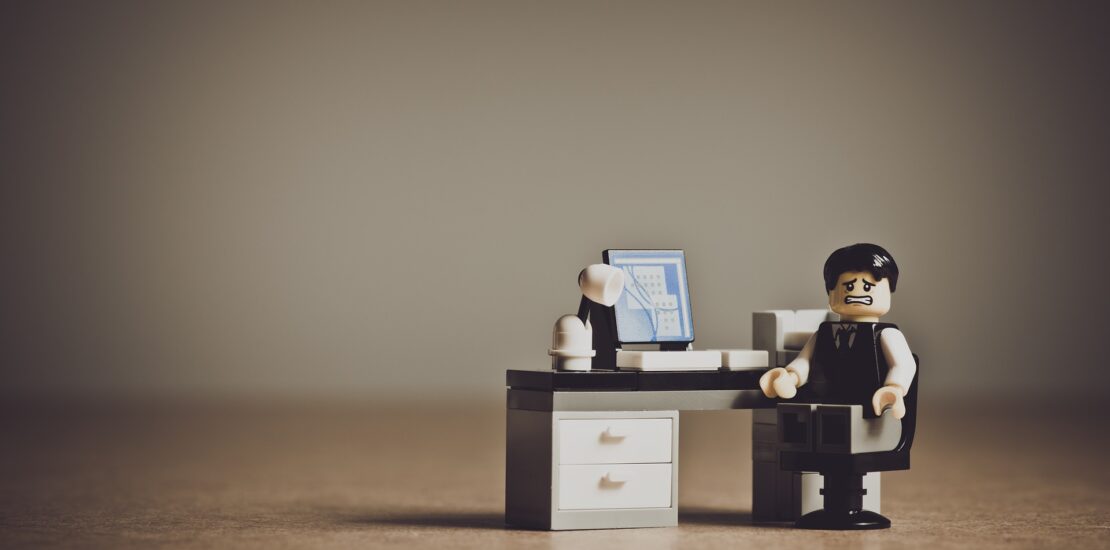
Picture: Pixabay
[i] World Health Organization (2014). WHO | Mental health: a state of well-being. [online] Who.int. Available at: http://www.who.int/features/factfiles/mental_health/en/ [Accessed 26 Jul. 2017].
[ii] Macmillan, A. (2017). Why Instagram Is the Worst Social Media for Mental Health. [online] Time.com. Available at: http://time.com/4793331/instagram-social-media-mental-health/ [Accessed 26 Jul. 2017].
[iii] Curran, J. (2002). Media and Power. 1st ed. London: Routledge, p.79.
[iv] Gilbert, G. (1997). Adam Smith on the Nature and Causes of Poverty. Review of Social Economy, 55(3), pp.273-291.
[v] Sagioglou, C. and Greitemeyer, T. (2014). Facebook’s emotional consequences: Why Facebook causes a decrease in mood and why people still use it. Computers in Human Behavior, 35, pp.359-363.
[vi] Royal Society of Public Health (2017). Instagram ranked worst for young people’s mental health. [online] Rsph.org.uk. Available at: https://www.rsph.org.uk/about-us/news/instagram-ranked-worst-for-young-people-s-mental-health.html [Accessed 26 Jul. 2017].
