- 31/07/2017
- Category: Commentaries
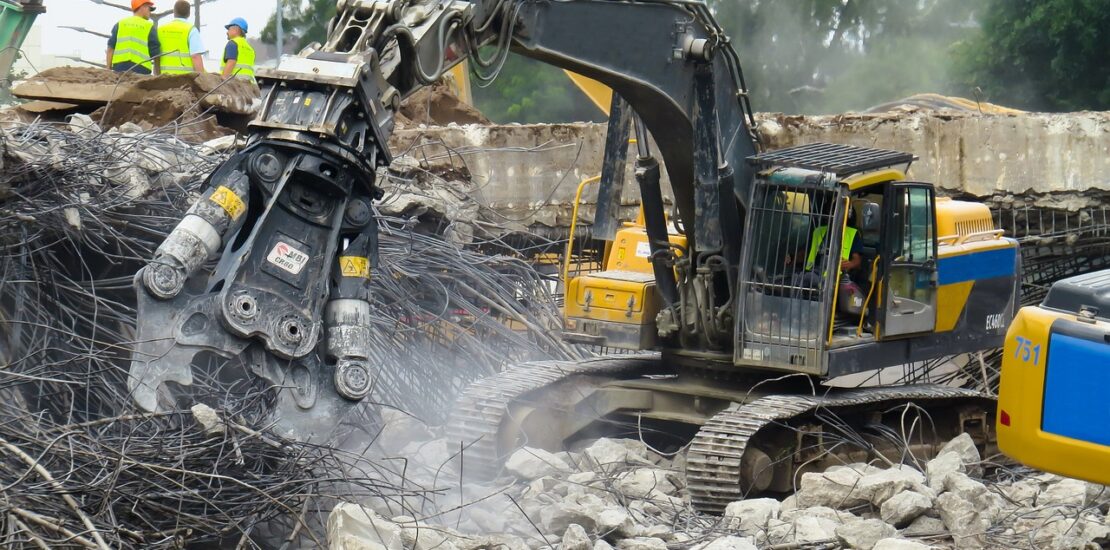
UNISDR (United Nations Office for Disaster Risk Reduction) defines disaster as a serious disruption of the functioning of a community or a society at any scale due to hazardous events interacting with conditions of exposure, vulnerability and capacity, leading to one or more of the following: human, material, economic and environmental losses and impacts. There were 327 disasters events, 191 of which were natural catastrophes, and 136 were man-made in 2016. The impacts of natural disasters continue to threaten countries around the globe. In many parts of the world, disasters caused by natural hazards such as earthquakes, floods, land-slides, drought, wildfires, tropical cyclones and associated storm surges, tsunami and volcanic eruptions have taken a heavy toll in terms of the loss of human lives and the destruction of economic and social infrastructure.[i] According to the latest sigma study of Swiss Re, insured losses from disasters worldwide increased by 42% from $38bn in 2015 to $54bn in 2016.[ii] There were about 8,700 people were killed by natural disasters in 2016.[iii] By incorporating disasters management policies and realization through application of information technology tools and devices, the impacts of natural disasters can be reduced.[iv]
The role of technology in disasters management is to connect, inform, and ultimately save the lives of those impacted by disasters. A rapid access and sharing of accurate, integrated information is critical for governments, rescue agencies and communities to make life-saving decisions and effectively co-ordinate disaster responses. Though it is not possible to completely avoid the natural disasters, but the sufferings can be minimized by creating timely awareness of the likely disasters through early warning system. In recent years, countries are continually improving their national emergency and early warning capabilities, and federal governments often defer to their states, provinces, or territories for the choice of the systems to adopt. Indonesia, as the top 5 countries that are most frequently hit by natural disasters over the last decade (2005-2014)[v], has adopted new technological tools to tackle disasters.[vi] Indonesia’s national disaster management agency, Badan Nasional Penanggulangan Bencana (BNPB), has recently launched the new InAWARE version 6 system, based on Pacific Disaster Centre (PDC)’s DisasterAWARE™ platform, also funded by USAID. InAWARE provides critical information to the country’s disaster managers with accurate, real-time information about multiple hazards; allowing decision makers to prepare for and respond to hazards more quickly and effectively, before disaster strikes. The InAWARE system upgrade also includes significant enhancements from project partners Humanitarian OpenStreetMap (HOT) and PetaBencana.Id.[vii]
Technology enables responders to coordinate rescue missions and work efficiently from the minute they arrive in a disaster zone.[viii] Governments, agencies, and communities use gazetteers to reference and integrate important information for shared situations awareness. Gazetteers hold valuable information for disaster management agencies, therefore an online system to make this rich geospatial information source completely accessible, interoperable and time-efficient is needed for evidence-based decision making. Moreover, social networking websites, such as Twitter and Facebook, provide rich source of information from which disaster managers and emergency response agencies can obtain real-time awareness of developing situations.[ix] By combining social media updates and well-managed gazetteers, informal ‘crowd-sourced’ information can be rapidly referenced, organized, and integrated with formal information providing an up-to-date picture of what is happening on the ground. [x] Through application of information technology tools, we can minimize the sufferings by developing a suitable warning system, disaster preparedness and management of disasters.[xi] A part from the technology advancements in disaster mitigation and response, we need to sustain and strengthen out disaster management efforts and better prepare for emergency situations to save lives and make our communities safer, stronger, more resilient. Besides that, it is necessary for having a clear knowledge of specific hazards and emerging disasters related to climate change, as well as methods, tools, standards and systems.[xii]
Picture: Pixabay
[i] The Masterbuilder: India’s Premier Construction Magazine. (2017). ‘Role of Information and Communication Technology in Natural Disaster Management in India.’ Available at: https://www.masterbuilder.co.in/role-information-communication-technology-natural-disaster-management-india/ [Accessed: 7 July 2017]
[ii] Seekings, Chris. (2017). ‘Global disaster events resulted in 54bn of insured losses in 2016.’ Available at: http://www.theactuary.com/news/2017/03/global-disaster-events-resulted-in-54bn-of-insured-losses-in-2016/. [Accessed: 7 July 2017]
[iii] Riley, Charles. (2017). ‘Natural disasters caused $175 billion in damage in 2016.’ Available at: http://money.cnn.com/2017/01/04/news/natural-disaster-cost-insurance-2016/index.html. [Accessed: 7 July 2017]
[iv] Liu, Zhi and Kaoru Ota. (2017). ‘Smart Technologies for Emergency Response and Disaster Management.’ Available at: https://books.google.co.id/books?id=Z_YoDwAAQBAJ&pg=PA2&lpg=PA2&dq=The+changing+trends+have+opened+many+scientific+and+technological+resources+to+reduce+disaster+risk.&source=bl&ots=-GGkHE-WcT&sig=Q_uCkJeTbpc39_VFdRR6RUsX0n0&hl=id&sa=X&ved=0ahUKEwiTzOSOz7LVAhXBKY8KHTvwDWoQ6AEIJTAA#v=onepage&q=The%20changing%20trends%20have%20opened%20many%20scientific%20and%20technological%20resources%20to%20reduce%20disaster%20risk.&f=false [Accessed: 11 July 2017]
[v] Center for Research on the Epidemiology of Disasters. (2016). ‘Annual Disaster Statistical Review 2015: The Numbers and Trends.’ Available at: http://reliefweb.int/report/world/annual-disaster-statistical-review-2015-numbers-and-trends. [Accessed: 11 July 2017]
[vi] OECD. (2011). ‘Technology to manage natural disasters and catastrophes.’ Available at: https://www.oecd.org/sti/outlook/e-outlook/stipolicyprofiles/newchallenges/technologytomanagenaturaldisastersandcatastrophes.htm. [Accessed: 11 July 2017]
[vii] PDC. (2017). ‘Indonesia unveils new technology to avert disasters, responding faster and more effectively.’ Available at: http://www.pdc.org/news-n-media/pdc-updates/2017-Indonesia-National-Disaster-Risk-Reduction-Day/ [Accessed: 11 July 2017]
[viii] Holdeman, Eric. (2014). ‘Technology Plays an Increasing Role in Emergency Management.’ Available at: http://www.govtech.com/em/training/Technology-Increasing-Role-Emergency-Management.html. [Accessed: 21 July 2017]
[ix] CSIRO. (2012). ‘All Hazards: Digital Technology & Services for Disaster Management.’ Page 12. Available at: http://www.crcsi.com.au/assets/Resources/48098b8b-27fb-447d-a5d6-f5b88396bb16.pdf [Accessed: 21 July 2017]
[x] CSIRO. (2012). ‘All Hazards: Digital Technology & Services for Disaster Management.’ Page 8. Available at: http://www.crcsi.com.au/assets/Resources/48098b8b-27fb-447d-a5d6-f5b88396bb16.pdf [Accessed: 21 July 2017]
[xi] Vyas, Tulsi, Aneri Desai. (2007). ‘Information Technology for Disaster Management.’ Available at: http://www.bvicam.ac.in/news/NRSC%202007/pdfs/papers/st_230_03_02_07.pdf [Accessed: 21 July 2017]
[xii] CSIRO. (2012). ‘All Hazards: Digital Technology & Services for Disaster Management.’ Page 2. Available at: http://www.crcsi.com.au/assets/Resources/48098b8b-27fb-447d-a5d6-f5b88396bb16.pdf [Accessed: 21 July 2017]
