
- 23/05/2017
- Category: Commentaries
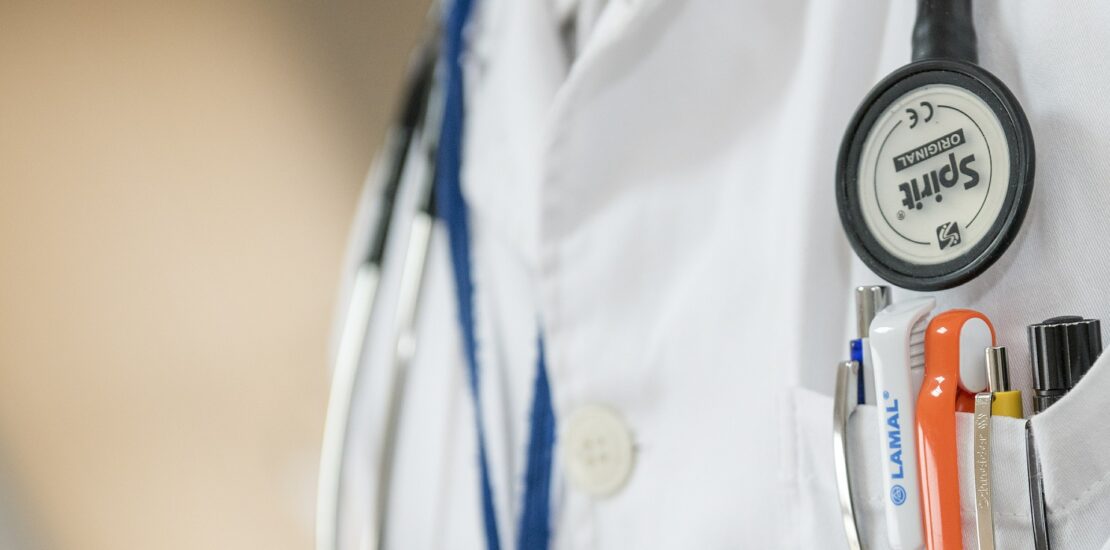
Health is arguably one of the most important aspects of our life. Mistreatment caused by inadequate management of health could result in the hospitalization of 30 to 50 percent patient who already suffered from this kind of chronic condition.[i] This condition can be prevented by having some early detection and monitoring which, with the help of technology, could be manifested in the form of health monitoring application planted in our smartphone. This application could be equipped with some sensors embedded in users’ body. This kind of technological development arguably could revolutionize health management, as it becomes more effective and efficient.
Nowadays, health management sector is challenged both by the increasing costs of medical services and the number of elder generations. Older adults with chronic diseases need a long-term and continuous monitoring to detect any negative symptoms regarding their health condition, as early as possible. The number of elders who are 65 years of age and above is predicted to be significantly increased in the next 20 years, from 40 million older adults in 2010 to 72 million in 2030, in the United States alone.[ii] In consequences, there needs to be a proper management of health for everyone.[iii] The evolution of virus and bacteria to become more resilient also contribute to the need of having a good system of health detection.
A lot of researches and studies have been focused on achieving the ease of health treatment process, to get to the real-time and online-based platform. It will be possible in the future that smartphone applications could diagnose the symptom of a more complex disease. Today, there have been several breakthroughs made in the area of health services in the form of applications, like mHealth, CodeBlue, and the program that uses a real doctor, onlineClickMedix. mHealth is an application that records the patients’ condition and calculates the need of the patient automatically (without the help of operator), through the sensor embedded in the patient’s body. This system uses the smartphone as the media to give the information to the patient.[iv] ClickMedix in the other hand is an application that sends information obtained from the sensor on patient’s body to be examined directly by the doctor in charge. All of the given examples of use is under one primary goal, to provide information about the health status and to give a warning if any small changes happen. Moreover, a 24/7 standby system is also chief to keep the stability of patient’s health. Such system does not only monitor, but also diagnose the diseases or any symptoms from the data collected. This system erases the need of the patient to interact actively with the doctor or nurse.
The recent smartphone technology could perform a complete task such as calculate the heartbeat, measure body temperature, record menstruation cycle, and so other issues. In the future, this can be further developed into a smartphone’s technology that will be able to provide information about the disease’s detail, and symptom from the data collected from more sophisticated fashion. It is not impossible to achieve the data without the need of direct contact with bodily fluids (saliva, blood, mucus, etc.) inside the patient’s body. When there is no direct contact, the interaction becomes more secure and comfortable to the patient.
In the future, preventive action in the form of early warning system of certain symptoms could be customized. As an example, a patient that has a history of some particular illness could personalize the application so that they will be able to monitor their health. It will reduce the risk of delayed treatment and increase the awareness that for the health that is not maintained well, then that is a multiplier factor by zero.
Looking at all the potentials, we can start to wonder, how far are we from this future? There are of course several apparent setbacks from this technology. First is on the accessibility of the technology. It is very apparent that the technology is not really for everyone, yet, looking at the obvious digital gap existing worldwide. According to a study by We Are Social, about 50% of people nowadays have access to the internet, leaving the other half behind.[v] The other half who are not yet penetrated by the internet are mostly from developing countries who are generally still entangled with serious health problems. We have to narrow down the gap and start including people with less access to technology. Secondly, the issue of data privacy persists. The data collected on the technology are personal data which tells what is going on in a person’s body. Such data is indeed private and requires protection. We do not want to let the data be abused and used without the consent of the individuals. Serious privacy threats like what happened recently in two hospitals in Indonesia,[vi] for instance, only reminded us once again that health data are still very vulnerable. Hence, we still have a lot to have before the technology can take effect. Serious consideration of privacy and accessibility has to be put forward as well.
picture: pixabay
[i] Crilly, Patrick, and Vallipuram Muthukkumarasamy. (2010). Using Smart Phones and Body Sensors to Deliver Pervasive Mobile Personal Healthcare. [online]. School of Information and Communication Technology, Griffith University, Gold Coast, Australia. Available at: https://research-repository.griffith.edu.au/bitstream/handle/10072/37264/68839_1.pdf%3bsequence=1. [Accessed 27 April 2017]
[ii] Joe, Jonathan, and George Demiris. (2013). Older Adults and Mobile Phones for Health: A review. Journal of Biomedical Informatics, [online] Volume 46(5), pp. 947-954. Available at: http://www.sciencedirect.com/science/article/pii/S153204641300083X. [Accessed 28 April 2017]
[iii] Stankevich, Evgeny, Ilya Paramonov, and Ivan Timofeev. Mobile Phone Sensors In Health Applications. [online] P. G. Demidov Yaroslavl State University Yaroslavl, Russia. Available at: http://www.cs.odu.edu/~cs495/Papers/app-006.pdf. [Accessed 28 April 2017]
[iv] Nanhore, Shenal D, and Mahip M Bartere. (2013). Mobile Phone Sensing System for Health Monitoring. International Journal of Science and Research (IJSR), [online] Volume 2(4). Available at: https://www.ijsr.net/archive/v2i4/IJSRON120136.pdf. [Accessed 30 April 2017]
[v] Edu Birdie. (2022). Digital in 2017: A Global Overview. [Online] Available at: https://angela-broadwater90-dot-yamm-track.appspot.com/2IB9HaLYrEWxazuJGZhtD68slHBsEFZJ-FD4wSXeDhn0D3ObaggEaVCF9O1idKBAeTFHJQoWxtOYnH1yWxTsPlux88hDdXOIuYIzZzxA5tSQiJVdhS3DV-ThgfsOHdsF0fIyKoGskdARhu0wCTLtQSpm8kIa4QVH1iCLOkPcxnM0Vbzcj1BcVBrZ8zeHiu8ehz4Loqlm0y5UPlmE [Accessed 30 August 2022]
[vi] Nangoy, F., Da Costa, A., and Meijer, E. (2017). Two major Indonesian hospitals attacked in ransomware storm. [Online] Reuters. Available at: http://www.reuters.com/article/us-cyber-attack-indonesia-idUSKBN1890AX [Accessed 4 May 2017]
