- 18/04/2017
- Category: Commentaries
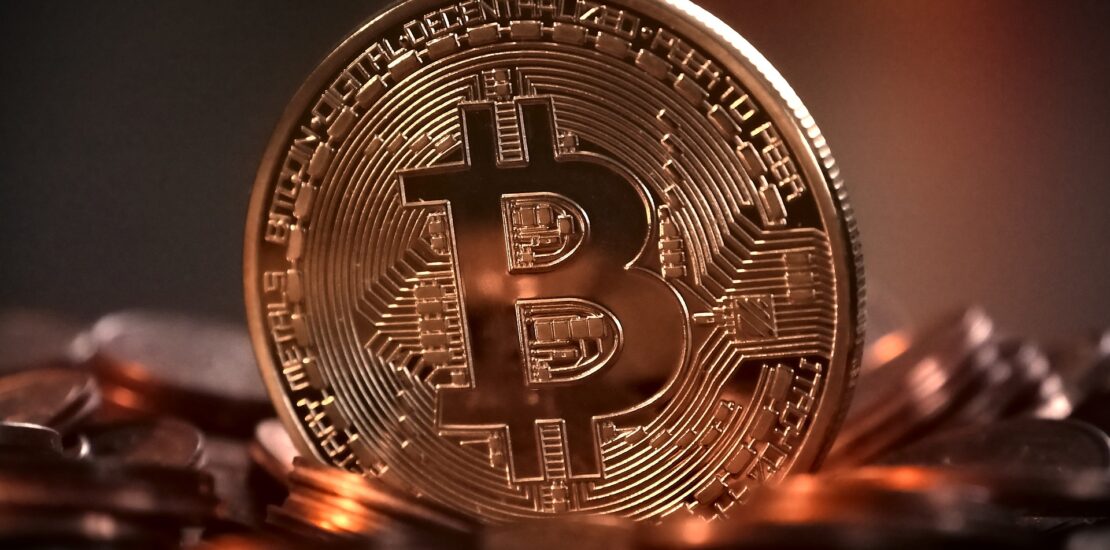
Foreign currencies are often seen as a burden for overseas students to pay their tuition fees. Education payment can become unnecessarily expensive and time-consuming, mainly because of the unequal exchange rate and complex bureaucracy. Currently, payment services on education can take more than two weeks and cost hundreds of dollars. Remittance companies such as the Western Union may not have to be the only choice for overseas students to pay their tuition fees, as the invention of digital currencies such as crypto-currencies can solve this problem as well.
Although it was initially associated with illicit online activities, such as illegal drugs and guns dealer, the online anonymous ‘crypto-currency’ has perceived as a success over the past few years. Bitcoin is the first implementation of a concept called ‘crypto-currency,’ which was first described in 1998 by Wei Dai on the cypherpunks mailing list, suggesting an idea of a new form of money that uses cryptography to control its creation and transactions, rather than a central authority. Bitcoin is a consensus network that enables a new payment system by using the completely digital money. It is the first decentralized peer-to-peer payment network which is powered by its users with no central authority or middlemen. From a user perspective, Bitcoin is pretty much like cash for the Internet.[i]
There are several numbers of universities that have started to accept the digital currency as an alternative payment for tuition fees. The first university to accept Bitcoin was the University of Nicosia, a private university in Cyprus.[ii] In 2013, this university announced that they would start accepting Bitcoin as an alternative payment for a specific master course. At first, this idea to use Bitcoin was simply to promote their new master course, but since then, they have expanded this payment method to another course. In the United Kingdom, the University of Cumbria also offers their student to use Bitcoin as a payments method, but limited for the students who take “Currencies and Sustainable Exchange” course. Nevertheless, University of Cumbria has become the first public university in the UK to experiment with accepting bitcoin as tuition payment for its students. [iii]
Since then, the trend has spread across the Atlantic to the US King’s College in New York City, a private liberal arts school that was founded in 1938. King’s College stated that they see the use of Bitcoin as a part of freedom of speech and that their decision to allow their students to pay with bitcoin was based on the Bill of Rights and the Constitutions which aimed at empowering citizens.[iv] They expected that higher education institutions around the world would follow this revolutionary step.
According to Dr. Christis Vlachos, a member of The Council of the University of Nicosia and the University’s Chief Financial Officer, there are three reasons behind the decision to accept Bitcoin as tuition fees payment. First, the Bitcoin payment will ease certain practical payment difficulties the university has encountered with their students. They projected Bitcoin would eliminate 5-10% transaction fees charged when students pay tuition via credit card, as Bitcoin third party providers do not ask transaction fees.
Second, it is a potential growth area for the Cyprus economy. In this context, University of Nicosia wants to invest significant intellectual capital in building their capabilities the in digital currency that could become a resource for the country. Third, the needs to develop new industries by creating a framework that will render Cyprus as a hub for Bitcoin trading, processing, and banking that may create an entirely new industry and help Cyprus’ economic recovery.[v]
Bitcoin has also been accepted in many developed countries, such as US, Canada, Australia, EU, and the UK. However, due to the lack of infrastructure and supra-structure aspects, students in several developing countries might not experience it shortly. Moreover, the skeptical stance in viewing Bitcoin as an illegal payment still actively comes out from several countries such as China, India, Russia, and Sweden. These countries suspect Bitcoin’s volatility and decentralized character as a potential threat to the current financial system and vulnerable to become a payment tool in illicit activities like drug dealing and money laundering.
Looking at the revolution of college payment using digital currency like Bitcoin, we can see that new ways are being introduced with the intention to ease the hurdles in higher education nowadays, especially the payment. Bitcoin may not be the ultimate way out in this scene as many things should be revisited before eventually adopting the currency, but it does promise us the possible future where more people are finding ways – innovative ways – in cutting down the problems of tuition fees of overseas students. As the world is becoming way more integrated, more people move around the globe to obtain the education. To better cope with the increasing flow of international mobility on students, there indeed should be a manner to accommodate this upcoming trend. One thing to be reminded is also the security aspect of this innovation. This is also to respond the concern of certain countries on ensuring the security of the possible financial transactions occurring shortly. With all the ease and simplicity, they all come with a cost.
Picture: Pixabay
[i] Bitcoin. Frequently Asked Questions. [online] Available at: https://bitcoin.org/en/faq#who-created-bitcoin [Accessed 16th April 2017]
[ii] Mashable Asia. (2013). European University Accepts Bitcoin as Tuition Payment. [online] Available at: http://mashable.com/2013/11/21/bitcoin-tuition-payments/#wBNI51UNsmqA [Accessed 15th April 2017]
[iii] RT Question More. (2014). World first: UK Public University to Accept Bitcoin. [online] Available at: https://www.rt.com/news/cumbria-bitcoin-university-fee-977/ [Accessed 15th April 2017]
[iv] Linshi, Jack. (2014). King’s College Become First US School to Accept Bitcoin. [online] Time.com. Available at: http://time.com/2871764/kings-college-accept-bitcoin/ [Accessed 15th April 2017]
[v] Mourdoukoutas, Panos. (2013). Bitcoin Gets An Endorsement For College Tuition Payments and A MOOC. [online] Forbes. Available at: https://www.forbes.com/sites/panosmourdoukoutas/2013/11/21/bitcoin-gets-an-endorsement-for-college-tuition-payments-and-a-mooc/#639751f84a66 [Accessed 16th April 2017]
