- 17/04/2017
- Category: Commentaries
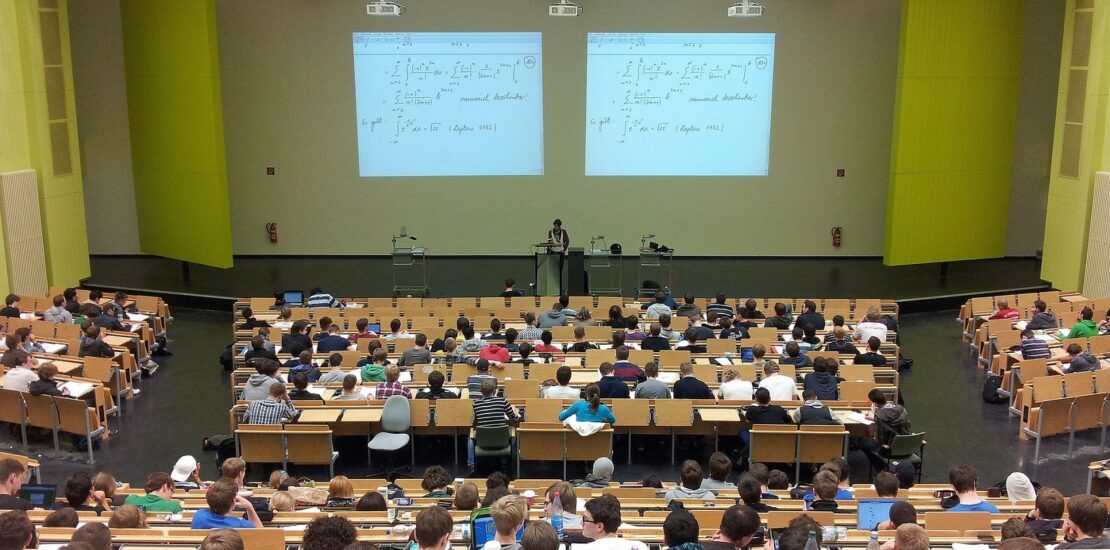
Last year, Paul Ryan ignited a controversial discussion on the Internet through his articles in Business Insider and The Conversation. The articles argued on how the penultimate presentation tools, Microsoft PowerPoint, are making student’s stupid and professor boring. Relying on questioning 105 computer science and engineering students in the first semester of 2015,[i] as well as two research publications from Innovative Higher Education[ii] and Canadian Medical Association,[iii] Ryan argued PowerPoint slides are toxic to education for three main reasons. First, slides discourage complex thinking because they encourage instructors to present complex topics (i.e. ambiguous situation) using bullet points, slogans, abstract figures and simple tables with minimal evidence. PowerPoint discourages in-depth analysis of the complex situation and gives students the illusion of clarity and understanding. Second, using PowerPoint make students come to a conclusion that a course is just a set-of-slide. PowerPoint deters teachers to present realistic complexity and ambiguity because they will be labeled as being unclear and not providing proper notes. Third, slides discourage reasonable expectations because students expected the slides to contain every detail necessary for projects, tests, and assignments. Less expectation means student won’t explore other detail that is not on the slide. Also, Ryan argued despite its apparent disadvantage; PowerPoint is still popular at school because they measure satisfaction at class but not the learning impact itself.[iv]
Ryan is not the only person that thinks PowerPoint is killing students’ creativity and critical thinking. Andrew Smith, the author of Moondust, shared the same perspective. Smith argued the best, and possibly the finest lecture that he has ever had is with Thomas Baldwin, and it’s about Sartre’s Being and Nothingness.[v] Looking at the topic, the lecture was supposed to be the dullest event in Christendom, but Baldwin delivered the lecture simply by writing a proposition on the blackboard and then facing the student, gazing them for a moment and then turning and smiling during his explanation which then made the lecture memorable. According to Smith, blackboard and simple lecturing style like Baldwin did is proven to be more efficient than tons of slides with punchy Word Arts.
Ryan and Smith arguments on this matter are interesting to be discussed because they are challenging the current paradigm on how the educational world perceives technology as a better medium of learning. The obsession through this Promethean believes, which put great emphasis on ICT as an answer to increase learning capacity, are shared across the free world. According to Gartner, a forefront technology Think-Tank, annual global spending on educational technology in schools has been valued at £17.5bn.[vi] This big spending on educational technology somehow has little or even zero correlation with the better learning experience or improve overall school grades. OECD reported that students, who use computers frequently at school, as indicated in student to computer ratio, get worse results compared to students who use computers moderately at school.[vii] There are no noticeable improvements in reading, mathematics or science in countries that invested heavily in information technology such as Australia, Denmark, and Sweden. On the other hand, high achieving school systems such as South Korea and Shanghai in China have lower levels of computer use in school.
The OECD report is indeed in line with Ryan and Smith arguments, but it is not to be used as an “excuse” to avoid using technology altogether. The report indicated that schools need to find a more practical approach on how technological advancement could leverage overall learning experience and performance. In seeking a new effective approach, schools need to dig deep into studies about the prior effective use of technology in education. In the current era, there are several research findings on technology and its correlation with student achievements at schools. Starting from pre-millennial works of Kulik’s Meta-Analysis, Sivin Kachala Review and ACOT[viii] to the most recent one from Dhamani and Youseff[ix], and Craig and Amernic,[x] all have more or less the same conclusion. The core problem of a setback in education is not solely because of lacking or abundant technology but is mostly related to the effective teaching strategy from the teacher and lecturer. PowerPoint and other technological means can be proven effective as long as it encourages students to think beyond slide bullets. Teachers can record their favorite sound effects and then put it on the slides an intro to their narrative during the class. The research did show an aggregate increase in students’ performance when using technology, but it depends on the active role and participation of teaching facilitators. Therefore, the role of humanity in improving the learning experience and education is inevitable, and technology is only suitable as a medium to enhance teachers’ gazes and smiles during the vibrant class session.
picture: Pixabay
[i] Ryan, P., (2015). Universities Should ban PowerPoint — It Makes Students stupid and Professors Boring.[Online] Business Insiders. Available at: http://www.businessinsider.com/universities-should-ban-powerpoint-it-makes-students-stupid-and-professors-boring-2015-6?IR=T&r=US&IR=T
[ii] Craig, R and Amernic J., (2006). PowerPoint Presentation Technology and the Dynamics of Teaching. Innovative Higher Education. Vol 31. No. 3. Pp. 147-160.
[iii] Koh, G and Wong, M., (2008). The Effects of Problem-Based Learning During Medical School on Physician Competency: A Systematic Review. Canadian Medical Association. Vol 178. No 1. Pp. 34-41
[iv] Ryan, P., (2015). Universities Should ban PowerPoint — It Makes Students stupid and Professors Boring.[Online] Business Insiders. Available at: http://www.businessinsider.com/universities-should-ban-powerpoint-it-makes-students-stupid-and-professors-boring-2015-6?IR=T&r=US&IR=T
[v] Smith, A., (2015). How PowePoint Is Killing Critical Thought. [Online] The Guardian. Available at: https://www.theguardian.com/commentisfree/2015/sep/23/powerpoint-thought-students-bullet-points-information
[vi] Coughlan, S., (2015). Computers ‘Do Not Improve’ Pupil Results, Says OECD. [Online] BBC. Available at: http://www.bbc.com/news/business-34174796
[vii] Coughlan, S., (2015). Computers ‘Do Not Improve’ Pupil Results, Says OECD. [Online] BBC. Available at: http://www.bbc.com/news/business-34174796
[viii] Schahter J., (1999).The Impact of Education Technology on Student Achievement. [Online] Milken Exchange on Educational Technology. Available at: http://www.mediachalk.com/ImpactofET.pdf
[ix] Youseff, A and Dahmani, M., (2008). The Impact Of ICT on Student Performance In Higher Education: Direct Effects, Indirect Effects And Organisational Change. RUSC. Vol 5. No. 1. Pp- 45-56
[x] Craig, R and Amernic J., (2006). PowerPoint Presentation Technology and the Dynamics of Teaching. Innovative Higher Education. Vol 31. No. 3. Pp. 147-160.
