
- 28/01/2017
- Category: Commentaries
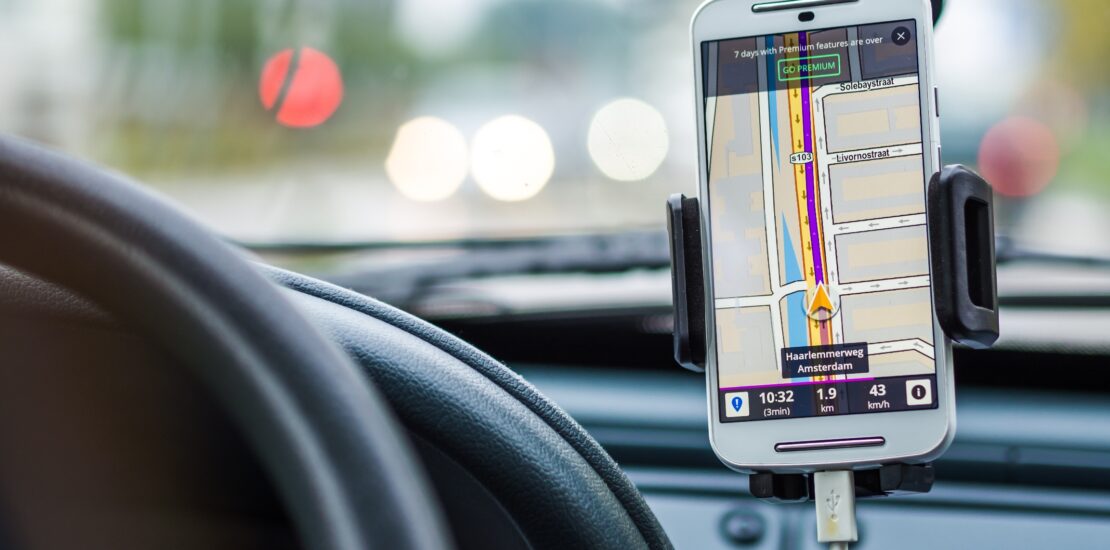
If you are planning to move from a rural area to a more crowded cosmopolitan city for a better life and salary, navigations apps should be on your survival kit list. Among the navigation apps that you can download for free on your smartphone, there are two apps that owns almost 80 percent of the shares and are most downloaded by its users. These apps are the famous Google Maps and Waze. Both apps are owned by the same giga-tech company, Google. Even though both apps are attached to traditional mapping and traffic information, Waze offers a deeper and more drilled down detail about traffic; not only from satellite imagery but also from the community who contributes information on traffic conditions.
Users, especially who drives by themselves, are more clung towards Waze for several reasons. While Google Maps might bring you to your destination and offers alternative transportations, it might not tell you how much traffic you will get. Chances are, you might get stuck in traffic along the way, especially from sudden construction works or road shifting due to state interventions or non-violent protests. Waze is not only able to inform users on these functions, but it is also capable on warning users if a police officer is on their way. Its versatility is thanks to a constant input by its users, which meant bulks of direct information are sent on a real-time basis. Its crowdsourcing ability from several social platforms, such as Facebook (in which you can find your Facebook friends on Waze), helps this app to gain paramount information in the sense of real-time traffic data[i].
The precise system in Waze that are built from community contribution is not without its loopholes. One aspect that remains problematic is the app’s feature to identify the location of traffic officers. Initially, this feature aims to identify and locate speed traps, which if violated might lead to a hefty fine for the driver. A speed trap is identified as a type of speed bump because it will make users incapable to drive above the speed limit to arrive at their destination on time. However this feature, to some extent, jeopardizes the community as a whole. Police officers won’t be able to effectively do their job if their presence can be known by users who plans to avoid them in order to speed up or even break other laws. For example, if an underage and unlicensed driver opens Waze and finds out that police officers are on the upcoming road, he or she might take a detour and take another route. During the detour, the young driver will not only endanger himself but also everyone in that area, which was all thanks to Waze. In an economical and common sense, the unlicensed young driver will prefer to open Waze rather than pay for hefty fines.
Since this loophole could be exploited by criminals and reckless citizens, several police officers have called to drop the features from the apps. Take the example of Sgt. Javier Ortiz, president of the Miami Fraternal Order of Police, who mentioned that disclosing the locations of these police speed traps “puts us at risk, puts the public at risk, because it’s going to cause more deadly encounters between law enforcement and suspects”[ii]. The officer also mentioned that Waze might help criminals to conduct crime, just like the case of NYPD officers who were ambushed and killed in their car[iii], even though there are no evidence that mentions the use of Waze by the criminals in this case. Police officers in Miami have take measurements to influence Waze to drop this feature by downloading the app for themselves and then using it to flood the database with false locations of speed traps. Seeing the potential conflicts around its apps, Google did not take any interest in responding to this issue. Waze spokesperson Julie Mossler said the app is designed to improve traffic safety, because notifying the user about emergency vehicles on the road, including police cars, would encourage speeding drivers to slow down.[iv] She added that users tend to drive more carefully when they believe law enforcement is nearby. It requires a long process and hard evidence to pin point Waze as a tools for felony.
The showdown between Waze and several police officers is forgetting the core principal in social interaction, which are incentives. Whether the users will use Waze to avoid speed traps or to drive carefully depends on how much incentives they will get. It is common sense for humans in social context to avoid loss and pick decision that favors them the most. The young unlicensed driver will definitely choose to open Waze and avoid police officers, rather than take a public transportation since it is easier to drive your own car. In this case, Waze and the police have to cooperate and create a reasonable incentive for users to avoid the misuse of the app. Waze can enhance its system with several measurements that make sure every user have to input their IDs and driving license number when they register for the app, for example. This could help the police in cooperating with Waze to monitor which car has a tendency to speed drive and avoid traffic officers. Waze and the police also have to come up with reasonable incentives for registered users that do not avoid speed traps and break traffic laws.
picture: pexels.com
[i] Korosec, K (2016). New Waze Feature Helps Drivers Avoid Speeding Tickets. [online] Fortune. Available at: http://www.citethisforme.com/harvard-referencing. [Accessed 23rd January 2017].
[ii] NBC Miami, (2015). Miami Police Fight Back Against Waze App. [online] Available at: http://www.nbcmiami.com/news/local/Miami-Police-Fight-Back-Against-Waze-App-290290001.html. [Accessed 23rd January 2017].
[iii] Clarke, D. and Thompson, J (2015). How Google is endangering police officers. [online] CNN. Available at: http://edition.cnn.com/2015/04/23/opinions/clarke-thompson-google-waze-danger/. [Accessed 24th January 2017].
[iv] Smith, D. (2015). Police officers in Miami are intentionally trying to ruin Google’s traffic crowdsourcing app — here’s why. [online] Business Insider. Available at: http://www.businessinsider.co.id/police-officers-vs-waze-google-traffic-crowdsourcing-app-2015-2/#s6vSiv02iqgoHb7X.99. [Accessed 24th January 2017].
