- 12/01/2017
- Category: Commentaries
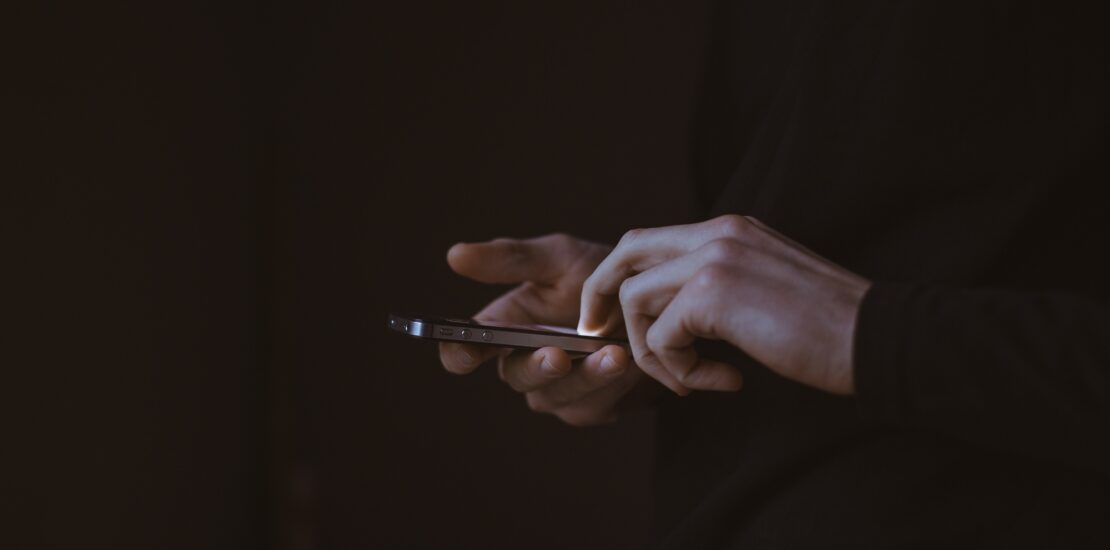
We have seen a lot of changes from the so called digital revolution, the very much renowned fourth revolution. It has showcased a successful profound penetration in every corner of humans’ lives. As what have been largely covered, the digital revolution occurs in three sectors; commerce, citizenship, and lifestyle. Commerce and citizenship have majorly taken places in everyone’s life, with measurable and apparent changes it created. From e-commerce to smart city trends, and new websites utilized for public service delivery to 4G connectivity. However, lifestyle, as it happens, is quite difficult to measure. Dating, as one of the most celebrated lifestyles in the world, has apparently been penetrated by the digital revolution as well, as dating apps emerged as one of the most downloaded and frequently used apps currently. How much has dating apps transformed lifestyle in general? Are they sufficiently portraying the digital revolution in lifestyle?
The Milestones
Dating apps or online dating in general have come a long way. A decade ago, online dating is associated with a certain stigma which resonates with, for example, degrading social status, hunger for sex, and the likes. However, over the course of ten years, the stigma has dropped quite significantly. A study by the University of California Berkeley found that, among Americans, 57% of Americans with an annual household income of $75000 or more know someone who uses online dating; 40% know someone who met a spouse or partner online; 11% of American couples who have been together for ten years or less first met online; and 5% of Americans who are currently married or in a long term partnership met their partner somewhere online. In addition to that, in the United States, the use of online dating sites or mobile apps by young adults has nearly tripled since 2013, showing the very dominant role of millennials. The statistics, showcasing steady increases, reflects the preference in dating by people; using digital tools.
Specifically, online dating nowadays is dominated by two major applications, Tinder and Badoo. Tinder in particular, has gained numerous attention as the current pinnacle of online dating application, with an estimated 100 million downloads. Furthermore, in 2016, Tinder accumulated 50 million active users, with 10 million active daily users. Tinder also has 10 billion matches made and about 1.4 billion daily swipes. This striking number also adds to the assumption that more and more people are engaged to online dating. Such high numbers also reflects the intensity and high frequency of people in using the app, which in turn, reflects the shift in people’s dating habits; towards a more digitized habit.
The numbers do not stop there, as Tinder has also left a strong economic impression throughout the years. As they topped the download number in ‘lifestyle’ category in 99 countries, the app enjoys 37% year over year operating revenue growth in 2016, with 18% growth in total revenue to $316.9 million last year. Cash also increased from $173 million in the last quarter to $231 million this quarter. Specifically, the app has more than 1.6 million paid users which will continue to grow in the future. This impressive number increases the company’s reliability in the stock market, and more importantly, reflects a healthy market with strong demand, sales and a bright future. The expansions of dating apps also reached Asia, with emergence of similar apps in several Asian countries; Chinese’ Momo, Koreans’ Heartbeep, and Taiwanese’ iPair Meet Your Match. Paktor from Singapore, in particular, has attracted attentions with its vast expansion throughout Asia, and has raised more than $22 million in investment, and generated almost $10 million in revenue last year. This shows that digital dating culture has penetrated very deep, even to places with stricter and more distinct dating culture like Asian countries. Raising numbers in revenue and investment also reflect spiking demand from people; more and more people are and will keep using dating apps and sites.
The Trails
Seeing such extent of online dating, we might have been wondering on how much it has done in changing, per se, the lifestyle of people; and whether or not dating apps in general might also be representing the transformation brought by digital revolution to the lifestyle in general. Turns out, online dating has more or less left several marks on people’s lifestyle in general. Online dating platforms at least affect people in two things; mental health and crimes.
In general, psychologists suggest that Tinder is bad for mental health. The behaviours of tinder users in general are perpetuating what many says as lowered standards in dating. As people easily ‘swipe’ to choose their preferred partners, people quickly judge their potential dates from the presented photos, and if they may not be astounded by the ‘photos’, they can always swipe again tomorrow. This will result in the increase of ‘ghosting’ or cutting off communication and suddenly-disappearing behaviours. Moreover, overwhelmingly large options affect the way people make decisions, as more options equals to less decisions or selections. Furthermore, as rejections become more easily snapped, people get more aware of their physical appearances, as photos are what determining in the success of Tinder game. Some even doubt themselves and their values to others, leading to undue self-monitoring for perceived flaws and defects. Even further from that, some argue that Tinder culture may lead to a human disposability culture, as more people are easily dragged down in life when they are constantly rejected. A study shows that Tinder users were more dissatisfied with their bodies and more likely to objectify their appearances than those who did not use the app. In the future, the way people live may be ultimately judged on how they want to project themselves in Tinder. More people are going to be entangled in self-hatred culture and depression, and mental health could be severely threatened.
Sadder stories emerge from dating apps use. Dating apps are recently associated with crimes, including murder, robbery, and rapes. In the UK alone, Tinder and Grindr are linked to more than 500 crimes. Location-based dating apps enable criminals to easily locate the preys they lured. Recently an incident of rape occurred to a single mother of one who was group-raped by unknown men, and this was linked to Tinder usage. The occurrences of such crimes obviously prompted affirmative actions from the authorities as well as from society in general. For the authorities, stricter and cleverer approaches in dealing with crimes resulted from Tinder or other dating apps activities must be enforced; and for the society in general, more careful and wiser usage of the apps must be considered to avoid potential crimes in the future. The fact that dating apps may bring up threats to the user should be taken seriously as how concrete lifestyle apps may be affecting and dictating people in real life. Safety and security have then become the two affected life sectors that further emphasises the disruptions that the digitial revolution caused to people’s lifestyle.
Conclusion
As what examined above, more and more people have participated in the contemporary dating game, as it happens. The constant raise in users and revenues generated from this industry are enough to capture the nascent phenomenon. Turns out, the phenomenon take roles in shaping people’s lifestyle, as dating apps affect mental health, interhuman interactions, and crime rates, which in turn affect the ways people live. This pretty much gives us exposure to how concrete the digital revolution alters our lifestyle.
References
Dutcher, J. (2014). ‘Big data Seeks Online Love (Infographic)’. datascience@Berkeley, Berkeley School of information (Online). Available at: https://datascience.berkeley.edu/online-dating-data/. [Accessed 9 January 2016].
Smith, A and Anderson, M. (2016). ‘5 Facts about Online Dating.’ Pew Research Center (Online). Available at: http://www.pewresearch.org/fact-tank/2016/02/29/5-facts-about-online-dating/. [Accessed 9 January 2016].
BBC UK. (2016). ‘The Dating Game: Which Dating Apps Are Winning the Hearts of the World’. (Online) Available at: http://www.bbc.co.uk/news/resources/idt-2e3f0042-75f6-4bd1-b4fe-9056540c65f8. [Accessed 9 January 2016].
SMR Stats. (2016). ’45 Impressive Tinder Statistics (December 2016).’ (Online). Available at: http://expandedramblings.com/index.php/tinder-statistics/. [Accessed 9 January 2016].
Fool, M. (2016). ‘Tinder Blazes a Trail for Match to Grow.’ NASDAQ (Online). Available at: http://www.nasdaq.com/article/tinder-blazes-a-trail-for-match-growth-cm723132. [Accessed 9 January 2016].
BBC UK. (2016).
Russel, J. (2016). ‘Asian Tinder Rival Paktor Lands $10M to further Global Push with Launches in japan and South Korea. Tech Crunch (Online). Available at: https://techcrunch.com/2016/07/11/asian-tinder-rival-paktor-lands-10m-to-further-global-push-with-japan-and-korea-launches/. [Accessed 9 January 2016].
Hagan, P. (2016). ‘Swipe Fright: Tinder is bad for your mental health, say scientists.’ The Sun (Online). Available at: https://www.thesun.co.uk/news/1557116/tinder-is-bad-for-your-mental-health-say-scientists/. [Accessed 9 January 2016].
Polus, S. (2016). ‘Tinder is so last year – in 2017, dating apps are getting more selective.’ The Sydney Morning Herald (Online). Available at: http://www.smh.com.au/lifestyle/life-and-relationships/sex-and-relationships/tinder-is-so-last-year–in-2017-dating-apps-are-getting-more-selective-20170106-gtn5ch.html. [Accessed 9 January 2016].
Whitley, R. (2017). ‘What is The Link between Tinder and Mental Health.’ Huffington Post Living Canada (Online). Available at: http://www.huffingtonpost.ca/robertwhitley/tinder-mental-health_b_13981416.html. [Accessed 9 January 2016].
Stewart, N. (2016). ‘Swipe Right for Negative Self Perception, Says Research into Tinder Users.’ The Guardian (Online). Available at: https://www.theguardian.com/science/2016/aug/04/swipe-right-for-negative-self-perception-says-research-into-tinder-users. [Accessed 9 January 2016].
Blanchard, J. (2016). ‘Tinder and Grindr Dating Apps Linked to More than 500 Crimes Including Murder, Rape and Child Abuse.’ Mirror (Online). Available at: http://www.mirror.co.uk/news/uk-news/tinder-grindr-dating-apps-linked-9537441. [Accessed 9 January 2016].
Kopsa, A. (2017). ‘Police Say They Couldn’t Find the Men Who Gang-Raped This Woman While Her 2-Year-Old Watched. Then Another Woman Was Raped.’ Cosmopolitan (Online). Available at: http://www.cosmopolitan.com/politics/a8557036/taylor-hirth-gang-rape-independence-missouri/. [Accessed 9 January 2016].
Picture: pexels.com
