- 29/09/2025
- Category: Commentaries
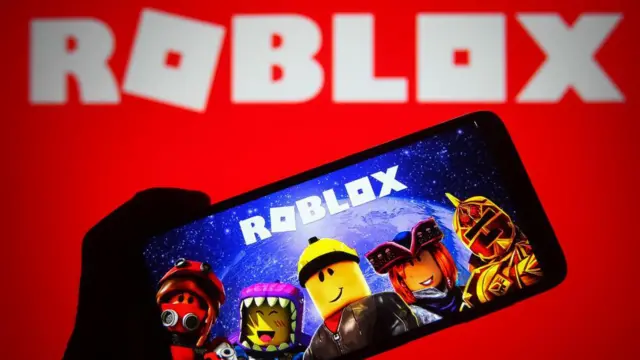
Roblox allows players to summit Mount Everest without actually doing so. Instead of physical equipment and climbing gear, all that’s needed is a device and adequate internet connection. The simulation of the real world, through the images and symbols used in Roblox, has successfully captured the attention of many young people, especially children. Simultaneously, risks also lurk behind it.
Introduction
The Roblox metaverse world has been named one of the most popular games in the world today. Roblox’s daily active users reached 111.8 million in the second quarter of 2025, an increase from 79.5 million in the second quarter of 2024.[1] From the total number of Roblox users in 2024, 56%, or the majority, were under 16 years old.[2] A survey by Bespoke Market Intelligence[3] revealed that compared to other platforms, such as Facebook, TikTok, Instagram, and Fortnite, users preferred Roblox for attending virtual concerts, virtual school, and even trying out items from stores virtually.
The existence of metaverses like Roblox has the potential to reconstruct the boundary between reality and a simulation of reality, known as hyperreality. Hyperreality, as coined by Jean Baudrillard, is a pseudo-reality created by technology through the use of symbols or images.[4] The interactive design developed by Roblox within its platform is slowly replacing the human experience of reality with simulations confined to virtual models.
Roblox: Between Limitless Creativity and Lurking Risks
Creativity, social interaction, and even its potential as a learning tool are some of the positive aspects emerging from Roblox’s use. Roblox’s in-game features, such as Roblox Studio, allow users to explore their creativity by designing and building their own games. Furthermore, other features like live chat and group activities allow users worldwide to interact and collaborate socially.[5] The social interaction Roblox offers through its platform is a strong factor influencing user satisfaction and continuance intention.[6] Furthermore, Roblox is considered a potential alternative learning medium for teaching coding to children.
The massive popularity of Roblox games, which has successfully competed with other popular platforms, cannot be separated from the ecosystem within the platform, which strives to transform complex human experiences into virtual forms. In this case, Roblox is not only a game that presents simulations of the real world—such as sports, running a business, fighting enemies, and even attending concerts together—but has succeeded in becoming an online social place that brings together aspects of community, culture, creativity, education, and commerce in a complete way.[7] To compare it, Roblox is a platform that combines YouTube, Epic Games, Facebook, and Lego, where this combination positions Roblox uniquely in the gaming world to become a technology company with the largest virtual economy.[8]
Negative aspects also exist within Roblox, including consumerism, violence, and even sexual harassment, which pose a dilemma, particularly for parents, about allowing their children to play Roblox. The game’s user-generated virtual worlds (UGVWs) model creates opportunities for games that are dangerous for children, such as Nazi roleplay games and gambling-like mechanisms.[9] The platform themselves utilize AI and machine learning technology as well as human resources to moderate UGC, but this effort still needs a lot of development because dangerous content continues to emerge. Moreover, the variety of badges and items Roblox has developed for use in the game is a key feature in retaining active players.[10] These items are available for free or for a fee using Robux, the virtual currency used in Roblox, which has recently raised concerns about consumer behavior in children. The presence of predators in Roblox has also raised concerns about sexual abuse among users. The hyperreality created by Roblox not only has the potential to shape consumer behavior but also disrupts self-identity, as users are unable to differentiate between the real world and simulation.
Platform Responsibility to Construct Safer Place for Children
Roblox platform managers are responsible for providing a safe environment and community for users, especially children. According to Government Regulation No. 17 of 2025 concerning the Governance of Electronic Systems for Child Protection, a child is defined as anyone under 18 years of age. In its 2020 Recommendations for the Online Gaming Industry[11], UNICEF also stated that children should be granted rights that take into account their developmental capacities and should not be treated as adults until they turn 18.
Roblox has implemented several efforts to create a more child-friendly online gaming ecosystem, but much work remains to be done. This can be seen through several crucial aspects, such as age limits and verification, regulations regarding toxic environments and sexual abuse, personal data protection, and parental control tools.
Roblox classifies user access into several age groups such as Under 9, 9-13, 13-17, 17, and 18+, which affect game content and available features, as well as parental permissions.[12] In many regions, parental controls no longer apply to users over 13, one implication of which is that users can freely use the chat feature to interact with other users. Roblox also has community standards, which regulate user safety, civility, integrity, and security, and state sanctions for users who violate these regulations, ranging from user account suspension to legal action.[13] However, these regulations have not been able to fully create an environment free from deviant behavior due to the imbalance between the amount of content and Roblox’s content moderation capabilities. Incidents such as cyberbullying by adults against young players, for example, are still common and cause psychological trauma.[14] Furthermore, Roblox’s systems and regulations regarding the monetization of content for children need to be reviewed, as they currently appear to prioritize profit over children’s well-being.
Digital Literacy & Parental Supervision to Protect Children
Parents should also play an active role in supervising their children while playing Roblox and providing digital literacy as a preventative measure to protect them. Digital literacy, which encompasses how content on digital platforms is consumed and how ethical behavior should be practiced, is a fundamental skill parents must possess to protect their children in the digital arena. Furthermore, active parental supervision and communication when children begin accessing Roblox is crucial.
Conclusion
The immersive world presented by Roblox creates a state of hyperreality, where simulations are perceived as authentic experiences and replace real-world reality. Both positive and negative consequences arise from this metaverse game, creating a dilemma. Banning the game is not the right solution; it would be more effective if preventative measures were implemented by the relevant parties. We also cannot ignore children’s voices, which provide crucial input into decision-making, rather than simply assuming what is best for them.
- Backlinko (2025) Roblox user and growth stats you need to know in 2025. Available at: https://backlinko.com/roblox-users (Accessed: 03 September 2025). ↑
- bid. ↑
- Bespoke Intel (2021) Roblox Survey Research. Available at: https://bespokeintel.com/wp-content/uploads/2021/11/Bespoke-RBLX-Player-Survey.pdf (Accessed: 03 September 2025). ↑
- Firdaus, P. F and Sudrajat, A, 2024. Hiperrealitas Social Media dan Perilaku Konsumtif Mahasiswa Urban Kampus Pendidikan. Paradigma, 13(2). ↑
- Han, J., Liu, G. and Gao, Y., 2023. Learners in the Metaverse: A systematic review on the use of roblox in learning. Education Sciences, 13(3), p.296. ↑
- Jo, H., Park, S., Jeong, J., Yeon, J. and Lee, J.K., 2025. Metaverse gaming: analyzing the impact of self-expression, achievement, social interaction, violence, and difficulty. Behaviour & Information Technology, 44(4), pp.749-763. ↑
- How They Grow (2023) How Roblox Grows: From Virtual Playground to Global Empire. Available at: https://www.howtheygrow.co/p/how-roblox-grows (Accessed: 20 September 2025). ↑
- Ibid. ↑
- Kou, Y. and Gui, X., 2023, July. Harmful design in the metaverse and how to mitigate it: A case study of user-generated virtual worlds on roblox. In Proceedings of the 2023 acm designing interactive systems conference (pp. 175-188). ↑
- Hardy, W., Paliński, M. and Rożynek, S., 2022. Roblox and the digital market for virtual experiences. ↑
- UNICEF (2020) Recommendations for the Online Gaming Industry on Assessing Impact on Children. ↑
- Roblox (2025a) What happens as I get older on Roblox? – roblox support. Available at: https://en.help.roblox.com/hc/en-us/articles/30428367965460-What-happens-as-I-get-older-on-Roblox (Accessed: 05 September 2025). ↑
- Roblox (2025b) Roblox Community standards – roblox support. Available at: https://en.help.roblox.com/hc/en-us/articles/203313410-Roblox-Community-Standards (Accessed: 05 September 2025). ↑
- Chawki, M., 2025. AI Moderation and Legal Frameworks in Child-Centric Social Media: A Case Study of Roblox. Laws, 14(3), p.29. ↑
