- 05/09/2023
- Category: Press Release
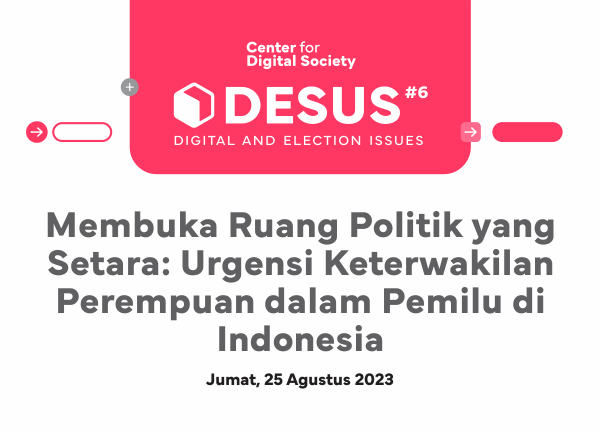

Yogyakarta, August 25, 2023 – Center for Digital Society (CfDS) UGM, in collaboration with Perludem, presents a collaborative effort in the form of “Digital and Election Issues” (Desus), a forum for in-depth discussions on critical topics pertaining to elections in Indonesia. The latest instalment, Desus #6, places its focus on “Creating an Equitable Political Space: The Urgency of Women’s Representation in the Indonesian Elections”. In this episode, CfDS UGM and Perludem delve deep into the issue of women’s representation within the electoral landscape, simultaneously exploring the extent of women’s participation and contribution within the realm of politics. Enlisting the expertise of experienced voices in the field, Desus #6 featured Delia Wildianti (Research Specialist at the Center for Political Studies (Puskapol), University of Indonesia) and Heroik Pratama (Research Specialist at Perludem), under the direct guidance of the host, Zakiah Fadhila (Researcher at CfDS). The episode can be revisited through the link: https://www.youtube.com/watch?v=KaMb1bvMgsg.
As Indonesia approaches the 2024 General Elections, the involvement of women in politics takes centre stage in the latest discussions, including in the sixth edition of Desus. Both speakers, Delia Wildianti and Heroik Pratama, emphasized the urgency of enhancing women’s participation in the upcoming 2024 Elections. Despite the presence of affirmative action policies since 2004, women’s participation still requires further support, especially from political parties. While affirmative action serves as an initial step, cultural, and structural challenges persist.
“One of the main issues lies in the implementation of women’s quotas within party structures. Although parties are mandated to nominate 30% women, this quota is not yet optimal,” as articulated by Heroik. Additionally, the impact of Peraturan PKPU 10/2023 is also discussed, with attention to affected electoral regions and women’s demands for family permission before candidacy.
Efforts to raise women’s awareness about the importance of political participation also take another focal point. “Political education that reflects women’s roles in societal issues is crucial,” Delia emphasized. The role of civil society is also highlighted in connecting women with constituents.
However, questions regarding the relevance of women’s participation and the need for a merit system also arise. The speakers concur that structural and cultural challenges remain inhibitive, thereby underscoring the continuing significance of women’s participation. Even with the application of a merit system, addressing gender bias and fostering women’s involvement in politics remain essential.
Moving forward necessitates collaboration from various stakeholders. Internal party democratization, inclusive political education, and the involvement of relevant institutions are deemed crucial. By ensuring both men and women’s participation in party decision-making and providing political education that embraces all, a more inclusive and representative political space can be realized.
Author: Allysa Putri Rendry
Editor: Ni Kadek Ayu Pratiwi
