- 31/08/2023
- Category: Press Release

Technological advances through Artificial Intelligence (AI) prompts continue to experience integration in various sectors, such as writing. One of the most famous is ChatGPT, an artificial intelligence capable of elaborating ideas into writing frameworks. Seeing this, the Center for Digital Society presented an online workshop on Digital Practice #6: “Words + AI: A Dynamic Duo of Modern Writing for Beginners divided into two sessions, to explain how AI can be used as a way to assist novice writers in creating a comprehensive writing framework. Cahyo Adhi Hartanto (Artificial Intelligence Engineer/Data Scientist) became the speaker on this occasion moderated by Zakiah Fadhila (Research Assistant CfDS).
The Use of AI Prompts in the World of Writing
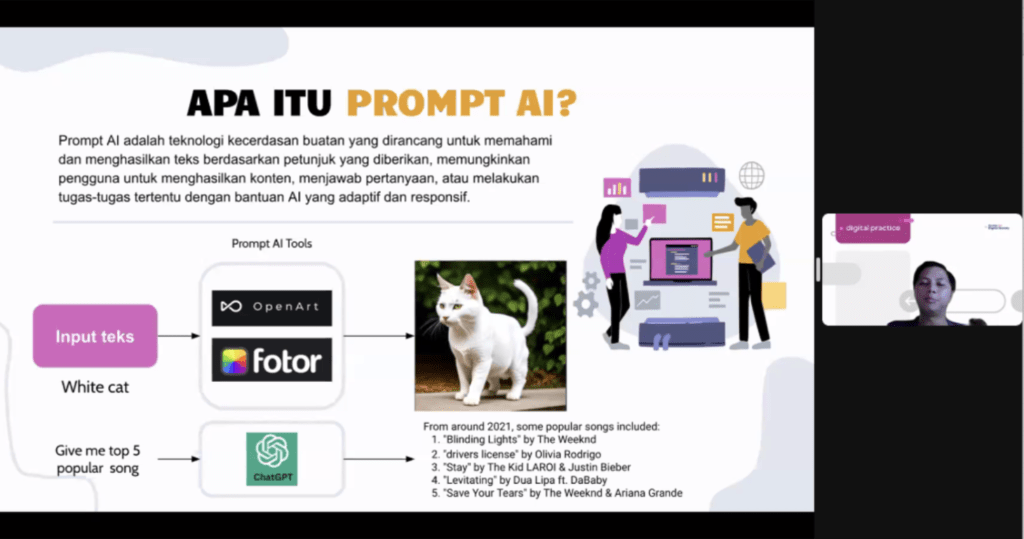
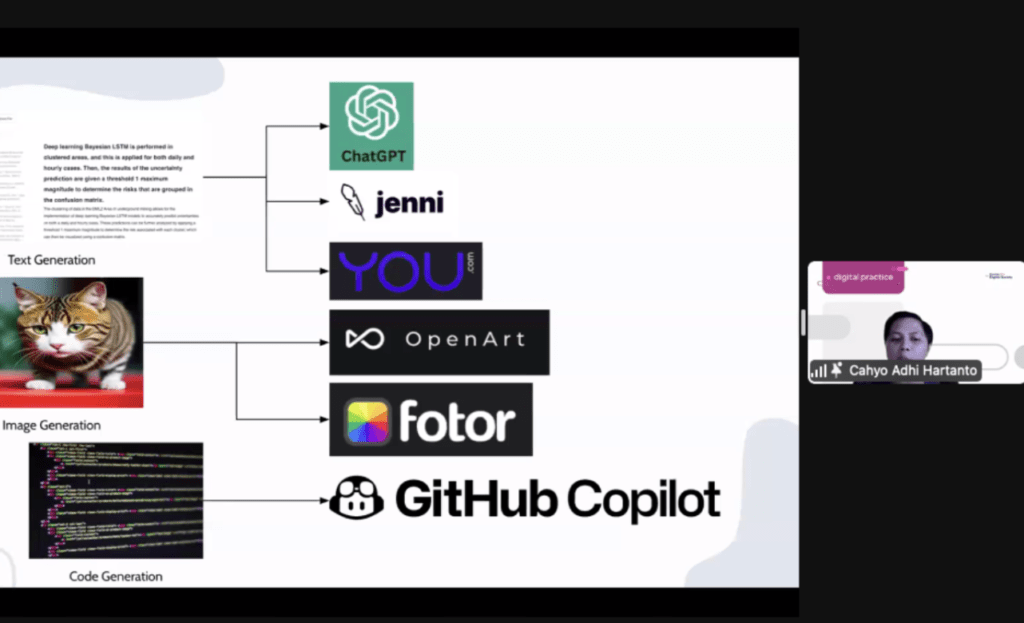
Artificial intelligence designed to generate text based on instructions to produce this content is divided into two, namely ChatGPT and Jenni. AI. There is a significant difference in the references provided by Jenni.AI because this system is based on artificial intelligence, but works specifically as an AI writing assistant. In contrast to ChatGPT which focuses on generating text in natural human conversation.
ChatGPT is used to develop ideas and brainstorm through the use of specific questions to get answers in context, the use of open-ended questions. In addition, we can provide input if the answer is less specific, explore its capabilities by using prompts, such as paraphrasing, and define some boundaries, such as writing formats to limit explanations so as not to go out of bounds. Furthermore, AI can also be used for affiliate marketing through content creation via copywriting.
Ethical Recommendations for Using Prompt AI
The use of AI should always be accompanied by strong ethical principles. In the creation and application of this technology, ethics plays an important role. Several things, such as filtering and modifying, reviewing and revising to ensure the accuracy of the summary, understanding the limitations of AI, and still relying on personal abilities are the right recommendations for overcoming the risk of AI errors.
Excessive use of AI can lead to dependence, even though the accuracy of AI is not 100%. Moreover, without paraphrasing from users, plagiarism about intellectual property from AI output can be detected. “In the future, AI will be widely integrated through various devices and applications. This will make AI equipped with capabilities in various specific tasks, one of which is writing. However, don’t be afraid that AI will replace writers because AI has limitations and of course, there are many companies that are trying to overcome this so that AI is only a complement, “concluded Cahyo ending his session.
Author: Muhammad Alfasya Syabil Sholatar
Editor: Ni Kadek Ayu Pratiwi
