- 28/11/2025
- Category: Commentaries
Author: Rizqi Ashari
Editor: Bangkit Adhi Wiguna
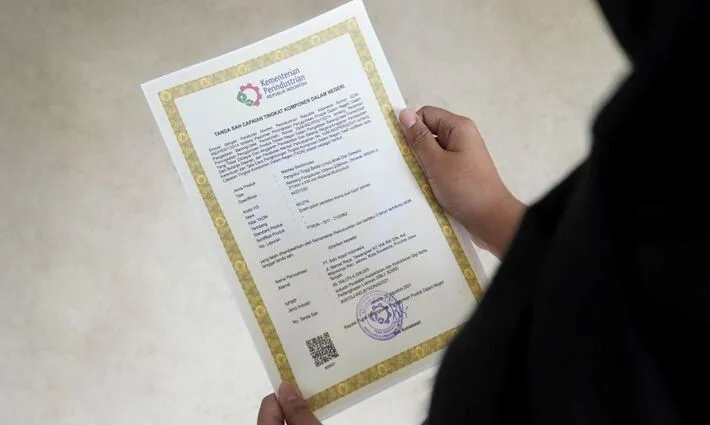
The Indonesian government is committed to encouraging the development of local electric vehicle production. One of the steps taken is to link import tariff exemptions to companies with relatively strict local content requirements. Through the Local Content Requirement (TKDN—Tingkat Kandungan Dalam Negeri) requirements, the government provides access and opportunities for the domestic industry to grow by imposing component level requirements that must be met by foreign companies.[1] The development of this policy in recent years has undergone dynamic changes in response to local needs and readiness conditions, as well as the conditions surrounding the penetration of companies into the Indonesian market.
Based on Presidential Regulation No. 55 of 2019 concerning the acceleration of EVs, the TKDN policy is contained in various derivative regulations. From the initial plan of the presidential regulation, the revision of Presidential Regulation No. 79 of 2023 was issued to revise Presidential Regulation No. 55 of 2019 with a TKDN target postponed to 40% until 2026; followed by 60% for the 2027-2029 period; and 80% starting in 2030. One of the reasons given by the government is the lack of readiness of the supporting ecosystem. This context relates to the environment for the electric vehicle component industry and nickel resource management in Indonesia, concerning foreign investment and the role of reciprocal services, such as the country needing capital, technology, expertise, and companies demanding the electric vehicle market.
Electric Vehicle Incentives and Market Opportunities
The McCulloch & Surya (2024) report notes that the number of electric vehicles (EVs) in Indonesia has increased significantly in recent years. In 2020, the number of EVs officially registered was only a few thousand units— excluding those unaccounted for by the government. This rapidly growing market exceeded 100,000 units in 2023, with about one-fifth of them being four-wheeled vehicles. With the rise in the value of the commodity market formalized by the state, EVs have also been adapted by public transportation such as TransJakarta, which is undergoing electrification. This has also begun to be adapted by other major cities in Indonesia.
The development of the electric vehicle market in recent years has been dominated by two major companies from East Asia, namely Wuling from China and Hyundai from South Korea. These two companies have established physical production bases in Indonesia and developed local supply chains, enabling them to meet the minimum local content requirements. Hyundai has invested approximately USD 1.55 billion in Cikarang, including its collaboration with LG for an electric vehicle and battery assembly plant. Hyundai has also established collaborations through long-term supply agreements with local companies and state-owned enterprises (Indonesia Battery Corporation, Pertamina NRE) to strengthen the battery supply chain. Meanwhile, Wuling has already built a factory in Cikarang since 2017, which continues to shift to electric vehicle production lines.[2] These two companies and their steps mark the ownership of a strategic electric vehicle market network, and this situation is in line with the presidential regulation mentioned above, where they have manufacturing facilities in Indonesia to obtain incentives. Then the question arises, why is this incentive important to discuss?
Basically, electric vehicle incentive policies are also given to companies as manufacturers. Some of these include exemption or reduction of import duties for EV components and imported electric vehicles, exemption or reduction of Sales Tax on Luxury Goods (PPnBM), reduction or exemption of VAT, and several others. Companies can obtain these incentives if manufacturers commit to producing components with local involvement or meet the requirements for TKDN (Local Content Requirement).[3]
However, when the TKDN component restrictions, which initially could only be met by Hyundai and Wuling, threatened to limit vehicle variety and potentially lead to dominance by these two corporations. As a result, the government, committed to expanding the variety of electric vehicles in the market, has allowed OEMs (Original Equipment Manufacturers) to continue importing fully assembled vehicles (Completely Built Up/CBU) without having to meet TKDN requirements and still receive luxury tax exemptions.[4] In this context, the government is relaxing the TKDN policy to pave the way for large corporations to explore the electric vehicle market in Indonesia.
Instead, to secure the company’s commitment, the government requested guarantees equivalent to tax exemptions and a commitment to produce a number of cars corresponding to the number of vehicles imported by the company within a certain period until 2027. Progressively, with increasing levels of local content domestically, OEM manufacturers can obtain incentives (for manufacturers) to continue improving domestic resource management in order to continue meeting TKDN requirements (ibid).
Through the conditions created by the initial TKDN policy outlined above, to continuously fulfill the requirements and demands of the government, various companies have built their own factories or collaborated with local and foreign developers to produce vehicles that meet TKDN requirements, such as Wuling.[5] Some big names as pioneers include PT SGMW Motor Indonesia from Wuling, which manufactures its components in Cikarang, West Java, and Hyundai Motor Group & LG Energy Solution (PT HLI Green Power), a joint venture between Hyundai and LG operating in Karawang, West Java.
Other names such as the consortium of PT ANTAM (Tbk) together with Indonesia Battery Corporation (IBC) & Contemporary Brunp Lygend (CBL) have become manufacturers that have begun to enter the local market by building their industries and meeting TKDN requirements through local resource management (management, labor, or components). Along with this opportunity, it was also reported that other manufacturers are entering the production sector in Indonesia, such as Mitsubishi, Chery, DFSK, and several other Chinese companies that plan to invest heavily in this industry, such as Citroen, GWM, GAC, AION, and BYD, with a capacity of hundreds of thousands of units per year (ibid).
Opportunities for Battery Industry Development, Nickel Utilization, and Manufacturing
The main component in the development of electric vehicles is the battery, which requires nickel as one of its main resources. The idea of increasing the relative percentage of TKDN in electric vehicle policy is to stimulate investment growth in the electric vehicle market. However, this condition creates a link (state-company-consumer) between the use of nickel resources for batteries as components and foreign companies to build their manufacturing facilities in Indonesia. This nexus is related to green development, which involves the reorganization of big business groups to profit from extraction during the energy transition with easy access and security from risks provided by the government (selective de-risking).[6]
Indonesia, as the world’s largest nickel producer, has imposed a ban on nickel ore exports since the idea was first proposed in 2014, with one of the focuses being on domestic refining processes. Although nickel does not entirely supply electric vehicle battery production (it contributes significantly to stainless steel production), at least seven large nickel refineries focus on High-Pressure Acid Leaching (HPAL) or the initial refining process in battery production. The companies involved in this refining process are dominated by foreign parties such as China, Japan, and others that have formed a coalition with the Indonesia Battery Corporation (IBC). In this context, the emphasis is on the nickel resource management process initiated by the government, involving foreign parties in the coalition and electric vehicles as an external offering.[7]
In less than five years, the design and realization of electric vehicle manufacturing and its components in Indonesia has grown rapidly with the involvement of foreign industries. This coincides with the relaxation and postponement of the TKDN policy, which was intended to strengthen the national electric vehicle industry. Returning to the context of nickel resource management, the ban on nickel ore exports presents a paradox where Indonesia is not yet capable of managing and processing nickel into refined forms that can be developed into batteries. As a result, this situation forces foreign investors to play a role in managing it amid downstreaming policies that promote self-sufficiency in natural resource management. [8]
These investments take the form of large-scale smelter development projects that bring in foreign managers, such as Indonesia Morowali Industrial Park, Huayue Nickel and Cobalt HPAL, and Obi HPAL. The results of this management are then used to produce components for electric vehicles, such as Wuling, Hyundai, and BYD (ibid). The relaxation of the TKDN policy and the ban on nickel ore exports were initially intended to stimulate the national industry in this sector. However, the inability to independently manage resources to produce electric vehicle components requires foreign investment in the form of technical management. This ultimately strengthens the position of foreign investors in the nickel supply chain and battery production.
A Critical Note: Relaxation of Local Content Requirements and Opportunities to Take Advantage of Incentives
Looking at the dynamics of the electric vehicle industry, nickel resource management, and managerial efforts through TKDN policies, these conditions create a related pattern. With the promising electric vehicle market in Indonesia, the government is trying to limit the use of nickel by foreign parties to build the electric vehicle industry through structural policies, namely the Local Content Requirements (TKDN). To reiterate the previous point, in its implementation, this policy is still flexible with ambitious targets until 2030. The lack of readiness in technical and infrastructure factors here is the main reason why the TKDN policy targets have been relaxed. The situation that has arisen is that during the period when the TKDN policy has been relaxed until now, foreign companies that produce their components overseas still receive incentives under this policy. Without the firm realization of the policy’s targets, foreign companies will continue to take advantage of duty exemptions and fiscal incentives, as well as expand their exploration in the development of electric battery components.
The above factors actually strengthen the position of foreign investors in penetrating the nickel and electric vehicle component supply chains amid the agenda of nickel management independence. This is clearly contradictory, because basically the policy is actually a tool to force companies with high capabilities to involve and mobilize local components, namely by forcing them to establish manufacturing facilities in the country. Looking at the target of the TKDN Policy after relaxation, which is to increase the percentage of components to 40% by early 2026, this is an opportunity to review the effectiveness of this policy. What needs to be anticipated here is how the sustainability of this policy will succeed in pressuring foreign companies to accelerate the development of the electric vehicle industry in Indonesia. In the context of implementing the TKDN Policy, it is necessary to look at local involvement in several areas, namely the prioritization of local resources, the need for local raw materials and equipment, and domestic labor.
- McCulloch, N., & Surya, I. R. F. (2024). Electric vehicles in Indonesia: a political economy analysis. Institute For Essential Services Reform. ↑
- Adzhani, A & Pramono, & Santoso, M. & Wirayat, & Okdinawati, &, Prawira. (2025). Battery Electric Vehicle Adoption in Indonesia: Insights from Consumer Preferences and Stakeholder Perspectives. Journal of the Civil Engineering Forum. 334-350. 10.22146/jcef.22067.
Darynaufal; Agustina; Figo; Sipahutar; and Rafsanjani (2025) “Convergence of Indonesia-South Korea Green Economy Strategy: A Case Study of Hyundai Motor Group’s Investment in the EV Industry,” Journal of Strategic and Global Studies: Vol. 8: Iss. 2, Article 5. DOI: 10.7454/jsgs.v8i2.1183 ↑
- Joson, A. (2025). No More Incentives for Imported BEVs in Indonesia Starting 2026 – AfMA. AfMA. https://afma.org.au/no-more-incentives-for-imported-bevs-in-indonesia-starting-2026/
Baker McKenzie. (2024). Indonesia: More incentives for BEV unveiled. Bakermckenzie.com. https://insightplus.bakermckenzie.com/bm/tax/indonesia-more-incentives-for-bev-unveiled ↑
- McCulloch, N., & Surya, I. R. F. (2024). Electric vehicles in Indonesia: a political economy analysis. Institute For Essential Services Reform. ↑
- Chinaevs. (2025). Wuling Indonesia Produces First MAGIC BATTERY – China EV news – China Electric Vehicles. Chinaevs.org. https://www.chinaevs.org/news/2025/1000.html? ↑
- Wijaya, T., & Sinclair, L. (2025). An EV-fix for Indonesia: the green development-resource nationalist nexus. Environmental Politics, 34(2), 252-274. ↑
- Korteweg, R., & Kranenburg, V. (2024). Indonesia and Nickel. In The good, the bad, and the ugly: Resource nationalism, geopolitics, and processing strategic minerals in Indonesia, South Africa, and Malaysia (pp. 9–28). Clingendael Institute. http://www.jstor.org/stable/resrep60355.5
Muhammad, F., & Maharani, D. (2025). 4 salah kaprah besar soal isu kendaraan listrik dan tambang nikel di Indonesia. https://doi.org/10.64628/aan.4fuhvysu5 ↑
- Korteweg, R., & Kranenburg, V. (2024). Indonesia and Nickel. In The good, the bad, and the ugly: Resource nationalism, geopolitics, and processing strategic minerals in Indonesia, South Africa, and Malaysia (pp. 9–28). Clingendael Institute. http://www.jstor.org/stable/resrep60355.5 ↑
