- 30/08/2024
- Category: Press Release
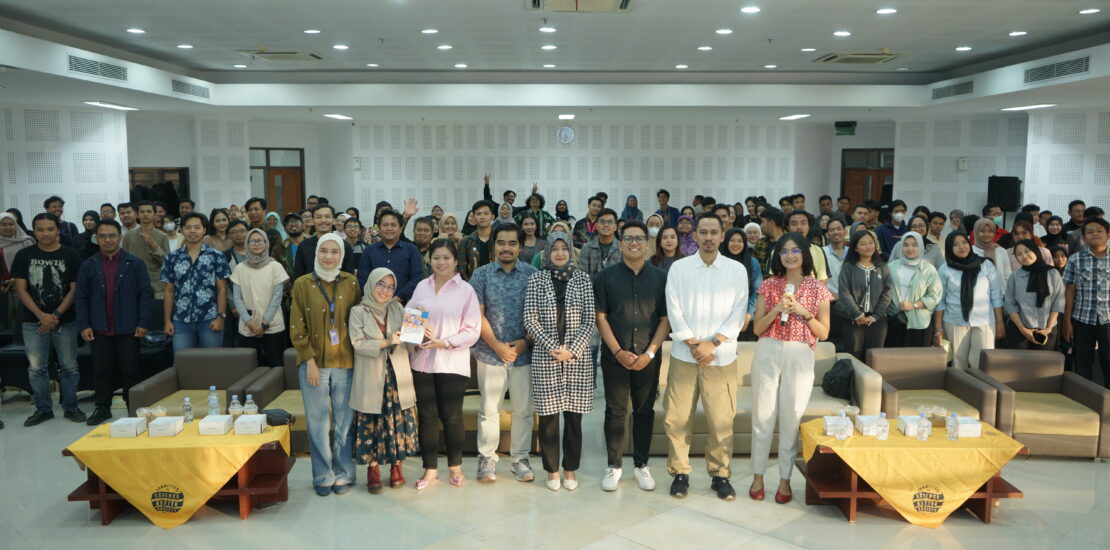
Yogyakarta, (29/09/2024) – Elections in Indonesia are increasingly influenced by the use of digital spaces, which hold significant risk of becoming platforms for the spread of disinformation such as the use of bot accounts to disrupt information and black campaigns. Unfortunately, there is no legal framework that effectively regulates these risks, and election organizers have been slow to address the issue. Hence, this CfDS in collaboration with Perludem committed to address this issue through #Desus 15 “Collective Action Against Election Disinformation: Multi-Stakeholder Efforts in Indonesia.” Iradat Wirid (Deputy Executive Secretary of CfDS), Heroik Pratama (Researcher at Perludem), Septiaji Eko Nugroho (Chairman of Mafindo), and Umi Illiayani (Member of Bawaslu DIY) were speakers at this event, moderated by Arsya Lay (CfDS Research Assistant).
Multi-Stakeholder Collaboration to Combat the Flood of Disinformation
Iradat Wirid opened the discussion by explaining that the most highlighted mass misinformation phenomenon in the history of elections occurred during the 2019 elections. At that time, hoaxes and false information ran rampant on the internet, disrupting voters’ ability to exercise their right to vote. This is often referred to as voter suppression, which caused election organizers and civil society organizations to struggle in addressing it. Voter suppression involved direct threats or intimidation, the spread of disinformation to deceive voters, disruptions to communication channels making it difficult to communicate with voters, and interference with a person’s right to vote.
“In response to this issue, Perludem initiated the formation of a multi-stakeholder collaboration to combat election disinformation. The first step was to identify civil society organizations focused on digital democracy, disinformation, and electoral issues,” added Heroik Pratama. The stakeholders were then brought together in regular coordination meetings organized by Perludem. This coalition was eventually established under the name Civil Society Coalition Against Election Disinformation, with the vision and mission of creating a democratic digital ecosystem and strengthening the ability to expose election disinformation.
Challenges of the 2024 Elections and Collaborative Efforts to Strengthen Civil Society

As the 2024 elections approach, concerns are rising that disinformation and its impacts will resurface, particularly with the rapid growth of social media platforms like TikTok and X. Leading up to the 2024 elections, Indonesia’s social media was already flooded with political disinformation, with as many as 1,292 cases of political disinformation reported. In addition to potentially inciting violence, political disinformation can lead to other election-related issues, with at least four main impacts: delegitimizing the election process and results, confusing voters with misleading election information, interfering with the right to vote, and manipulating information to benefit certain candidates. Perludem also found that many political ads were not reported to election authorities. This disinformation was spread through three stages: first, the production of manipulated political ad content tailored to the demographic segmentation of specific platforms; second, the mass accumulation of similar content; and third, the distribution of political ads targeted to specific audiences.
The Civil Society Coalition Against Election Disinformation conducts various internal and external efforts, such as capacity building. Perludem has organized several coordination meetings to discuss emerging issues, including debates around the pros and cons of the Election Recapitulation Information System (Sirekap). In addition to coalition coordination meetings, Perludem has initiated multi-stakeholder forums with various institutions, resulting in three collaborative documents, such as MoUs with Bawaslu, reports on problematic channels to platforms, and Sirekap.
Perludem has also enhanced the coalition members’ capacity through collaborative activities organized by the coalition, such as workshops on prebunking training, content moderation and artificial intelligence, and digital regulation in various countries. This initiative was also taken by Mafindo to address the issue of disinformation in elections. “Not only debunking, but fact-checking is also considered a comprehensive step in promoting a safe and inclusive election,” said Septiaji.
Society groups at the regional level are also considered more capable of understanding political issues specific to the dynamics of their regions. The solutions offered will be tailored to the political issues each region is facing. For example, as conveyed by Umi Illiayani, Bawaslu DIY has a strategy for combating hoax news by collaborating with influencers for the upcoming 2024 election.
“The formulated strategy must follow current election trends. This ensures that the processes of education, pre-bunking, debunking, and moderation of political content can be carried out optimally. This effort is expected to contribute to supporting a safer and more inclusive democracy and effectively combating disinformation,” explained Umi Illiayani, closing the discussion.
