
- 08/03/2023
- Category: Commentaries
Author: Stanislaus Axel Paskalis
Editor: Alfredo Putrawidjoyo
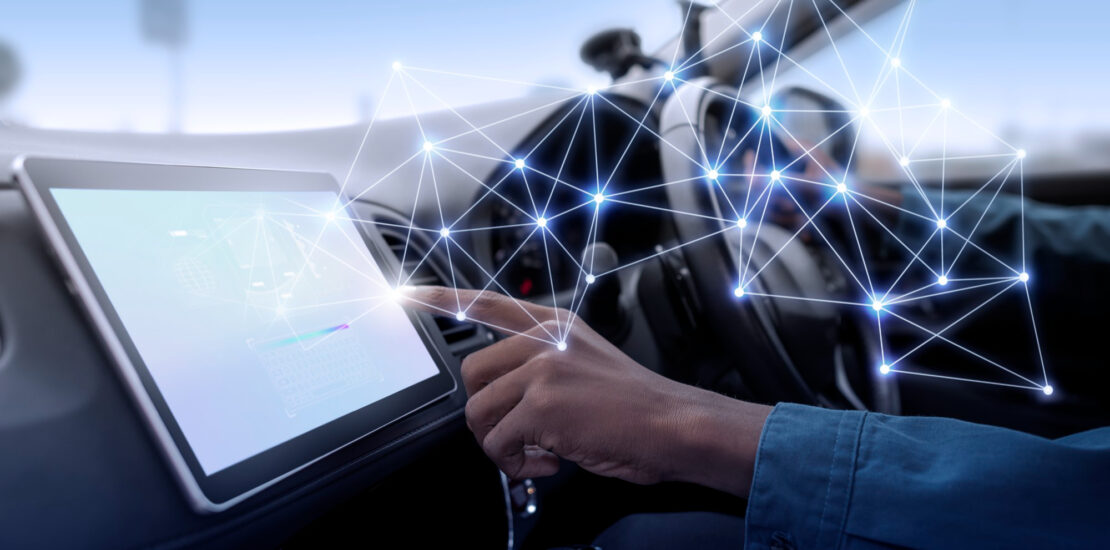
Autonomous control technology has entered the automotive industry through the market of autonomous private cars. Its marketers promise comfort, safety, and driving efficiency that exceeds the experience of driving conventional vehicles.[i] Imagine sitting in a passenger seat in a car that can operate without a driver needing to eat, rest, sleep, or take days off. So it is no wonder that autonomous cars are touted, by one BBC article, to revolutionize the transportation industry.[ii]
However, like any advanced technology, its presence brings both hope and suspicion alongside critical questions, such as: Who should be responsible if an autonomous car hits a child? Should we accept this technology and make them common on the streets? If so, how soon? If not, why not? Therefore, this article investigates various potential problems that may arise when we adopt autonomous cars.
Autonomous Cars and Congestion
Everybody wants traffic congestion to disappear from the face of the earth, and autonomous cars appear to be one of the solutions. A simulation shows the presence of just 10% of autonomous cars on the street can speed up car traffic flow by 7% in the Manhattan traffic grid.[iii] However, it is too hasty to assume that autonomous vehicles can eliminate traffic congestion altogether.
Before our traffic can become autonomous, we will have to go through a transition period from manual driving (with human control) to full autonomy. In other words, autonomous cars should anticipate manual cars whose behaviours are outside the coordination of artificial intelligence (AI). A study on autonomous vehicles using real-world traffic situations shows that autonomous cars do not have much impact on traffic congestion.[iv] This is because autonomous car users utilize Adaptive Cruise Control (ACC) with safe headway distance among other cars to minimize the accident risk. This ACC reduces the car’s speed if its sensors detect a slowing vehicle.
In addition, the leading cause of traffic congestion is the high use of private vehicles. Hence, an effective anti-congestion policy reduces such use.[v] The problem is, if using autonomous cars is easy and comfortable, more people will use cars, and therefore increase the use of private vehicles on the street.[vi] The increasing volume of vehicles, coupled with the existence of manual cars during the transition period, will render the ability of autonomous cars to alleviate congestion questionable.
Who Killed Elaine Herzberg?
That day, Elaine Herzberg was pushing her bike across a road in Arizona when Uber tested one of their autonomous SUV cars on the same road.[vii] Unfortunately, the car hit and killed Elaine Herzberg, making her the first deadly self-driving car accident victim in the United States. An Arizona judge later charged the “backup” driver inside the car with negligent homicide. Meanwhile, Uber was acquitted of criminal responsibility for the incident.
The National Highway Traffic Safety Administration (NHTSA) recorded at least 392 traffic accidents[viii] that involved autonomous vehicles in 2022. What is complicated about these accidents is determining who is or are responsible for such incidents.[ix] We should note that the human justice system can’t put cars and AIs in Jail, but it can impose sanctions on humans and companies.
Regardless, companies may throw off their responsibilities by arguing that the drivers are responsible for the car they are driving. However, we may argue that this should also come with consequences for companies. For instance, companies should not be allowed to promote or market their products as “self-driving”.[x] Autonomous cars should also be designed so that their drivers remain alert and aware of their surroundings. One concrete example is requiring drivers to pay attention to the road and put their hands on the steering wheel while the autonomous mode is active.
But what if the accident still happens despite the cars’ compulsory awareness mechanism and the driver’s full attention? What if there is a certain malfunction in the software, just like what is said by one of the autonomous car drivers in the San Fransisco accident?[xi] Unfortunately, there is yet comprehensive international regulation which can answer such questions.
Programming errors can happen, and computer programs may get better over time. But potential accidents can still exist because of human errors or code malfunction. But unlike humans, we can’t accuse robots of drowsy driving.
Data and Its Use
In addition to selling autonomous cars, companies also farm data. Although not exclusive to autonomous cars, datafication can cause surveillance and information security problems. We should also oversee how companies collect data, how they use it, and the actors who can access such sensitive data.
Autonomous car surveillance technology gives way for car companies to enter private spaces that are previously inaccessible. Autonomous cars can farm information on geographical location, physical environment, communication network connections, and information on the car specifications and its users.[xii]
The presence of multimedia facilities inside autonomous cars can provide spaces for an advertiser to promote their products specifically to the passengers.[xiii] For example, a platform company can provide an advertising space inside the in-built display screen inside of an autonomous car.[xiv] Through data collection and additional revenue through advertising, platform and automotive companies can receive many benefits.[xv]
This business model requires supervision, especially because it can affect people’s living spaces. Companies may misuse data without strict supervision and accountability procedures. For instance, Amazon has misused its retailers’ data[xvi] to develop products that compete with its retailers. Similarly, platform and automotive companies can use data they have collected to support policies that encourage urban sprawl and narrow our mobility choices.
With the datafication of the automotive industry, companies will have an incentive to collect data. Consequently, companies will encourage as many people as possible to use cars, even excessively.[xvii]
Solving Mobility Problems Beyond Cars
Far from ideal, autonomous cars still have many issues. However, instead of denying its development, we should see autonomous technology as one of many tools that we have at our disposal.
A car is a useful transportation, but it is no mobility panacea. Every form of technology has its limitation in solving certain problems, and our best bet is to combine these tools that we have. In Autonorama, Norton proposes a combination of Low-tech and High-tech approaches to solve our mobility issues. One concrete example is an electric bike that we can borrow through digital bike-sharing technology.[xviii] With this paradigm, private vehicles, manual and autonomous, are not the priorities for urban mobility planning.[xix] A report from T4<2 has shown us that we already have the tools that we got to solve our mobility issue and combat the climate crisis as quickly as possible; they are: walking, cycling, and buses.[xx] Recently, The Economist released an article about a trend among young people who are starting to abandon cars and choosing public transport as their mode of mobility. [xxi] This means the future of mobility is not autonomous cars, but walking, cycling, and riding public transport.
[i] Jack Stilgoe dan Miloš Mladenović, “The Politics of Autonomous Vehicles,” Humanities and Social Sciences Communications 9, no. 1 (3 Desember 2022): 433, https://doi.org/10.1057/s41599-022-01463-3.
[ii] Jenny Cusack, “How driverless cars will change our world – BBC Future,” BBC, 30 November 2021, https://www.bbc.com/future/article/20211126-how-driverless-cars-will-change-our-world.
[iii] Matthew Hutson, “Watch Just a Few Self-Driving Cars Stop Traffic Jams,” 16 November 2018, https://www.science.org/content/article/watch-just-few-self-driving-cars-stop-traffic-jams.
[iv] Eirin Olaussen Ryeng, Eivind Myklebust Lindseth, dan Torbjørn Haugen, “Traffic Flow with Autonomous Vehicles in Real-Life Traffic Situations,” dalam Autonomous Vehicles and Future Mobility (Elsevier, 2019), 33–41, https://doi.org/10.1016/B978-0-12-817696-2.00003-2.
[v] David Metz, “Tackling Urban Traffic Congestion: The Experience of London, Stockholm and Singapore,” Case Studies on Transport Policy 6, no. 4 (1 Desember 2018): 494–98, https://doi.org/10.1016/j.cstp.2018.06.002; Peter Smith, “Controlling Traffic Congestion by Regulating Car Ownership: Singapore’s Recent Experience,” Journal of Transport Economics and Policy 26, no. 1 (1992): 89–95; Dirk Van Amelsfort, “Introduction to Congestion Charging” (China: Deutsche Gesellschaft für Internationale Zusammenarbeit (GIZ) GmbH, 2015).
[vi] Daniel J. Fagnant dan Kara M. Kockelman, “The Travel and Environmental Implications of Shared Autonomous Vehicles, Using Agent-Based Model Scenarios,” Transportation Research Part C: Emerging Technologies 40 (1 Maret 2014): 1–13, https://doi.org/10.1016/j.trc.2013.12.001; Jonas Meyer dkk., “Autonomous Vehicles: The next Jump in Accessibilities?,” Research in Transportation Economics 62 (1 Juni 2017): 80–91, https://doi.org/10.1016/j.retrec.2017.03.005; Susilawati, “Will Self-Driving Cars Solve Traffic Congestion?,” The Jakarta Post, 18 Februari 2023, https://www.thejakartapost.com/opinion/2023/02/18/will-self-driving-cars-solve-traffic-congestion.html.
[vii] Sam Levin, “Safety Driver Charged in 2018 Incident Where Self-Driving Uber Car Killed a Woman,” The Guardian, 16 September 2020, bag. US news, https://www.theguardian.com/us-news/2020/sep/16/uber-self-driving-car-death-safety-driver-charged.
[viii] Jon Fingas, “NHTSA: ‘Self-Driving’ Cars Were Linked to 392 Crashes in 10 Months,” Engadget, 15 Juni 2022, https://www.engadget.com/self-driving-car-technology-crash-data-172606258.html.
[ix] Kareem Othman, “Public Acceptance and Perception of Autonomous Vehicles: A Comprehensive Review,” AI and Ethics 1, no. 3 (1 Agustus 2021): 355–87, https://doi.org/10.1007/s43681-021-00041-8; Araz Taeihagh dan Hazel Si Min Lim, “Governing autonomous vehicles: emerging responses for safety, liability, privacy, cybersecurity, and industry risks,” Transport Reviews 39, no. 1 (2 Januari 2019): 103–28, https://doi.org/10.1080/01441647.2018.1494640.
[x] Emily Rosenthal, “Who’s Responsible If a Tesla on Autopilot Kills Someone?,” Futurity (blog), 11 Maret 2022, https://www.futurity.org/self-driving-cars-vehicles-laws-2709692/.
[xi] Ken Klippenstein, “Exclusive: Surveillance Footage of Tesla Crash on SF’s Bay Bridge Hours After Elon Musk Announces ‘Self-Driving’ Feature,” The Intercept, 10 Januari 2023, https://theintercept.com/2023/01/10/tesla-crash-footage-autopilot/.
[xii] Luis F. Alvarez Leon, “Eyes on the Road: Surveillance Logics in the Autonomous Vehicle Economy,” Surveillance & Society 17, no. 1/2 (31 Maret 2019): 198–204, https://doi.org/10.24908/ss.v17i1/2.12932.
[xiii] Leon, 201.
[xiv] Chris Peri dkk., “Advertising and the Autonomous Car,” t.t.
[xv] Leon, “Eyes on the Road,” 203.
[xvi] Dana Mattioli, “Amazon Scooped Up Data From Its Own Sellers to Launch Competing Products,” The Wall Street Journal, 23 April 2020, https://www.wsj.com/articles/amazon-scooped-up-data-from-its-own-sellers-to-launch-competing-products-11587650015.
[xvii] Peter Norton, Autonorama: the illusory promise of high-tech driving (Washington, DC: Island Press, 2021).
[xviii] K. N. F. Ku Azir dkk., “UniCycle: An Android Application of Bike Sharing System in the Digital Campus,” Journal of Physics: Conference Series 1755, no. 1 (Februari 2021): 012010, https://doi.org/10.1088/1742-6596/1755/1/012010.
[xix] Abbas M. Hassan dan Hyowon Lee, “Toward the Sustainable Development of Urban Areas: An Overview of Global Trends in Trials and Policies,” Land Use Policy 48 (November 2015): 199–212, https://doi.org/10.1016/j.landusepol.2015.04.029.
[xx] Agora Verkehrswende, Deutsche Gesellschaft für Internationale Zusammenarbeit (GIZ), dan World Economic Forum (WEF), “Transport for under Two Degrees – the Way Forward: 10 Key Insights for the Decarbonisation of the Transport Sector,” Transport for under Two Degrees, 2020.
[xxi] The Economist, “Throughout the rich world, the young are falling out of love with cars | The Economist,” The Economist, 16 Februari 2023, https://www.economist.com/international/2023/02/16/throughout-the-rich-world-the-young-are-falling-out-of-love-with-cars.
