
- 25/08/2021
- Category: Commentaries
Few months ago, the digital realm was shocked by the alarming yet intriguing news on the stock market. The famous GameStop stock had its value rising off the roof, which took the Wall Street stockbrokers by surprise. It all started with a Reddit user only known as DVF, who led the idea that GameStop would be shorted by prominent investment players, in which they later invested $50,000.[1] Other users then followed suit, which ended up skyrocketing the value of GameStop up to $470 per share. Wall Street lost more than $5 billion, which was deemed the result of the “antics” of Reddit stock investors. Corporatists alike pointed their fingers at the “amateur” investors as culprits. At the same time, many well-known figures took notice and sided with the investors, such as Alexandra Ocasio-Cortez, Elon Musk, and the unexpected Donald Trump, Jr.
Although this seems like a feat amongst profit-oriented groups, the shocking event itself became a beacon of hope for the democratization of the stock market, including cryptocurrency. However, a question emerges: how can something so capitalistic be utilized as a revolutionary tool?
Since cryptocurrency is a part of the digital realm generated by gadgets, it is referred to by Joss Hands as a ‘thing’ or a source of gathering, whether that is of shared experiences, moments with others, as well as of flourishing and self-expression.[2] In the context of cryptocurrency, digital communities with similar interests ‘gather’ to democratically manage the system without the intervention of financial intermediaries such as central banks and stockbrokers. Such management is created due to its open-source, which also uses a peer-to-peer network in the blockchain. In addition, the implementation of the proof-of-stake (PoS) mechanism in cryptocurrency also enables validator nodes to democratically engage in decentralized network governance by voting on critical updates and decisions.[3]
Because the nature of cryptocurrency is decentralized and open-source, the platform can then be utilized for crypto activism as a resistance towards the status quo. For instance, cryptocurrency helped change the way of fundraising and gathering resources while dodging government encroachment. Such a course of action was actualized in the usage of Bitcoin in the funding of Hong Kong Free Press using Bitcoin in the heat of the protests and its usage encouragement in Yellow Vest Movement as a sign of protest towards France’s monetary system and politics.[4] [5] Essentially, the ability to take advantage of cryptocurrency is to take back control of the economy from the government and corporatists without the means of violence in the way.
Astonishingly, cryptocurrency also gives a chance to those without money to contribute to the cause much more effectively than that of social media. Instead of reposting or sharing posts, participants can actually help financially with the ongoing social movements. Sparkle, the currency created by Occupy Wall Street’s co-creator Micah White, is redistributed proportionally to the entire economy every time it is bought or transferred by being taxed 2%.[6] Another example is Dogecoin, a popular cryptocurrency derived from a famous meme. Due to its popularity, it garnered the fund for do-good projects, which helped their community and also raised the currency’s value.[7] Thus, whether the contributor is wealthy or not, it still rewards the poor.
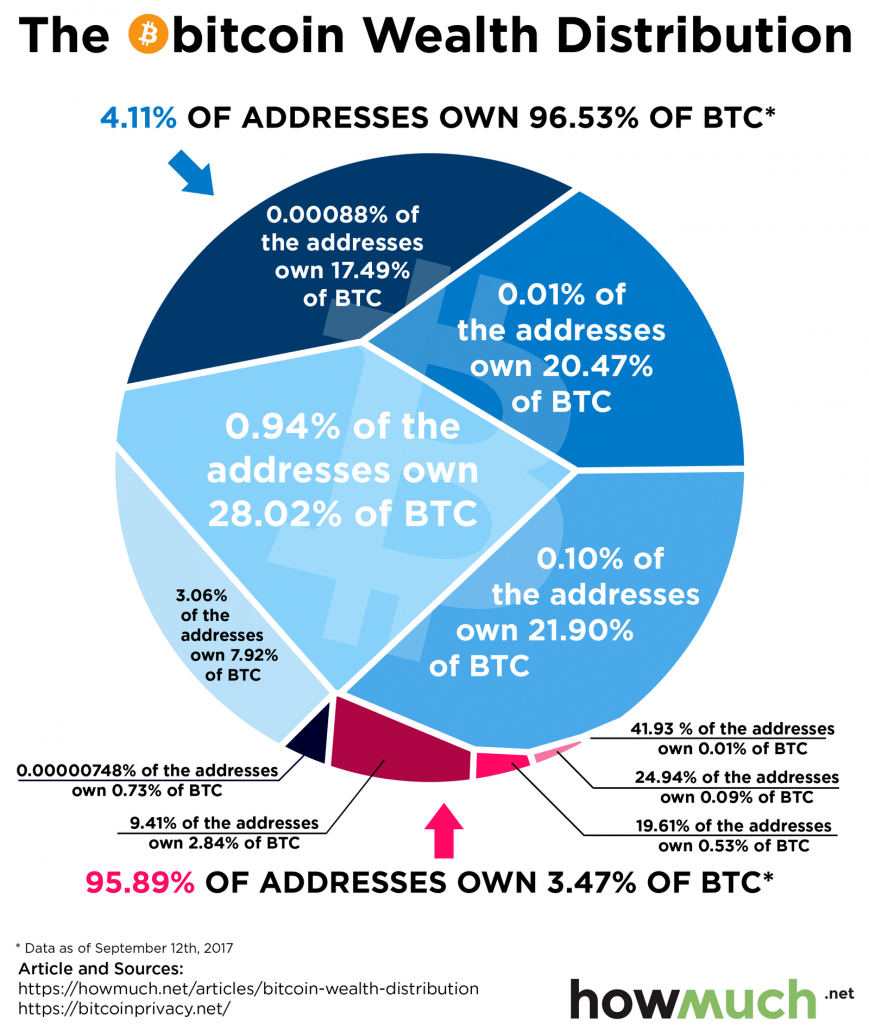
Although the existence of cryptocurrency generates a lot of hope and potential, activist contributors should also keep in mind the underlying risks and issues. For instance, due to its decentralization and pseudonymity status, the absence of a regulatory framework is still prevalent. Hence, there is a possible danger of losing vast sums of crypto. Some of those risks are caused by ransomware attacks, in which the perpetrator demands huge ransoms of crypto in exchange for the victim to restore access to the data.[8] While most of them are mainly targeted towards large corporations and government institutions, it does not rule out the possibility of attack from the elite or even the government towards activism groups.[9] On the other hand, another quite noticeable concern is the wealth disparity. Despite the promise of distributed wealth, the money is extremely concentrated amongst those with access and previous knowledge on the matter. For example, based on the data by HowMuch.net, over 95% of the Bitcoin in circulation is held by 4% of the owners, whereas the 1% runs half of the entire market.[10]
Undoubtedly, there is still a lot of work to do to fuel the progress of activism via cryptocurrency. To counter these fallbacks, there are ways for those deemed “outliers” to occupy cryptocurrency. From a technical standpoint, there have been numerous studies regarding the proper mitigation to ransomware.[11] However, activists can do this by forming partnerships with fellow activist groups specializing in cryptosecurity to ensure funding from and for both groups and assistance in times of crypto attacks. From a social perspective, opening doors to accessible, easy-to-follow insights such as a crash course on cryptocurrency can be the first step in doing so. Nowadays, with the rise of tele-education through mediums such as YouTube or TikTok, the created contents are much easier to digest and relatable to the masses[12]. In addition, slowly building better infrastructure for marginalized communities through community fundraising is crucial to ensure digital accessibility. These strategies might be a slow, challenging process, but they will surely prevail in the long run.
In the end, whether we like it or not, cryptocurrency will always be around in this time of age. However, with the changing nature of social movements, the protests might no longer be in the streets. Instead, it is out there in the crypto realm, among the digits.
Author: Rizka Khairunissa Herdiani (Research Intern)
Editor: Amelinda Pandu Kusumaningtyas (Research Project Officer CfDS)
[1] Miles, I., 2021. GameStonks: Power to the People. Medium. Available at: https://medium.com/swlh/gamestonks-power-to-the-people-1e0d2b1f4ee4 [Accessed July 5, 2021].
[2] Hands, J., 2019. Gadget Consciousness: Collective Thought, Will and Action in the Age of Social Media, London, UK: Pluto Press.
[3] Anon, 2021. Crypto Glossary – Cryptopedia. Gemini. Available at: https://www.gemini.com/cryptopedia/glossary [Accessed July 5, 2021].
[4] Stevens, R., 2019. Funding dissent in China: Hong Kong Free Press accepts Bitcoin. Decrypt. Available at: https://decrypt.co/8491/hong-kong-free-press-accepts-donations-in-bitcoin-bitcoin-cash [Accessed July 5, 2021].
[5] Redman, J., 2019. Yellow Vest Movement Starts a New Form of Protest – Burning Banknotes. Bitcoin News. Available at: https://news.bitcoin.com/yellow-vest-movement-starts-a-new-form-of-protest-burning-banknotes/ [Accessed July 5, 2021].
[6] White, M., 2019. If Occupy Created Bitcoin. Medium. Available at: https://micahwhite.medium.com/if-occupy created-bitcoin-cceda9e7c246 [Accessed July 5, 2021].
[7] Schneider April 14, N., 2019. Bitcoin for activists – what you need to know. Waging Nonviolence. Available at: https://wagingnonviolence.org/2014/04/bitcoin-activists-need-know/ [Accessed July 6, 2021].
[8] Fruhlinger, J., 2020. Ransomware explained: How it works and how to remove it. CSO Online. Available at: https://www.csoonline.com/article/3236183/what-is-ransomware-how-it-works-and-how-to-remove-it.html [Accessed July 6, 2021].
[9] Michaelsen, M., 2017. Far Away, So Close: Transnational Activism, Digital Surveillance and Authoritarian Control in Iran. Surveillance & Society, 15(3/4), pp.465–470.
[10] Raul, 2017. This Chart Reveals the Centralization of Bitcoin Wealth. HowMuch.net. Available at: https://howmuch.net/articles/bitcoin-wealth-distribution [Accessed July 7, 2021].
[11] Alshaikh, H., Ramadan, N. & Ahmed, H., 2020. Ransomware Prevention and Mitigation Techniques. International Journal of Computer Applications, 177(40), pp.31–39.
[12] Shaban, H., 2021. A TikTok influencer brings cryptocurrency trading to the masses. The Washington Post. Available at: https://www.washingtonpost.com/business/2021/06/24/crypto-wendyo-influencer-cryptocurrency/ [Accessed July 7, 2021].
