
- 21/04/2020
- Category: Commentaries
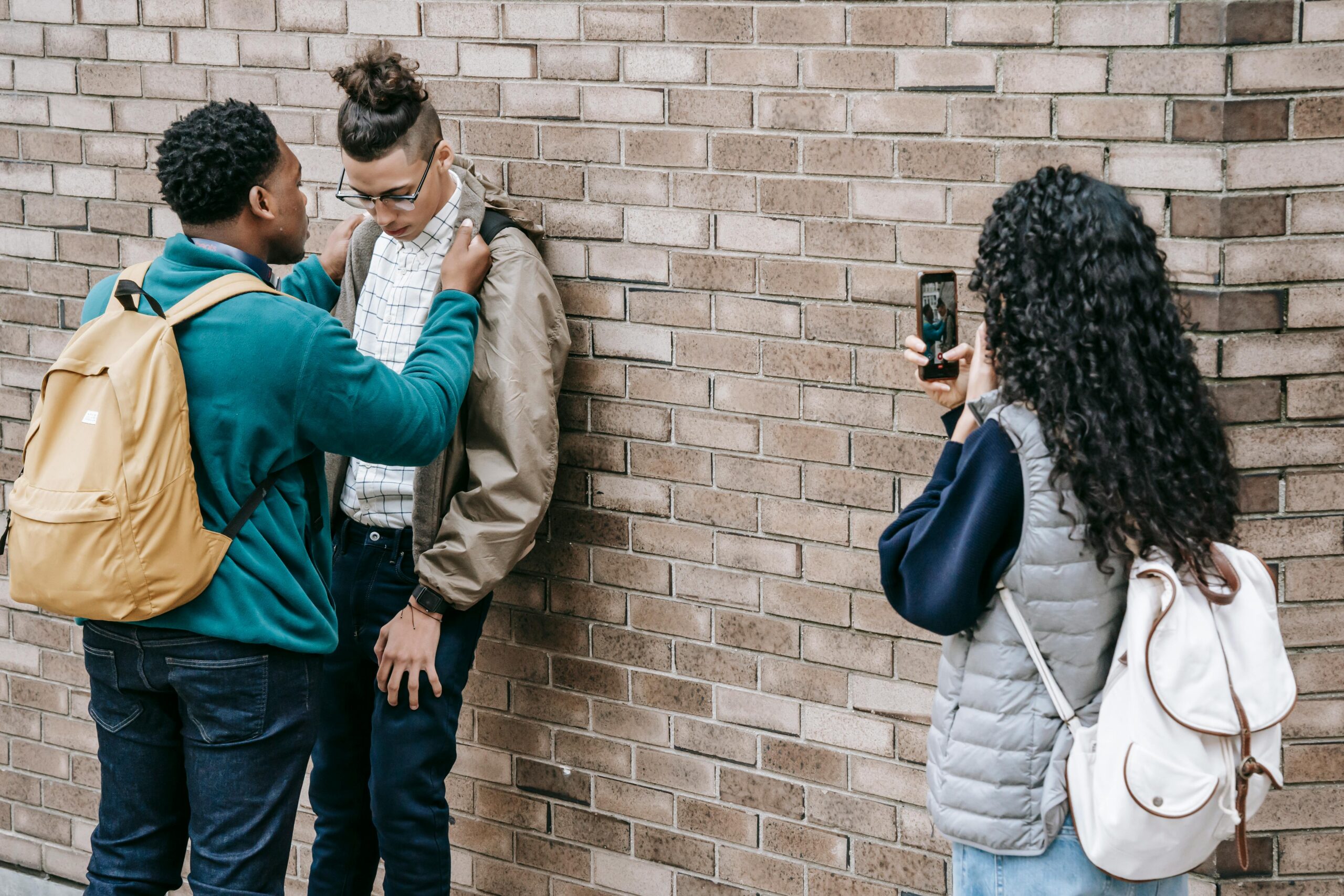
The second half of 2019 was quite rough for Kekeyi Rahmawati Putri. The 25 years old beauty vlogger who rose to fame after one of her videos went viral in 2018, was the target of mass cyberbullying after announcing her relationship with an upcoming actor. Many accused Kekeyi was faking her relationship for publicity purpose, due to massive media coverage on her relationship.
Kekeyi’s high-profile relationship only lasted for three months. The couple reportedly broke up in December. Shortly after the break-up, Kekeyi posted a series of posts alluded that netizens were the reason why her relationship failed. At the time she was dating her actor boyfriend, Kekeyi’s social media handles were flooded with hate comments. The constant online harassment that she received eventually destroyed her mental health and relationship[i].

Figure 1: Screenshot images of negative comments directed to Kekeyi
The picture above shows how far netizens were with their online harassment toward Kekeyi. Netizens were judging her appearance, calling her names, spreading malicious accusations, and even telling her that it was her fault people bullied her. Kekeyi has been trying to stop the cyberbullying by deactivating the comment section in her social media accounts and opening up about her childhood bullying experience. Sadly despite the efforts, the bullying continued, and Kekeyi was still blamed for that.
Many netizens insisted that Kekeyi deserved to be bullied because she purposely did something that provoked people to abuse her. The cyberbullying was Kekeyi’s fault because she was asking for it.
Unfortunately, many people on the internet are also going through Kekeyi’s situation. Cyberbullying victims often suffer in silence because there is little to no sympathy for the victim of online harassment. Many victims can not open up about their misery because they are afraid that they would be blamed and ignored by people.
.
So why do people tend to blame the victim instead of the cyberbullies?
No Consensus on Cyberbullying
Some studies suggested that there are various reasons behind the victim-blaming culture in a digital society. However, before learning further, we must first understand what cyberbullying is.
In short, cyberbullying is a series of abuse and hostile behavior that takes place over digital devices[ii]. Sending a threat, sharing a negative post about someone, or posting false and harmful content about someone else are some examples of cyberbullying.
Despite sharing various similar characteristics with traditional bullying, many do not consider cyberbullying as ‘real bullying[iii]‘. Minimum to no physical abuse and harassment in cyberbullying leads people to perceive cyberbullying as something that we can dismiss. Mean posts written by cyberbully are considered less harmful than being punched by traditional bullies because it is only words that will not cause physical harm. Some people even take it too far by refusing to acknowledge cyberbullying as a real phenomenon.
Lack of consensus on the clear definition of cyberbullying has enabled people to reject the severity of online harassment. A study conducted by Computer Human Behavior has shown that the majority of people often misinterpret toxic and abusive social media content as friendly teasing[iv]. Due to the perception that cyberbullying is just a myth, many fail to recognize cyber aggression. The fact that close friends are more likely to be the bully also makes it harder for bystanders to differentiate online harassment with dark jokes among peers. The victim is then being called overly sensitive because people fail to recognize the cyberbullying. The perpetrator of cyberbullying is sometimes being celebrated as a savage, funny, and interesting human being, while the victim is blamed for taking the ‘jokes’ too seriously.
Moral Disengagement as The Root of Victim Blaming
Bandura, an American psychologist, has proposed the idea of moral disengagement as the cause of victim-blaming in today’s society. Moral disengagement is a process that enables individuals not to involve in self-sanctioning behavior that usually results from inhuman behavior[v]. An individual with moral disengagement who engage in cyberbullying will try to disengage from morally-sanction behavior by ignoring the cyberbullying, reconstructing moral justification, and then blaming the victim[vi]. The bully may be aware of their wrongdoing but reluctant to acknowledge their fault or to feel guilty and remorseful. Most of the time, they will switch the blame to the victim to reject any consequences.
When moral disengagement is deeply embedded within a society, it is more likely for the victim to be shunned away and ignored when they are reaching out for help[vii]. The society also grants the bystanders less social pressure to get involved and help the victim. They are receiving justification and validation to remain passive instead of standing up for the victim[viii]. The severe the cyberbullying is, the more reluctant for bystanders to support the victim. Instead of defending the victim, bystanders would convince themself that the victim must have done something wrong that initiated the cyberbullying. By focusing on the victim’s wrongdoings, the bystander is trying to disengage themselves from the conversation.
So, What can we do to stop the victim-blaming culture?
Victim blaming brings more harm than good. Putting all the blame on the victim’s shoulders will only sustain the toxic behavior and allowing more people to become the next victims. As a society, we should not normalize victim-blaming. Instead of investing our energy on blaming the victim, we should hold the bullies accountable for their actions. To make it possible, the first thing that we need to do is to recognize that cyberbullying is a real thing and should not be trivialized. Whether the bullying is taking place in the real world or cyber world, bullying is bullying. Raising awareness on the perils of cyberbullying is an approach that can be done to encourage people to acknowledge the severity of cyberbullying and why it should be prevented and condemned. When the majority of digital society has agreed on the way cyberbullying is perceived as the way it should be, a new set of morals may be established. Thus, cyberbullying will be seen as immoral. Therefore, anyone who partakes in the bullying will receive societal sanctions instead of the victims.
Author: Amelinda Pandu Kusumaningtyas
Editor: Treviliana Eka Putri
Read more article written by Amelinda Pandu Kusumaningtyas
[i] Grid.id. 2020. Putus Dengan Rio Ramadhan, Kekeyi Salahkan Netizen Yang Menjadi…. [online] Available at: https://www.grid.id/read/041953325/putus-dengan-rio-ramadhan-kekeyi-salahkan-netizen-yang-menjadi-pihak-ke-3-udah-terlalu-sakit [Accessed 9 February 2020]
[ii] Assistant Secretary for Public Affairs. (2019). What Is Cyberbullying. [online] StopBullying.gov. Available at: https://www.stopbullying.gov/cyberbullying/what-is-it.[Accessed 9 February 2020]
[iii] Rao, T.S., Bansal, D. and Chandran, S., 2018. Cyberbullying: A virtual offense with real consequences. Indian journal of psychiatry, 60(1), p.3.
[iv] Dolan, E. (2020). Study Provides New Insights Into Why Cyberbullying Victims Are Blamed For Being Abused Online. [online] PsyPost. Available at: https://www.psypost.org/2019/02/study-provides-new-insights-into-why-cyberbullying-victims-are-blamed-for-being-abused-online-53067 [Accessed 9 February 2020]
[v] Hymel, S., Rocke-Henderson, N. and Bonanno, R.A., 2005. Moral disengagement: A framework for understanding bullying among adolescents. Journal of Social Sciences, 8(1), pp.1-11.
[vi] ibid
[vii] Koehler, C. and Weber, M., 2018. ” Do I really need to help?!” Perceived severity of cyberbullying, victim-blaming, and bystanders’ willingness to help the victim. Cyberpsychology: Journal of Psychosocial Research on Cyberspace, 12(4).
[viii] ibid
