
- 03/04/2018
- Category: Commentaries
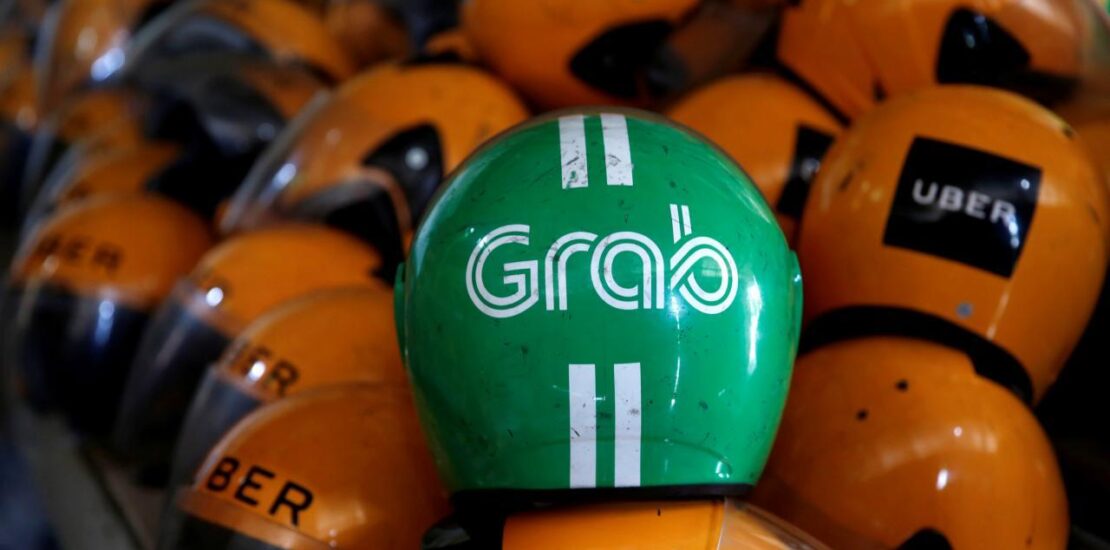
Uber officially announced that they are selling their operations in Southeast Asia (SEA) to Grab, in exchange for a 27.5% stake in the combined company. This is the third time that Uber pulled out from a market. Previously, Uber left China in 2016 and the year after it sold their business in Russia to Yandex—the biggest technology company in Russia.[i] We present key questions surrounding Uber’s latest major decision.
Q1: Why did Uber sell its South East Asia operations to Grab?
According to Uber CEO Dara Khosrowshahi’s email to his company’s staffs, Uber faced “too many battles across too many fronts and with too many competitors.” Khosrowshahi said that Uber should focus its main operations in their core markets,[ii] which are countries in which they have the biggest market share among competitors.
We can see that it is not about Uber being unable to “multi-task” in foreign markets. Competition among ride-hailing companies like Uber and Grab in emerging markets are getting harsher day by day. They rely on giant investments to provide subsidies for its customers and extra fees for partners (read: drivers), making it difficult to increase profit margin—if the operation is profitable at all.
Besides, it might also have something to do with Softbank’s investment to Uber last year. Softbank launched US$ 1.2 billion primary direct investment to Uber and wished to help Uber’s plan for an initial public offering (IPO) in 2019. Softbank, which is known for its enormous investment in Grab, might think it is better to have the two companies they have invested in to cooperate instead of competing, according to Dr. Lee Der Horng, an analyst from the National University of Singapore (NUS).[iii] This move is somewhat beneficial for both.
Q2: What are the consequences of this deal for Uber’s community?
First, there would be big employment issues. The first person to ‘move’ is probably the Uber CEO himself. It is included in the deal that, since Uber has a 27.5% stake in Grab, Khosrowshahi will also join Grab’s board.[iv] This means that Uber will have a voice on how Grab would run in the future. Besides the CEO, Khosrowshahi mentioned in his personal address to his employees that around “five hundred colleagues will transition to Grab.” Other than the five hundred, in a statement to the media, Grab said Uber employees were on paid leave and that it will try to hire them back.[v]
Second, while it sounds like good news for Uber’s top management, it might not always be for Uber’s ordinary employees. Even though Uber and Grab promised to assist drivers and customers in shifting to Grab,[vi] some drivers are not relieved. Some Malaysian drivers, for example, are worried that Grab will have a monopoly on the market. They believed that Uber’s policy towards its drivers was looser than Grab, and their fares mechanism was more lucrative.[vii]
Another consequence for Uber is that it left one of the most promising ride-hailing markets on the globe for Grab, even though Uber still has a big portion in Grab. According to Google and Temasek, SEA’s ride-hailing market could reach US$13.1 billion in 2025. Every large country in SEA is even predicted to have around a US$ 1 billion market in the same year.[viii]
Q3: Does it mean that Grab wins and Uber loses?
To be frank, the deal does not mean that Grab has kicked Uber out of its territory. It is a rational and profitable merger instead of a defeat. Both sides can benefit from this.
For Uber, they now have a 27.5% stake in Grab, a company which was recently valued at US$ 6 billion. This stake is worth US$ 1.6 billion, and it is a big profit considering that Uber claimed they had invested US$ 700 million in SEA over the past five years.[ix] In other words, Uber had more than doubled its initial investment in the region, plus possible future incomes from Grab’s operation in SEA. Uber can now focus on developing its position in the market where it has a strong hold, such as the United States. It is important for Uber since profitability is crucial for their IPO plan in 2019, as investors would not like to see a public company perform badly, considering that Uber has not performed well since its huge losses in previous years.[x]
For Grab, acquiring additional operations will expand their resources, and at the same time increase efficiency. More drivers and services can be managed with their existing managerial employees. Grab can also focus on their ‘home’ market in SEA, just like Uber with their western markets. The deal opens more chances for Grab to dominate SEA markets—except for Indonesia, whose market is still dominated by its local rival GO-JEK.
Q4: How does the deal change/shape the online transportation competition in Indonesia?
In 2017 we predicted that 2018 would be the beginning of the year where e-commerce players will be eliminated due to tougher competitions. This might be true, only this time in the context of ride-hailing business. One thing we might pay attention to is the fact that it is a global tech giant who exited the arena. Now, the only dominating ride-hailing companies in Indonesia are GO-JEK and Grab.
GO-JEK, the most dominant of the two, will have a serious challenge after Grab and Uber’s deal. Grab will certainly become bigger after it acquires Uber and could gain better leverage in the long run—considering the number of armadas, efficiency, international markets, and financial support from investors led by Softbank. Thus, it might prolong the price war between the two.
A price war is not good for sustainability. The subsidies and promotions—as weapons of the price war—can be useful to attract the market’s attention. However, in the long run, it will force companies to reduce fares for drivers and charge customers as low as possible. Even before the deal takes effect, online transportation drivers in Indonesia have already voiced their concerns on this issue. On 27 March 2018, they marched to the streets urging the government to force companies like GO-JEK and Grab to increase drivers’ fares.[xi] On the other hand, low prices may cause customers to be too spoiled. They will not be happy to face monetization policies when the time comes. This will lure new competitors to enter the market with similar schemes, similar to what GO-JEK and Grab initially offered when they first entered the market. It could be a disaster for old players like GO-JEK and Grab.
Editors: Diah Ratna Pratiwi, M.Dev & Nabeel Khawarizmy Muna, S.IP
Picture: Reuters
[i] BBC (2018). Uber sells South East Asia operations to rival Grab [online]. Available at: http://www.bbc.com/news/business-43536322 [Accessed 28 March 2018].
[ii] Khosrowshahi, D. (2018). A New Future for Uber and Grab in Southeast Asia. Uber Newsroom [online] Available at: https://www.uber.com/newsroom/uber-grab/ [Accessed 28 March 2018].
[iii] Kit, T.S. (2018). Grab buys Uber’s Southeast Asia operations: Who are the winners and losers?. Channel News Asia [online]. Available at: https://www.channelnewsasia.com/news/singapore/grab-uber-takeover-operations-winners-losers-10078020 [Accessed 2 April 2018].
[iv] BBC (2018). Uber sells South East Asia operations to rival Grab [online]. Available at: http://www.bbc.com/news/business-43536322 [Accessed 28 March 2018].
[v] Abdullah, Z. (2018). Uber staff on paid leave following acquisition, Grab says it will try to rehire them. The Strait Times [online]. Available at: http://www.straitstimes.com/singapore/uber-staff-on-paid-leave-following-acquisition-by-grab-which-says-it-will-try-to-re-hire [Accessed 28 March 2018].
[vi] Nistanto, R.K. (2018). Grab Akuisisi Uber, Bagaimana Nasib Pengguna dan Driver Uber di Indonesia?. Kompas [online]. Available at: https://tekno.kompas.com/read/2018/03/26/11402397/grab-akuisisi-uber-bagaimana-nasib-pengguna-dan-driver-uber-di-indonesia [Accessed 28 March 2018].
[vii] Dzulkifly, D. & Robertson, M. (2018). Uber drivers fear lower pay, stricter rules after Grab merger. Malay Mail Online [online]. Available at: http://www.themalaymailonline.com/malaysia/article/uber-drivers-fear-lower-pay-stricter-rules-after-grab-merger [Accessed 28 March 2018].
[viii] Minter, A. (2018). Why Uber’s Losing to the Locals in Asia. Bloomberg [online]. Available at: https://www.bloomberg.com/view/articles/2017-07-27/why-uber-s-losing-to-local-rivals-in-southeast-asia [Accessed 28 March 2018].
[ix] Russell, Jon. (2018). Southeast Asia exit deal is a win, not a defeat, for Uber. Tech Chrunch [online]. Available at: https://techcrunch.com/2018/03/26/southeast-asia-exit-deal-is-a-win-not-a-defeat-for-uber/ [Accessed 28 March 2018].
[x] Sherman, L. (2017). Why Can’t Uber Make Money. Forbes [online]. Available at: https://www.forbes.com/sites/lensherman/2017/12/14/why-cant-uber-make-money/#5a29c8e410ec [Accessed 28 March 2018].
[xi] Taylor, G.S. (2018). Ribuan Pengemudi Ojek Online Demo Istana Jokowi Hari Ini. CNN Indonesia [online]. Available at: https://www.cnnindonesia.com/nasional/20180327084136-20-286148/ribuan-pengemudi-ojek-online-demo-istana-jokowi-hari-ini [Accessed 28 March 2018].
