- 19/09/2016
- Category: Commentaries
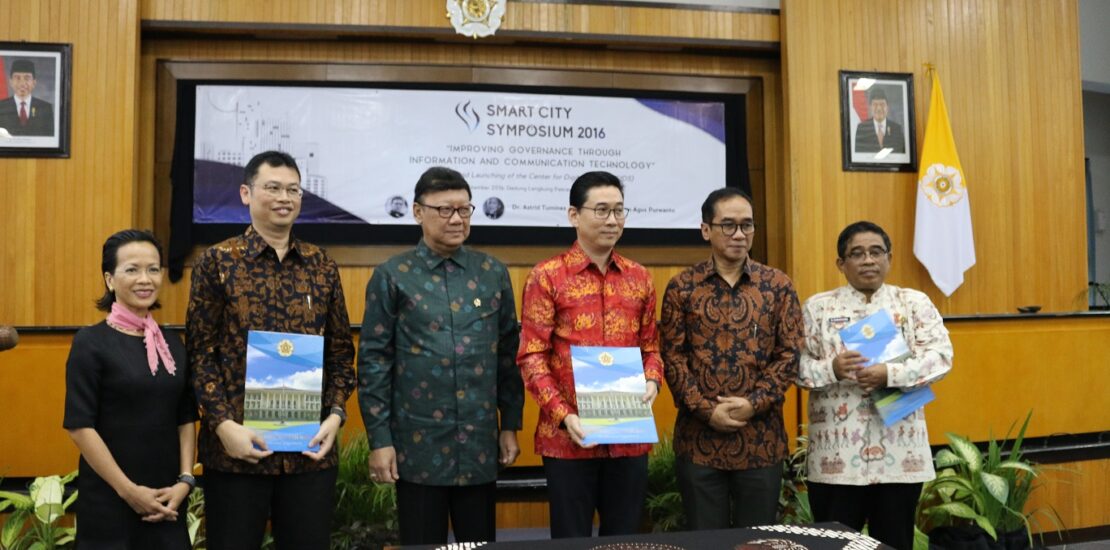
Approximately two weeks ago, the Center for Digital Society Universitas Gadjah Mada, in collaboration with the Ministry of Home Affairs Republic of Indonesia and Microsoft Indonesia held a nation-wide symposium and training, titled Smart City Symposium and Training 2016: Improving Governance through Information and Communication Technology (ICT). About more than 200 participants, which include HE Tjahjo Kumolo, the Minister of Home Affairs Republic of Indonesia, Andreas Diantoro, the President Director of Microsoft Indonesia, as well as academicians and fellow enthusiasts on the issue of ICT and digital society, attended the event. Here are some insights on what happened during the three-day event.
Day 1: September 7th
The first day of the event was opened with ceremonial proceedings where a monumental moment was documented: the signing of Memorandum of Understanding (MoU) between Universitas Gadjah Mada and Ministry of Home Affairs Republic Indonesia, as well as an Agreement between the Directorate-General of Regional Autonomy Ministry of Home Affairs, Faculty of Social and Political Sciences Universitas Gadjah Mada, as well as Microsoft Indonesia. Both documents signified the strong commitment made by these parties to directly engage and delve in the effort of building smart cities in the country. The minister himself highlighted the necessary urgency to realize smart cities across the nation to put forward the benefits it brings, particularly in the public service sector. He also underlined that the initiative was in line with the vision of our current president, Joko Widodo.
Following closely afterwards is set of discussion panels which invited several Mayors and city representative from some cities in the country. The sessions were divided into three panels, where each panels put representatives from different cities to share what they accomplished and faced during their own efforts in pursuing the smart city visions in their respective cities. Some mayors attending included the Mayor of Semarang, Tangerang, Depok, and Banda Aceh; whilst some other cities (Bekasi, Makassar, Sidoarjo, Surabaya and Bandung) sent their representatives to also share their own piece of stories. The discussion was alive and sparked some interesting discussion, as participants had the chance to directly interact with the panelists, including the invited city mayors. Despite different degree of smart city implementations between the cities involved in the panel discussion, all of them share the same vision on moving forward to be smarter cities in the future, as the innovative way they undertake to reshape their cities to be smarter and better cities. The forum was indeed aimed to have these cities more informed on each other’s efforts in realizing smart cities, and make the public more aware of how developed are the cities in the country in realizing smart cities.
Day 2 and 3: September 8th and 9th
After the first day was wrapped in success, the second and third day of the event were reserved for city bureaucrats from 40 cities in the country, as they were invited to participate in the inaugural training for city bureaucrats on smart city. The invited bureaucrats were exposed to the A-Z of smart city essentials brought by academicians of UGM and fellow tech-experts providing examples of operative applications for smart city. The participants were also exposed to several discussions where they were able to share and showcase their own concern on city in general and smart city in particular, especially in terms of prioritizing and identifying city problems. Divided into eight sessions, the training was well received and ignited possible future trainings for the bureaucrats in their cities.
