- 23/08/2016
- Category: Commentaries
co-authored with Farras Masardhi
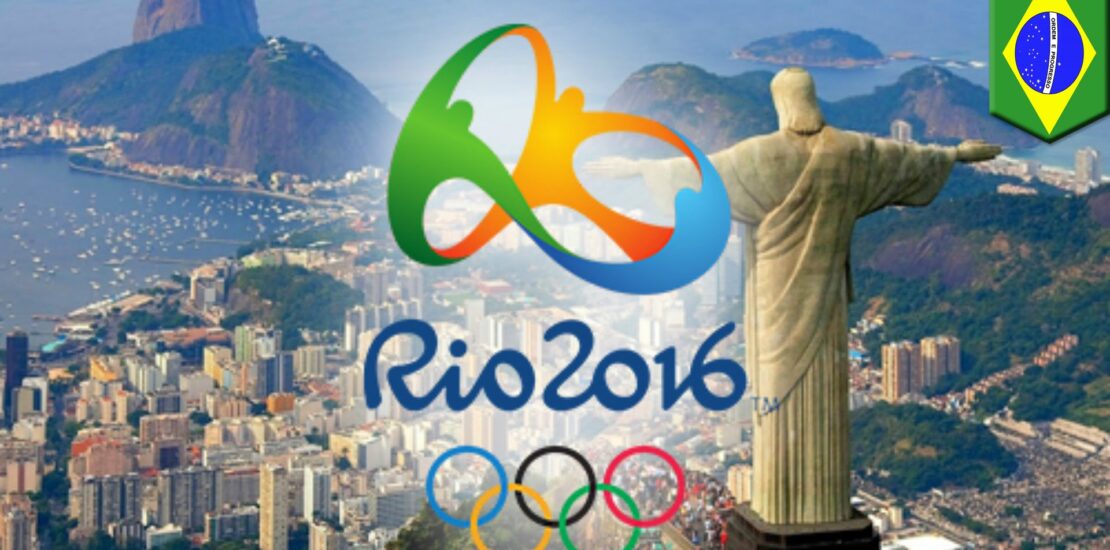
Did you watch the Opening and Closing Ceremonies of Rio Olympics 2016 on TV? If the answer is no, then I guess you might also have tried to watch the re-runs on YouTube or other popular internet channels. And the same goes to other moments of Rio 2016; we certainly are pumped to watch the live broadcasts or the re-runs on the internet.
Now, let’s get some flashbacks to London Olympics 2012. As for London 2012, we could watch the entire Olympics competitions on TVRI – our beloved state-owned broadcasting station. Aside from TVRI, we could also watch the broadcasts of London 2012 on various YouTube channels, particularly the official Olympics committee YouTube channel: Olympic. Of course for Rio 2016, we hope to get the access to Olympics with easier, or even better, than the previous Olympics. But unfortunately, Rio 2016’s publication is not as good as the last Olympics.
This happened because, firstly, Eurovision became the official license holder of Olympics broadcasts internationally. Thus, Eurovision sold the broadcasting rights to broadcasting stations all over the world. In Indonesia, Elang Mahkota Teknologi (EMTEK Group) won the broadcast rights. The EMTEK Group is a parent broadcasting company overseeing several private broadcasting stations, such as SCTV, Indosiar, O Channel, and Nexmedia. [i] Sadly, SCTV and RCTI preferred to air their own featured programs, such as soap operas, music shows, and other entertainment programs. As for the result, Indonesians have a very minimum access to Rio 2016.
These TV stations might argue that the entertainment programs are more beneficial (economically) than the Rio Olympics 2016 for them. Of course, this is a rational reasoning calculation for these TV stations, since their featured shows (namely Anak Jalanan (RCTI), Tukang Bubur Naik Haji (RCTI), and Mermaid In Love (SCTV)) have long been standing as the TV shows with the highest rating in Indonesia. [ii] But this doesn’t mean public cannot criticize and question EMTEK group on their decision to buy the broadcasting rights of Rio Olympics with no commitment on actually showing them on their respective TV channels to the general public. This, indeed, needs o be reevaluated
What even more ironic is, in this modern era, the development of digital technology does not bring any opportunity for netizens to access the broadcasts. Another sad thing is that the official channel of Rio Olympics 2016 has not uploaded any new entry since its beginning in early August. On top of that, if public tries to watch unofficial Olympics broadcasts posted by netizens, it will not be easy either since most of them have been deleted due to copyrights issue. And yes we could say that online broadcasting is fully taken and controlled by NBC (an American Broadcasting Company), and thus making the spread of online broadcasting of Rio Olympics on the internet becomes very limited and rare. [iii]
In the end, this issue becomes important for a reflection concerning the direction of ICT development in the future. If the purpose of ICT development is to make things easier for everyone to share, become more connected, gain information, increase productivity by considering pleasance and security aspects, then the limitation of Rio 2016 broadcasts –especially in this digital era—is unnecessary and, let’s say, is a sign of a set back. Also, the broadcasts of the biggest sports event like Olympics should be organized with the spirit of sportsmanship, togetherness, and peace clean for profit-driven motives. [iv]
[i] https://www.rio2016.com/en/official-broadcasters
[ii] http://seleb.info/2016/08/09/rating-acara-tv-indonesia-terbaru-3/
[iii] http://www.dailymail.co.uk/news/article-3732074/Chicago-sportscaster-slams-NBC-tough-restrictions-video-coverage-Rio-Olympics.html
[iv] Preuss, H., 2002. Economic dimension of the Olympic Games. Fundamental Olympic Lessons, Olympic Studies Centre, Universitat Autònoma de Barcelona (http://olympicstudies. uab. es/lectures/web/abo. asp.
