- 24/12/2022
- Category: Commentaries
Author: Mario Hartanto
Editor: M Perdana Karim
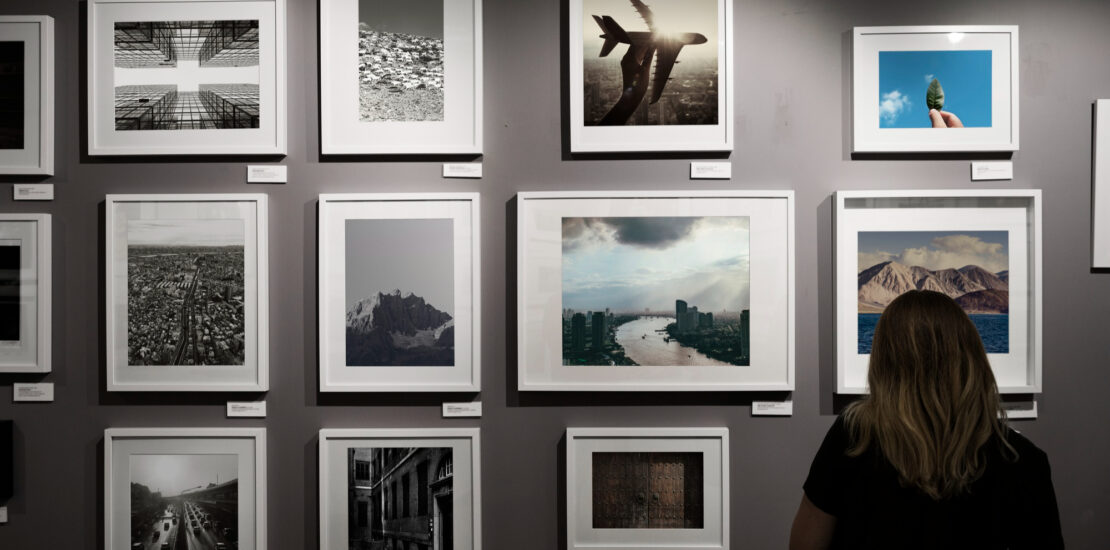
COVID-19 outbreaks two years ago have affected many things in our lives: from the way we behave, economics, and interact with each other to how we perceive art and culture. Take a look at art galleries: with the social distancing regulations, the art stored in public places was shuttered. Data from the International Council Of Museums (ICOM) reports that around 95% of museums closed during the outbreaks[i]. This phenomenon was challenging for art institutions where exhibitions were canceled, workers were laid off, and hindered the artist’s work. As we as a society try to navigate this issue, the usage of digital technology might be the answer. Yet the question remains: how has technology shaped art museums nowadays?
History & COVID-19 Restrictions
Who would have thought that cultural artworks exceeded their material forms? Philosophically speaking, art is perceived with its ‘post-medium condition’ where the meaning of artwork did not necessarily lie within it, but as often as not arising out of context existed (Archer, Paul 1997). Therefore, art tends to focus on its material form through art museums as the actual space. However, implementing digital technologies has shifted art practices through new possibilities and a connected world. Serota identified that the future of museums might be rooted in its buildings, but technology will connect audiences worldwide [ii]. In Indonesia itself, the mix of technology and art began in 1990 with Krisna Murti’s art pieces that focused on new media implementation towards contemporary art.
Art museums experience a radical shift during the COVID-19 outbreak. The situation became uncontrollable, and many countries started the lockdown policy. As a result, public places were shut down, including art museums. UNESCO report in May 2020 stated that 90% of museums were closed, and 10% of them may never reopen[iii]. The closing of art galleries also affects museum revenues which dropped 80% compared to 2019. While art galleries need to operate and people need art, technology implementation has become bigger during this unprecedented time. Many technology tools and platforms are used to provide social support. Without even realized, we have accelerated the pace of the digital ecosystem by expanding the virtuality of art and identity.
The Future of Cultural Preservations
Welcome to the new era! Where art museums had a paradigm shift from collection based to user based in the human participation context. Nowadays, museums (even before the pandemic) tend to focus on bringing art to an engaging experience for the audience. It is a massive trend for museums to collaborate with digital artists to build an integrative and inclusive museum model. Look at the ‘ Story of the Forest’ Singapore National Museum, which has been on permanent display since 2016[iv]. The art piece uses drawings from Farquhar and an animated virtual biosphere environment. It brings two years of collaboration between curators with the Japanese digital art collectives and is integrated through a mobile application.
The shift continued in this outbreaks season, where virtual museums provide various experiences to visit art galleries anytime and anywhere. They use technologies such as Artificial Intelligence (AI), Augmented Reality (AR), Cryptocurrency, etc. This development holds a critical role in recreating physical spaces into digital ones. We can take the example ‘Galeri Nasional Indonesia’, which held a hybrid immersive exhibition, ‘Affandi: Alam Ruang Manusia’ in May 2020[v]. This exhibition uses video mapping projection to minimize physical interaction between artists and visitors. Tempo, one of the prestigious media in Indonesia, perceived this exhibition as very special because of the usage of technology for cultural preservation with novelty.
What’s Next?
The succession of technology used for art galleries indicates that this is a positive trend for cultural preservation efforts. We can look at many art museums that innovate with tools and create an immersive experience for the audience. Technologies can provide interactivity and support the audience’s need for experienced art. Besides, the implementation can build new revenue streams for art museums’ managerial and further preservation efforts.
[i] Giannini, T. G., & Bowen, J. (2022). Museums and Digital Culture: From Reality to DIgitality in the Age of COVID-19 . Heritage, 5, 192–214.
[ii] Wands, B. (2017). The engagement of Digital Art with contemporary art. Electronic Workshops in Computing. https://doi.org/10.14236/ewic/eva2017.69
[iii] UNESCO Report: Museums around the World in the Face of COVID-19; UNESCO, May 2020. Available online: https://unesdoc.
unesco.org/ark:/48223/pf0000373530
[iv] Firšt, D., & Petljak, N. (2022, January 13). Interactive museum exhibitions – examples and technologies. DITDOT. Retrieved March 18, 2022, from https://www.ditdot.hr/en/interactive-museum-exhibitions-examples-and-technologies
[v] Genia Krishbie, B. (2021). Tantangan Museum Seni di Tengah pandemi Covid-19 Kajian: Pameran Imersif Affandi di GNI, 2020. JSRW (Jurnal Senirupa Warna), 9(2). https://doi.org/10.36806/jsrw.v9i2.119
