- 12/12/2022
- Category: Commentaries
Author: Ismada Firdaus Mandala Putra
Editor: Jasmine Noor Andretha Putri
In order to conduct economic recovery after the Covid-19 pandemic in Indonesia, the expanding global market for entrepreneurs by way of escalating digitization needs to be increased. It should be underlined that the economic progress of a country cannot be separated from trade interactions with other countries in the world. Therefore, the process of international trade improvement is totally crucial to undertake. One of the potential regions to be a market for Indonesia is Africa. Indonesia has a close relationship with countries from Africa since decades ago. The Asian-Africa Conference, which even the first edition was held in Bandung, Indonesia in 1955, can serve as a reminder that Indonesia-Africa relations have been close for a long time. This fact can certainly be used by Indonesian entrepreneurs to increase trade cooperation with countries on the African continent for the common good.
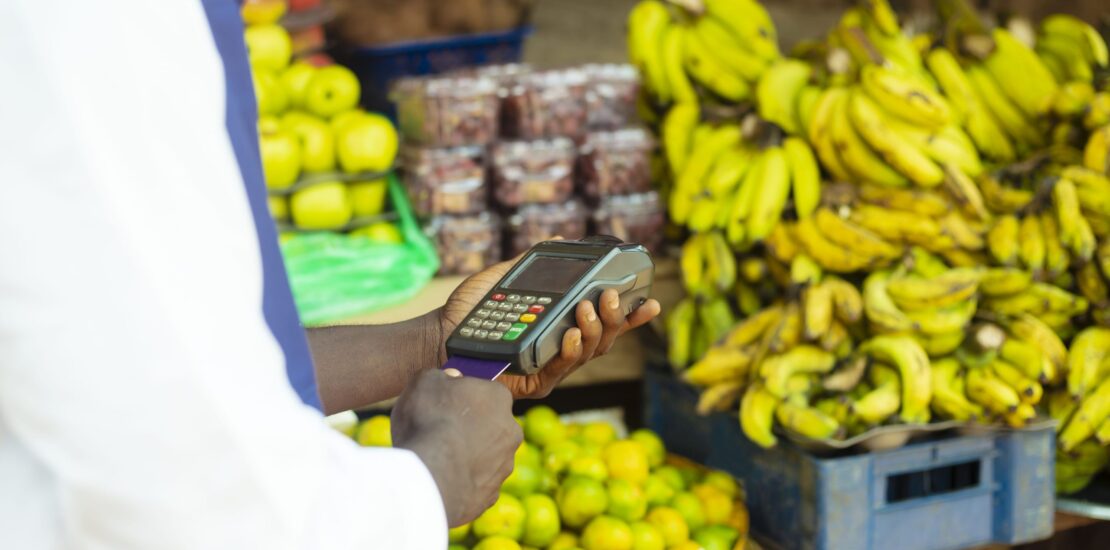
The study from Ali and Ebaidalla indicated that about half of more than 5.000 firms of some African countries such as Egypt, Morocco, and Tunisia are adopting the digital business during the Covid-19 pandemic emersion[i]. They develop a digital business significantly as the key to recovering economic conditions in Africa. Moreover, internet users in Africa have reached almost half of the total population, to be more precise, by 43%[ii]. In addition, Pinet et al argued that social distancing to prevent the transmission of Covid-19 have encouraged African society to implement a blended system between offline and online in various activities, including economic activities[iii]. They utilize the internet to access e-commerce platform to have diverse commodities they want. It is pretty clear that African region can be a prospective market for another country, no exception for Indonesia since both the businessman and the society has used the internet for their economic activities.
According to the research carried out by Nagel et al (2020) as cited by Ali and Ebaidalla, Covid-19 pandemic spreading has indeed emerged the idea to work from home in order to avoid the crowd so that the society can keep away each other as a preventive way to overcome this pandemic[iv]. Hence, those who are running a business has a chance to take advantage of this momentum by accelerating their digitization to expand their market virtually, especially local entrepreneurs in Indonesia or well-known as Micro, Small, and Medium Enterprises (MSMEs) owners. This will be the great opportunity for MSMEs to not only promote and supply the demand from local level in Indonesia. Instead, they can extend their scope to global level or exactly African region in this context.
Furthermore, Indonesia has started establishing economic cooperation with African countries through the role of embassies of both countries. For instance, Indonesia and Ethiopia have a special digital platform called Indonesia-Ethiopia Business Connect (IEBC) to bridge entrepreneurs in both countries so that they can quickly find out the existing demand and supply in real time[v]. Besides, Indonesia and Kenya are also cooperating with the construction of an Indonesian product house called Soko la Indonesia in Kenya to display thousands of samples of Indonesian products offered to Kenyan importers[vi]. From these examples, the MSMEs can join in such platforms by coordinating with some stakeholders such as the embassy of African countries to Indonesia as well as the Ministry of Foreign Affairs of Indonesia. Based on the explanation above, it is obvious to conclude that African countries can be an appropriate target for the MSMEs owners as local entrepreneurs from Indonesia to upgrade their market level from local to global in the post-pandemic world. There are some reasons to consider African countries as a reassuring place for marketing Indonesian products over digital-based business. Firstly, most of entrepreneurs over there, which can be a future partner for the MSMEs has run the digital business massively in response to Covid-19 effect. Secondly, the people of African countries are also being a digital consumer since they have to do a physical distancing. The last, there is a commitment of Indonesian and some African countries to share work in international trade sector for both parties through the program initiated and managed by their embassy. Consequently, the combination of these facts, which are the increasing of digital entrepreneur and consumer as well as the past collaboration between the government of Indonesia and several African countries hopefully adequate to make African region as a better place to globalize MSMEs’ products.
[i] Ali, M. E. M. and Ebaidalla, E. M. (2022) Does COVID-19 Pandemic Spur Digital Business Transformation in The MENA Region?
[ii] Internet World Stats (2021) Internet Users Statistics for Africa. Available at: https://www.internetworldstats.com/stats1.htm (Accessed: 22 November 2021).
[iii] Pinet, M., Sanyu, P. and Youn, A. (2021) Advancing youth-centred digital ecosystems in Africa in a post-Covid-19 world. London. Available at: http://www.indiaenvironmentportal.org.in/files/file/digisoc yf youth centred digital ecosystems.pdf.
[iv] Ali and Ebaidalla (2022)
[v] Ministry of Foreign Affairs Republic of Indonesia (2019) Indonesia-Ethiopia Business Connect: Improving Investment and Trade Partnerships between Indonesia and African Region, Ministry of Foreign Affairs Republic of Indonesia. Available at: https://kemlu.go.id/portal/en/read/712/view/indonesia-ethiopia-business-connect-improving-investment-and-trade-partnerships-between-indonesia-and-african-region (Accessed: 22 November 2021).
[vi] Ministry of Foreign Affairs Republic of Indonesia (2021) Soko la Indonesia: Strategi Tingkatkan Ekspor ke Kenya dan Sekitarnya, Ministry of Foreign Affairs Republic of Indonesia. Available at: https://kemlu.go.id/nairobi/id/news/16643/soko-la-indonesia-strategi-tingkatkan-ekspor-ke-kenya-dan-sekitarnya (Accessed: 22 November 2021).
