- 08/09/2021
- Category: Commentaries
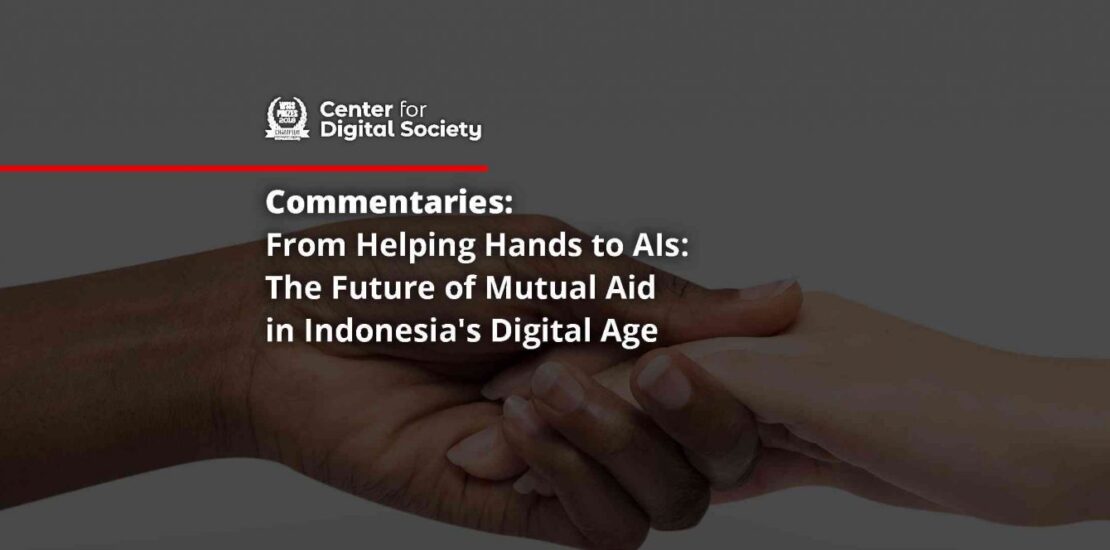
The people saw it coming, the inevitable crisis that was about to bring Indonesia to absolute turmoil in its second year of the pandemic. With the surging toll of COVID-19 cases up almost reaching 40,000, the Indonesian government then decided to impose the Community Activities Restriction Enforcement to halt the spread of the virus.[1] Although the decision was deemed fit, the government seemed not to learn its lesson in handling the pandemic situation in the early days. The implementation was proven to be ineffective in maintaining the welfare of its citizens as many workers were laid off along with small and medium enterprises (SMEs) struggling to make ends meet.[2] Ironically, the government has yet to offer any more assistance within the span of the extended measure in accordance with UU No. 8 about Health Quarantine. In addition to the scandal of corruption related to governmental social aids, the ongoing situation led to a growing public distrust. [3]
This series of unfortunate events resulted in local communities and volunteering organizations across the archipelago finding ways to help others through means such as mutual aid. Coined by anarchist philosopher Peter Kropotkin in the essay collection, Mutual Aid: A Factor of Evaluation, mutual aid is understood as cooperation between communities to ensure their survival. Such is done through voluntary reciprocal exchange of resources and services to fulfill the needs of everyone in the community.[4] Since it operates outside the existing frameworks, mutual aid holds onto the principles of equality and de-establishes hierarchical platforms such as institutional charities.[5] Thus, it covers all aspects of society and not just those deemed as “the most vulnerable”, especially the middle class who are being hit the hardest this time around with self-isolation.
With social media being considered an innate aspect daily, social movements, including mutual aid, are moving to the digital realm. Interestingly, digital mutual aid in Indonesia has actually been around before the pandemic. For instance, in Yogyakarta, the famous Facebook group Info Cegatan Jogja has been gathering and conveying information varying from missing personal belongings to ongoing community donations since it was initiated in 2013.[6] As a result, what started from a digital platform transformed into actual actions which created hyperlocal networks where local communities can distribute information from different regions in the province.
Moreover, as the pandemic increasingly integrated into our lives now, the frequency of social media usage is also increasing. As such, it accommodates the continuity of mutual aid programs. One of them is Bagi Rata, a peer-to-peer distribution tool for financial aid for workers from various sectors. While the platform itself launched a website that facilitates cross-subsidies between citizens, Bagi Rata also utilizes its Instagram account to promote SMEs, stories and testimonies from its recipients, as well as their donation report as a form of transparency. Moreover, unlike the typical third-party platform that accumulates all the monetary donations, Bagi Rata instead lets the donors send their money directly to the recipients.[7] As of August 15, 2021, Bagi Rata has successfully distributed its donations to 3.140 workers from 9.808 cross-subsidies across Indonesia.[8]

Source: bagirata.id
Alongside that, the application of artificial intelligence (AI) could also support digital mutual aid to further reach out to citizens from a range of different backgrounds. For example, developers can map out potential sympathizers, donors, and recipients by using machine learning such as Social Network Analysis (SNA). This is especially useful to detect recipients who are not included in the “vulnerable” list.[9] An example of this is the hashtag #WargaBantuWarga used in various social media platforms, especially Twitter, which can help pinpoint these individuals and spread out the information to clusters that have not been exposed to the hashtag. AI could also help mutual aid groups independently accumulate more vast, unique, and decentralized data since the database does not solely originate from the government. Additionally, data accumulation and distribution could also be done ethically through safeguards generated by AI.[10] Doing so is to respect and adhere to ethical principles when it comes to personal data, which has been an issue in the digital infrastructure.
Looking back at the trends in the past few years, the future of mutual aid will be more integrated with digital platforms and artificial intelligence. Even if the pandemic is over and platforms are being closed down, upcoming social projects can be more extended beyond local networks than ever before with platforms focusing on diverse aid, such as legal and psychological support for victims of domestic violence.[11] Nevertheless, although conventional mutual aid is still relevant, citizens are now moving towards those within their fingertips’ reach.
Author: Rizka Khairunnisa Herdiani
Editor: Amelinda Pandu Kusumaningtyas
[1] Rastika, I., 2021. Kasus Covid-19 Harian Hampir Tembus 40.000 dan Skenario Terburuk yang Disiapkan Pemerintah. Kompas. Available at: https://nasional.kompas.com/read/2021/07/09/09593011/kasus-covid-19-harian-hampir-tembus-40000-dan-skenario-terburuk-yang?page=all [Accessed August 15, 2021].
[2] Jatmiko, B.P., 2021. Melihat Dampak Bagi Pelaku usaha Jika PPKM Skala 4 Terus Diperpanjang. Kompas. Available at: https://money.kompas.com/read/2021/07/22/080511826/melihat-dampak-bagi-pelaku-usaha-jika-ppkm-skala-4-terus-diperpanjang [Accessed August 15, 2021].
[3] Thomas, V.F., 2020. Ironi korupsi Mensos Saat Belum Semua Rakyat Kebagian Bansos R. Apinino, ed. tirto.id. Available at: https://tirto.id/ironi-korupsi-mensos-saat-belum-semua-rakyat-kebagian-bansos-f7RQ [Accessed August 15, 2021].
[4]Kropotkin, P., 1902. Mutual Aid: A Factor of Evolution, Available at: http://theanarchistlibrary.org/library/petr-kropotkin-mutual-aid-a-factor-of-evolution [Accessed August 15, 2021].
[5]Spade, D., 2019. Mutual aid chart. Dean Spade. Available at: https://www.deanspade.net/2019/12/04/mutual-aid-chart/ [Accessed August 15, 2021].
[6] Rasyid, S., 2020. Mengenal Grup Info Cegatan Jogja, Wadah Berbagi Informasi Terbesar di Yogyakarta. merdeka.com. Available at: https://www.merdeka.com/jateng/mengenal-grup-medsos-info-cegatan-jogja-wadah-berbagi-informasi-terbesar-di-yogya.html?page=all [Accessed August 15, 2021].
[7] Anon, 2021. Bagirata. BagiRata. Available at: https://bagirata.id/ [Accessed August 15, 2021].
[8] BagiRata, 2021. Instagram. Available at: https://www.instagram.com/p/CSlnvp-FoDy/ [Accessed August 15, 2021].
[9] Isa, D. & Himelboim, I., 2018. A social networks approach to online Social Movement: Social mediators and Mediated content IN #FreeAJStaff Twitter Network. Social Media + society, 4(1), p.205630511876080.
[10] Floridi, L. et al., 2020. How to Design AI for social Good: Seven essential factors. Science and Engineering Ethics. Available at: https://link.springer.com/article/10.1007/s11948-020-00213-5 [Accessed August 15, 2021].
[11] Anon, 2021. Tentang Kami. Cari Layanan. Available at: https://carilayanan.com/about/ [Accessed August 15, 2021].
