- 13/01/2021
- Category: Commentaries
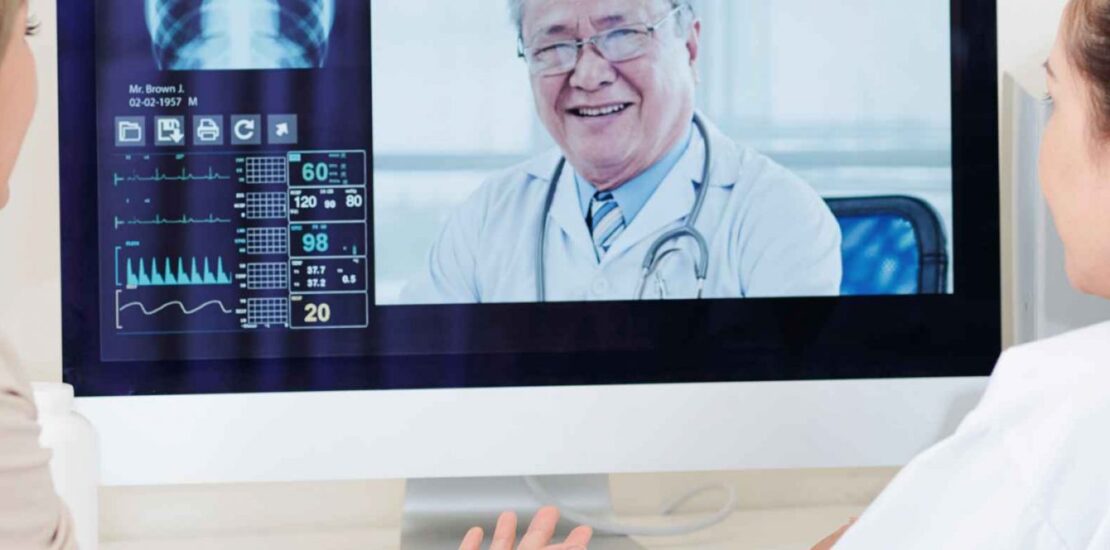
COVID-19 pandemic creates a situation where it’s innately dangerous to directly seek medical services without the risk of possibly contracting or spreading the virus, especially in high-risk places such as hospitals. In this situation, telemedicine—the remote diagnosis and treatment of patients by means of telecommunications technology—ideally becomes an alternative option. This scenario is reflected by the increase of telemedicine app usages, according to statements by telemedicine apps’ representatives; for example Alodokter—one of telemedicine application in Indonesia—which clocked 32 million website visitors in March and over 500,000 free coronavirus consultations since Indonesia’s first confirmed COVID-19 case on March 2. In a similar trend, GrabHealth said daily consultations had nearly doubled to 10,000[i]. These rising numbers support the idea that telemedicine is an easily-accessed mobile platform to support healthcare facilities’ function. However, can it contribute to the broader goal of equal healthcare in the context of Indonesia?
Indonesia’s foray into telemedicine: towards better healthcare distribution?
Telemedicine is not something novel in Indonesia. On top of applications such as HaloDoc and Alodokter, Indonesia’s Ministry of Health has actually launched Telemedicine Indonesia (Temenin) in 2017. Telemin can be seen as Indonesia having its own national telemedicine platform, with features such as teleradiology, tele-EKG, tele-USG, and teleconsultation, as well as partnering with around 200 hospitals and local health centers (Puskesmas)[ii]. From this, we can see that the government has paid attention to the potentials of telemedicine development. Not only that, several hospitals have also provided their own telemedicine services, which separate from the national telemedicine service.
This also shows that Indonesia’s healthcare stakeholders keep up with the trend of steady demands for telemedicine: a survey conducted in Asia-Pacific region shows that 59 percent of consumers expect their doctors to answer questions through phone and messaging services rather than waiting for the next appointment, and as of now 59 percent say they monitor their health using technology and 54 percent schedule appointments through mobile apps[iii].
Ideally, telemedicine helps healthcare services to cover more areas, especially rural ones that lack physical healthcare facilities. At the very least, telemedicine provides people with the ability to be diagnosed faster; hence, they can acquire a faster and more concise response from healthcare providers, both in emergency and non-emergency cases. This is why in a populous and enormous country like Indonesia, telemedicine would complement the existing healthcare facilities by overcoming their current accessibility issues. Moreover, BPJS Kesehatan—the national health insurance program—can take advantage of telemedicine as compensation for healthcare provision in regions where physical facilities aren’t largely available. In fact, this plan has explicitly been mentioned under Peraturan Presiden No 82/2018 about Health Insurance[iv]. Not only in the national level, local governments also harbor high hopes for Temenin. For example, in the province of East Java, the Governor expects all hospitals to integrate into the program[v].
What to look out for
However, despite the promising concept of Temenin, it is not yet ready to be established nationwide, and not yet popularly used by the general population, especially in regions outside metropolitan cities. As an illustration, in West Papua province where Temenin has partnered with four hospitals, it was found that its utilization level is so low due to the problem of internet connectivity and lack of suitable features that match the local population’s health needs[vi]. Not to mention, compared by other providers of telemedicine operating in Indonesia, Teemenin is considerably less well-known.
Our national telemedicine service’s current state reflects the long-standing challenge of Indonesia’s digital development: inequal digital infrastructure that doesn’t cover remote areas. Thus, if Indonesia were to harness telemedicine’s full potential, it must be accompanied by a commitment to developing digital infrastructure so that citizens’ utilization would not be limited in the urban areas.
Moreover, there is a challenge to make sure that telemedicine remains accessible financially to realize the goal of healthcare itself. This is due to the nature of telemedicine as an economically exploitable sector, especially in Asia Pacific where telemedicine market is projected to grow from US$8.51 billion in 2019 to $22.45 billion by 2024[vii]. Looking at the context of Indonesia, Inventure Indonesia projects that telemedicine start-ups will grow faster after COVID-19 and that the competition to create the best service will be tighter—with telemedicine apps predicted to be the next unicorns[viii]. Because of this, there is a possibility that telemedicine would be privatized and capitalized, hence defeating the purpose of accessible universal healthcare. Hence, the only way for telemedicine to provide healthcare for all people better is by the government’s active role to provide reliable telemedicine service while also having the political will to keep the best interest of the people at heart. Providing subsidized services and seamlessly integrating telemedicine services with BPJS insurance might serve as examples.
To conclude, Indonesia does have a promising start and trajectory of telemedicine technologies. While it might be challenging, there is a substantial need for the government to develop accessible and telemedicine platforms for the possible betterment they might bring to the future of healthcare provision in general.
Author: Heidira Witri Handayani
Editor: Amelinda Pandu Kusumaningtyas
[i] Hermesauto, “Indonesia Leans on Health Tech Start-Ups to Cope with Coronavirus Surge,” The Straits Times, April 10, 2020, https://www.straitstimes.com/asia/se-asia/indonesia-leans-on-healthtech-startups-to-cope-with-coronavirus-surge.
[ii] “Temenin – Telemedicine Indonesia,” Telemedicine (Kementerian Kesehatan), accessed August 21, 2020, https://temenin.kemkes.go.id/layanan_medis/.
[iii] Yunindita Prasidya, “Major Indonesian Hospitals Go Digital to Tap into Growing Telemedicine Market,” The Jakarta Post, May 20, 2020, https://www.thejakartapost.com/news/2020/05/20/major-indonesian-hospitals-go-digital-to-tap-into-growing-telemedicine-market.html.
[iv] “Layanan Kesehatan Dan Kemajuan Teknologi Digital,” Website Resmi Kementerian Komunikasi dan Informatika RI (Kominfo), accessed August 21, 2020, https://www.kominfo.go.id/content/detail/17698/layanan-kesehatan-dan-kemajuan-teknologi-digital/0/sorotan_media.
[v] Hilda Meilisa, “Khofifah Ingin RS Di Jatim Terapkan Teknologi Temenin, Apa Itu?,” detiknews, accessed August 21, 2020, https://news.detik.com/berita-jawa-timur/d-4784597/khofifah-ingin-rs-di-jatim-terapkan-teknologi-temenin-apa-itu.
[vi] “Low Utilization of Telemedicine in the First-Year Trial: A Case in the Province of West Papua, Indonesia,” in Conference: 2019 2nd International Conference on Bioinformatics, Biotechnology, and Biomedical Engineering (Yogyakarta, Indonesia, 2019).
[vii] Yunindita Prasidya, “Major Indonesian Hospitals Go Digital to Tap into Growing Telemedicine Market.
[viii] Esther Samboh, “Will Indonesia’s Telemedicine Start-Ups Be the next Unicorns?,” The Jakarta Post, accessed August 21, 2020, https://www.thejakartapost.com/news/2020/04/21/will-indonesias-telemedicine-start-ups-be-the-next-unicorns.html.
