- 23/04/2018
- Category: Commentaries
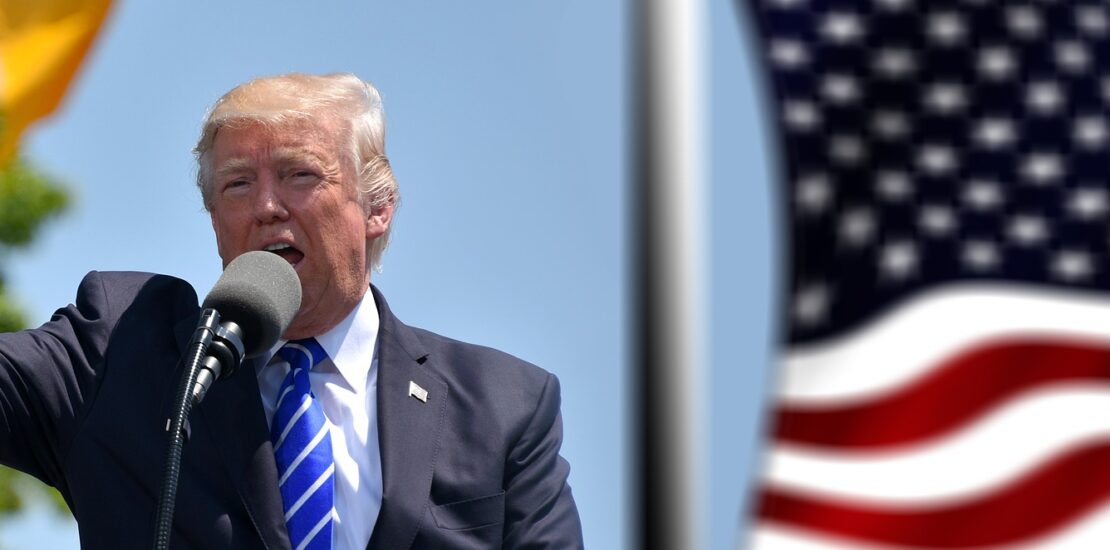
The world’s largest social media platform, Facebook, has been the subject of recent scrutiny after reports highlight how it might have indirectly assisted Donald Trump’s victory during the 2016 US presidential election. An investigation by The Guardian and the Observer explains how information from over 50 million Facebook profiles was wrongly exposed by Facebook to Cambridge Analytica, a UK-based political consulting firm that handles the collection and analysis of large-scale digital data.[i]
Having ties with Trump’s former key advisor Steve Bannon, Cambridge Analytica is a firm that worked closely with Trump’s campaign election team to help target personalized political advertisements towards individuals. Cambridge itself originated from a British PR firm called Strategic Communication Laboratories (SCL) Group which had already been around since the 1990’s. The group, known for assisting in ethically questionable methods of political messaging and PR advertising, has worked for governments, politicians, and militaries across the world – including Indonesia’s first legitimately elected president, Abdurrahman Wahid, during his first year of tenure.[ii] In 2014, the owner of SCL teamed together with Bannon to establish Cambridge Analytica, a similar political PR firm that would later see Trump’s campaign team as one of their major clients.
However, recent revelations made by former employees have raised concerns regarding Cambridge’s role during the 2016 election. Individuals who used to work for the firm have come out and claimed that they collected personal data of US citizens through an online personality quiz in which they had paid 270.000 individuals to fill.[iii] But unknown to most of these individuals, Cambridge misused the quiz application to exploit and collect the information of everyone on their friends list, which ultimately resulted in the unconsented harvest of data that belonged to 50 million users. The big data was then used to analyze individual personalities and psychological traits of US citizens which allowed for more efficient and accurate political campaigning.
The collection of personal data through the quiz itself was not a violation of Facebook’s guidelines since users willingly gave consent to participate in it. The issue lies in the fact that Cambridge successfully exploited a loophole in Facebook’s API, which allowed it to harvest information of individuals that barely even knew the quiz existed.[iv] As a result of this outbreak, Facebook has received widespread public criticism and has become the subject of an investigation by the US Federal Trade Commission (FTC), as well as having to endure a drop of 6% of its stock in only a week – its most damaging loss in history.[v]
At this point, it is crucial to underline that Cambridge’s data collection was not a “breach,” and it did not constitute any form of infringement towards Facebook’s policies that were applied during the time. Neither was it an infiltration or hacking of any of Facebook’s systems. The large-scale harvest of data that was carried out was possible because Facebook allows all third-party applications to access data not only from users of their apps but also from all of the people in those users’ friend networks on Facebook.[vi] However, while Cambridge’s act was not a data breach in technical terms, it still constituted as a severe misusage of data that abused its access towards user information. Facebook claimed that Cambridge had reassured the collected data would strictly be used for academic purposes only and therefore was not made aware that the data would later be used for political means.[vii] Facebook eventually requested that the data be deleted in 2015, in which Cambridge agreed to, but later investigation showed that the data was still stored throughout 2016.
Despite all of this, what is perhaps the main concern that has risen from this case is that it highlights how oblivious social media users are towards the privacy of their online personal data. Facebook’s guidelines and privacy policies have already stated the implications of sharing personal data on its social media platform, but it is not a common practice for users to thoroughly read through such fine print before utilizing the website. This results in the majority of users being highly unaware of the dangers that they face when they post information on their profiles – the underlying factor that allowed the massive Cambridge data collection to happen in 2014. Facebook eventually became aware of Cambridge’s unethical harvest in 2015, entailing a drastic revision of its API that largely limited third-party access to personal data. However, this revision, of course, was not before Cambridge had already collected information of 50 million users, which was then utilized by Trump’s campaign team to determine the effectiveness of different forms of political messaging to each individual.
It is difficult to measure to what extent Cambridge’s data collection assisted Trump in his presidential election. There is a slight possibility that the overall effect of it could have been minuscule and insignificant, and some analysts go as far as to say that Trump’s campaign team would still have won without the assistance of Cambridge Analytica. Nonetheless, what happened to Facebook is a worrying reminder that digital platforms are increasingly causing regrettable ramifications that were not initially considered by its users. Continuous cases of exploitation and manipulation of personal information have now become somewhat less and less surprising to witness, despite not being any less undesirable. As a consequence, the recent global urge to digitalize all aspects of life is now put into question: how beneficial is it to actually utilize digital means of technology if the security of our personal data can never be truly guaranteed?
Editors: Atin Prabandari MA(IR) & Nabeel Khawarizmy Muna, S.IP
Picture: pixabay
[i] Cadwalladr, Carole & Graham-Harrison, Emma. (2018). ‘Revealed: 50 million Facebook profiles harvested for Cambridge Analytica in major data breach’. The Guardian (online). 17 March 2018. Available at: https://www.theguardian.com/news/2018/mar/17/cambridge-analytica-facebook-influence-us-election [Accessed 26 March 2018].
[ii] Prokop, Andrew. (2018). ‘Cambridge Analytica and its many scandals, explained’. Vox (online). 21 March 2018. Available at: https://www.vox.com/policy-and-politics/2018/3/21/17141428/cambridge-analytica-trump-russia-mueller [Accessed 27 March 2018].
[iii] Chang, Alvin. (2018). ‘The Facebook and Cambridge Analytica scandal, explained with a simple diagram’. Vox (online). 23 March 2018. Available at: https://www.vox.com/policy-and-politics/2018/3/23/17151916/facebook-cambridge-analytica-trump-diagram [Accessed 26 March 2018].
[iv] Chang, (2018).
[v] Prokop, (2018).
[vi] Ramano, Aja. (2018). ‘The Facebook data breach wasn’t a hack. It was a wake-up call.’ Vox (online). 20 March 2018. Available at: https://www.vox.com/2018/3/20/17138756/facebook-data-breach-cambridge-analytica-explained [Accessed 27 March 2018].
[vii] Wong, Julia Carrie & Lewis, Paul. (2018). ‘Facebook gave data about 57bn friendships to academic.’ Vox (online). 22 March 2018. Available at: https://www.theguardian.com/news/2018/mar/22/facebook-gave-data-about-57bn-friendships-to-academic-aleksandr-kogan [Accessed 3 March 2018].
