
- 27/02/2018
- Category: Commentaries
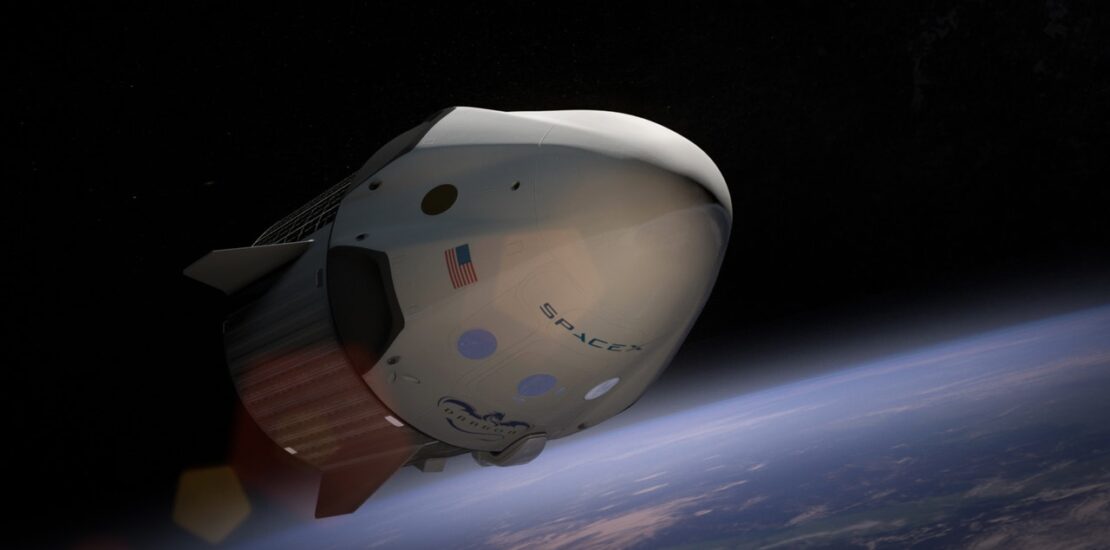
On February 8th, 2018, Elon Musk’s SpaceX successfully launched the widely-anticipated Falcon Heavy rocket into space. The occurrence made headlines worldwide because Musk seized the opportunity to send his personal Tesla Roadster car into space. As a result, the Roadster became the first car to reach Earth’s orbit, giving us photos that seemed to be taken straight from a science-fiction movie. However, the importance of the launch goes well beyond the impressive publicity stunt. The rocket launch marks a significant milestone for space travel as well as for technological development. Here’s why.
Q1: What is SpaceX and what are their activities?
Space Exploration Technologies Corp, or widely known as SpaceX, is a private company founded by Elon Musk in 2002 that aims to revolutionize the technological development of space travel. The long-term and highly ambitious goal of the company is to pioneer the establishment of human civilization on other planets – most possibly Mars. Taking note of the high-expense rocket launches by NASA, the company aims to manufacture an array of affordable rockets that would require substantially lower amounts of funds to launch.
The main activities of the company focus on the design as well as the launching of self-manufactured spacecraft. In 2008, only six years after establishment, SpaceX’s Falcon 1 rocket became the first privately funded spacecraft to reach Earth’s orbit. Two years later in 2010, SpaceX gained widespread attention when its Dragon spacecraft returned from orbit fully intact, which was an achievement that was previously only possible by national agencies such as NASA or Russia’s Roscosmos. The company made headlines again in 2012 when it launched unmanned cargo vehicles to the International Space Station (ISS). Similarly, this challenge was achieved only by four government-owned space bodies in previous years, which further underlined the significance of SpaceX’s accomplishment. Since then NASA has trusted SpaceX with at least 20 commercial cargo resupply missions, sending its spacecraft to and from the ISS.
To reduce manufacturing costs, SpaceX builds most of its launch hardware in-house – meaning that an estimated 80% of spacecraft parts are made within the company’s factory.[i] This allows the company to not only greatly limit the funds allocated for outsourcing, but also to maintain tight quality control over most rocket parts. However, it is not to say that the company is short of funds. It has $4.2 billion in contracts from NASA alone, along with additional private contracts worth $7 billion for launching at least 60 commercial satellites.[ii]
Q2: What does the recent Falcon Heavy rocket launch mean for technological development?
The successful launch of the Falcon Heavy rocket has several significant implications. Regarding the payload it can lift, the Falcon Heavy is the biggest rocket to launch since NASA’s Saturn V rocket in 1973. It is capable of carrying 64,000 kilograms of cargo to orbit which is at least double the payload of its current closest competitor called the Delta IV Heavy, which is currently still in development. [iii] But whereas the Delta IV Heavy will cost over $400 million to launch, the Falcon Heavy requires less than a quarter of that at only $90 million.[iv] Moreover, the Falcon Heavy implements a unique booster system with rocket-pushers that are not limited to single use. Boosters used in mainstream rockets with more traditional systems would most likely fall into the ocean or burn up in Earth’s atmosphere, but Falcon Heavy’s boosters are capable of accurately landing themselves on pads or floating barges in the ocean, making them recoverable and reusable. This is a notable achievement in spacecraft development since the recyclability of the boosters further reduces costs for future rocket launches, while also representing SpaceX’s most impressive act of technological innovation.
Furthermore, the Falcon Heavy is a symbolic representation of SpaceX’s continuous work throughout the years. The launch highlights the rapid growth of commercial space industry within the past decade, and it may entail a new ‘space race’ amongst competing companies. But more importantly, the highly competitive cost of the Falcon Heavy will bring a significant impact on the entire industry, as SpaceX’s competitors may be forced to cut down the costs of their rocket launches to stay in the market. [v] On top of this, the successful inaugural flight of the Falcon Heavy has also sparked global excitement for space travel that has been mostly absent since the moon landing in 1969 and the launch of the Space Shuttle in 1981. It is also the largest rocket launch in a lifetime for anyone currently under 45 years old, and its relatively low cost in comparison to its competitors also serves as a reminder that mankind is very well set for magnificent space travel achievements in the near future.
More importantly, the Falcon Heavy’s currently unmatched cost-efficiency and performance make it one of the possible options for NASA to develop space travel even further. NASA’s current model for exploring the outer solar system usually includes large and complex missions worth billions of dollars, with each mission potentially taking up a scientist’s entire professional lifetime just to gather the required data.[vi] If NASA decides to incorporate SpaceX’s technology somehow, they would be able to deploy a fleet of smaller missions that would greatly reduce spacecraft travel time to just a few years, while also significantly cutting down costs. From a larger perspective, this means that it may be possible to fast-forward current space travel research rapidly.
Q3: What’s next for SpaceX and space travel?
Elon Musk aims to make mankind ‘multiplanetary’ by creating the possibility to live in both Earth and Mars. He is amongst an emerging generation of ‘entrepreneurial space pioneers’ with equally ambitious ideas. This group includes Jeffrey Bezos, owner of Amazon and rocket company Blue Origin, who has mentioned that one of his ultimate goals is to establish civilization in space.[vii] Other companies, such as the Luxembourg-funded ‘Planetary Resources’, aim to mine asteroids for profit; while Florida-based ‘Moon Express’ is looking to provide frequent transportation to the moon and back.[viii] While all these ideas seem somewhat far-fetched at the moment, SpaceX’s breakthrough with the Falcon Heavy rocket is a big step towards realizing these ambitions. However, when compared to other future models that are currently in development, the Falcon Heavy is not the largest. NASA is currently preparing the Space Launch System (SLS) that will be able to carry up to 130,000 kilograms of payload or equivalent to almost twice the Falcon Heavy’s. But the downside of this is that the SLS will be substantially more expensive than the $90 million-priced Falcon Heavy with estimations of the launch costing anywhere from $1.5 to $2.5 billion.[ix] With the Falcon Heavy’s successful launch, however, they have proven that space travel can be much more affordable than once conceived, and companies will now look to continue technological development while also striving to implement the low-cost production methods pioneered by SpaceX.
Elon Musk himself has stated that the Falcon Heavy is not the last of SpaceX’s plans. Now that the rocket has gained success, the company can finally focus on developing an even larger model called the Big Falcon Rocket (BFR) that would give off more than 11 million pounds of thrust at liftoff. Being more than double the thrust of the Falcon Heavy, it’s difficult to imagine that a rocket with such power would be developed in the near future. Musk is determined to start test launches for the BFR as early as 2019, but it is highly probable that this would be delayed for several years since Musk has a reputation for failing to meet promised dates.[x] But once the BFR is finally fully developed, it would serve as SpaceX’s main rocket to start flying humans to the moon, and eventually, to Mars.
However, several obstacles stand in the way of Musk’s ambition to ‘colonize’ Mars. Other than several digital renderings of Martian bases, Musk has not provided any concrete details on how he believes he can build such human habitats. Furthermore, he has avoided explaining how to keep humans alive during the extended spaceflight, where radiation is a major problem; and he has not answered how to make Mars a possible place to live for any extended period of time.[xi] But looking at how far SpaceX has developed in only 16 years of its existence, Musk’s Martian master plan may very well be worth the wait.
Editors: Diah Ratna Pratiwi, M.Dev & Nabeel Khawarizmy Muna, S.IP picture: pexels
[i] Kluger, J. (2017). SpaceX: Ten Things to Know. [online] TIME. Available at: http://time.com/space-x-ten-things-to-know/ [Accessed 15 Jan. 2018].
[ii] Kluger, (2017).
[iii] O’Callaghan, J. (2018). Why SpaceX’s Falcon Heavy Launch Tomorrow Is Such A Big Deal. [online] ABC. Available at: http://www.iflscience.com/space/why-spacexs-falcon-heavy-launch-tomorrow-is-such-a-big-deal/ [Accessed 15 Jan. 2018].
[iv] Collett, M. (2018). Falcon Heavy: Elon Musk is sending this Tesla into space, but that’s not why this is important. [online] ABC. Available at: http://www.abc.net.au/news/2018-02-06/elon-musk-is-sending-a-tesla-into-space-via-the-falcon-heavy/9393256 [Accessed 17 Jan. 2018].
[v] Kramer, M. (2018). This is what SpaceX’s Falcon Heavy launch means for the future of spaceflight. [online] Mashable. Available at: https://mashable.com/2018/02/07/spacex-falcon-heavy-rocket-whats-next/#XnyxqjHThOqj’ [Accessed 17 Jan. 2018].
[vi] Berger, E. (2018). Forget the Falcon Heavy’s payload and focus on where the rocket will go. [online] ARS Technica. Available at: https://arstechnica.com/science/2018/02/forget-the-falcon-heavys-payload-and-focus-on-where-the-rocket-will-go/ [Accessed 17 Jan. 2018].
[vii] Chang, K. (2018). Falcon Heavy, in a Roar of Thunder, Carries SpaceX’s Ambition Into Orbit. [online] New York Times. Available at: https://www.nytimes.com/2018/02/06/science/falcon-heavy-spacex-launch.html [Accessed 17 Jan. 2018].
[viii] Chang, K. (2018).
[ix] Berger, E. (2017). NASA is trying to make the Space Launch System rocket more affordable. [online] ARS Technica. Available at: https://arstechnica.com/science/2017/12/nasa-is-trying-to-make-the-space-launch-system-rocket-more-affordable/ [Accessed 17 Jan. 2018]
[x] Mortilarro, N. (2018). Meet the BFR, SpaceX’s next big rocket. [online] CBC News. Available at: http://www.cbc.ca/news/technology/spacex-bfr-1.4526336 [Accessed 17 Jan. 2018].
[xi] Grush, L. (2017). Can SpaceX afford its new Mars rocket — and will there be a market for it?. [online] The Verge. Available at: https://www.theverge.com/2017/9/30/16384096/elon-musk-spacex-bfr-mars-rocket-development-business-demand [Accessed 17 Jan. 2018].
