- 23/09/2020
- Category: Commentaries
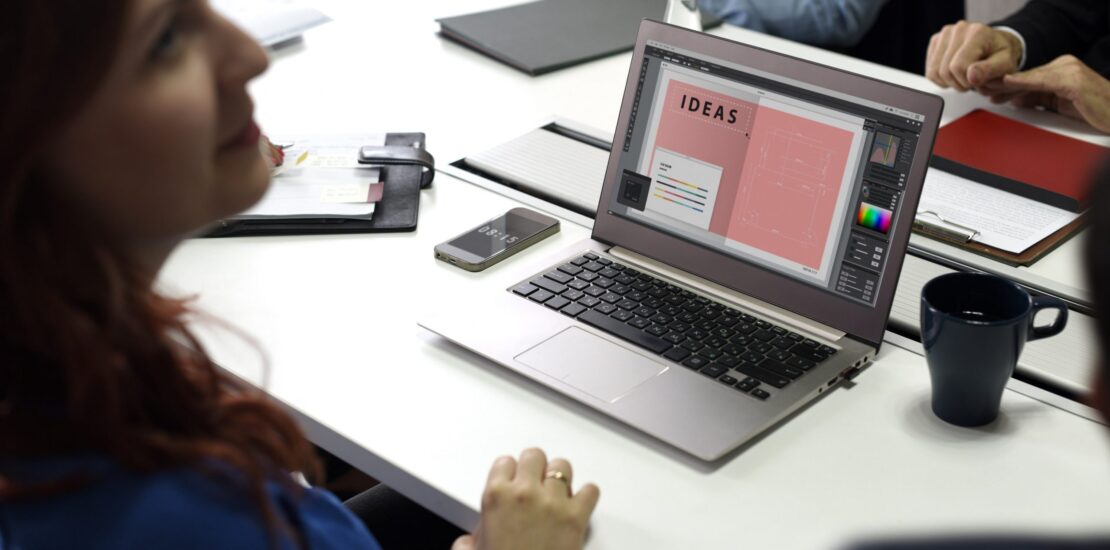
In exploration of the global phenomenon that is the Internet, a domain that is largely affected by Internet diffusion is the creative field. This field includes works such as art, design, music, film, performing arts and literary works. Through the introduction of social media and its large number of global users, the playing field for ownership of these creative works has become increasingly challenged.
Generation Z and millennials are a generation of ‘digital natives’, because they are more digitally literate than its predecessors, the ‘digital immigrants’.[i] [ii] Due to access to the Internet that has increasingly becoming easier, faster and cheaper, we consume much more information than our ancestors did.[iii] With this flow of information, we can become educated consumers to give input to corporate producers and become more vocal about market demands that meet our needs. We are now part of the creation process, there are now more user-generated contents, goods and services from this feedback loop.[iv]
It is because we are no longer just consumers, that have we have also become producers. We have moved on from what Lessig coins the ‘read-only society’, into the ‘read-write society’.[v] We are now part of the ‘amateur culture’, which is a society who creates for the love of it. Due to this digital revolution, the creativity domain is widening. Our creativity is our own literacy of this generation, it has become a tool of communication.[vi]
For creative professionals and even amateurs, the Internet makes it easier to access and re-share work. Anyone at any level of competency can have an online presence and build a network practically for free. Social media not only becomes a platform of self-expression, it functions as creative portfolios, and becomes the modern day word-of-mouth.[vii]
However, the downside of social media as creative outlets is the sharing culture that we have adapted. Works may become republished over and over without accreditation, until it becomes ‘orphaned’ and we no longer know who the creator is.[viii] This could be an act of innocence from individuals who aren’t familiar with the creative etiquette online, however it is sometimes deliberate copyright infringement. With the amount of vast information stored within the Internet, it has unfortunately become easier to plagiarize other people’s work and even get away with it.[ix]
What judicially constitutes as infringement is typically if an ordinary observer deems the two works as aesthetically similar.[x] The line is further blurred, as sometimes it is creative appropriation (as opposed to infringement) where you build upon an existing work, make alterations and create your own context. It usually becomes harder to hold somebody who has creatively appropriated accountable in court.[xi] It can also be argued that imitation is an inevitable part of the creative industry.
One solution to becoming law-abiding creative netizen is the Creative Commons (CC).[xii] The CC is a response to the limitations of traditional copyright laws which stifles the digital economy. They are a non-profit organization that provides six free copyright licenses to permit creative material to be copied, distributed, edited, remixed and built upon, with a basic condition of creator acknowledgment. Over 60 affiliate countries have created their adaptations of the CC licenses, and for the countries that lacked the expertise to create their own adaption, an international version of the licenses was launched in November 2013. This then not only protects many creative practitioners from the law, but also contributes to an open-source society with a free flow of information.[xiii]
To conclude, the Internet has definitely changed the playing field of the practices of creation. Thus, we need to be more educated on the moral of sharing, whether that is the sharing of our own work or others. For example, social media sites like Instagram will not claim responsibility if a user is sued for infringement.[xiv] Instagram also do not have ownership of the images that are uploaded by users. However there is an ‘implied license’ that is transferable to third-party services such as Olapic, where if users use a brand hashtag of an Olapic consumer, then Olapic and their consumers can legally use the images uploaded with that hashtag.[xv]
Not everything that is available on the Internet is free to use or share. It is important that we take the time to read the terms and conditions of social media sites, or the licenses of existing works online. If the information is not available, the best thing we should do other than to find work with the right licensing, is to contact the creator directly. At the end of the day, creators should have the choice whether their works are allowed to be reused freely for personal or commercial purposes, or even reposted.
Open-source resources are beneficial to society, however that does not give us the license to plagiarize or disacknowledge creators—with openness that is provided for the interest of the collective, there should be respect for the creators. If we want the digital future to consist of more openly available resources, we need to adapt this mentality towards creators for a healthier creative digital space. Picture: pexels
[i] Prensky, M. (2001). Digital Natives, Digital Immigrants. On the Horizon (MCB University Press), 9 (5), pp. 1–6.
[ii] ‘Digital natives’: a person born during after the widespread use of digital technology, therefore familiar with technology from an early age. ‘Digital immigrant’: a person born or brought up before the widespread use of digital technology.
[iii] TED. (2012). Four principles of the open world: Don Tapscott. [Video online] Available at: https://www.ted.com/talks/don_tapscott_four_principles_for_the_open_world_1 [Accessed 18 Dec. 2017]
[iv] TED. (2005). The era of open innovation: Charles Leadbeater. [Video online] Available at: https://www.ted.com/talks/charles_leadbeater_on_innovation#t-1703 [Accessed 18 Dec. 2017]
[v] ‘Read-only society’: a society where we consume existing works that is protected by copyright, and are unable to do anything other than passively consume it. ‘Read-write society’: a society where we create derivative works by combining or editing existing works to produce new creative works, also known as ‘remixing’.
[vi] TED. (2007). Laws that choke creativity: Lawrence Lessig. [Video online] Available at: https://www.ted.com/talks/larry_lessig_says_the_law_is_strangling_creativity [Accessed 18 Dec. 2017]
[vii] Leeuwen, F. (2017). Is Social Media the Death of Creativity or the Birth of a New Creative Era?. [online] Fstoppers. Available at: https://fstoppers.com/originals/social-media-death-creativity-or-birth-new-creative-era-192748 [Accessed 22 Dec. 2017].
[viii] MadeBrave. (2017). Copyright Infringement And The Creative Industries. [online] MadeBrave. Available at: https://madebrave.com/copyright-infringement-and-the-creative-industries/ [Accessed 22 Dec. 2017].
[ix] Morley, M. (2016). This is What Happens When You Rip Off a Designer. [online] AIGA Eye on Design. Available at: https://eyeondesign.aiga.org/this-is-what-happens-when-you-rip-off-a-designer/ [Accessed 22 Dec. 2017].
[x] Zafarris, J. (2016). Graphic Design Copyright Laws: Inspiration vs. Infringement. [online] HOW Design. Available at: http://www.howdesign.com/featured/graphic-design-copyright-laws-inspiration-vs-infringement/ [Accessed 25 Dec. 2017].
[xi] Ellison, K. (2012). 5 famous copyright infringement cases (and what you can learn). [online] 99designs. Available at: https://99designs.com/blog/tips/5-famous-copyright-infringement-cases/ [Accessed 25 Dec. 2017].
[xii] Creative Commons. (2017). About The Licenses. [online] Creative Commons. Available at: https://creativecommons.org/licenses/ [Accessed 25 Dec. 2017].
[xiii] Fitzgerald, A and Hooper, N. (2013). Explainer: Creative Commons. [online] The Conversation. Available at: https://theconversation.com/explainer-creative-commons-21341 [Accessed 25 Dec. 2017].
[xiv] Zafarris, J. (2016).
[xv] Schlackman, S. (2016). Losing Copyrights through Social Media. [online] Art Law Journal. Available at: https://alj.orangenius.com/copyright-olapic-and-social-media/ [Accessed 25 Dec. 2017].
