
- 23/05/2017
- Category: Commentaries
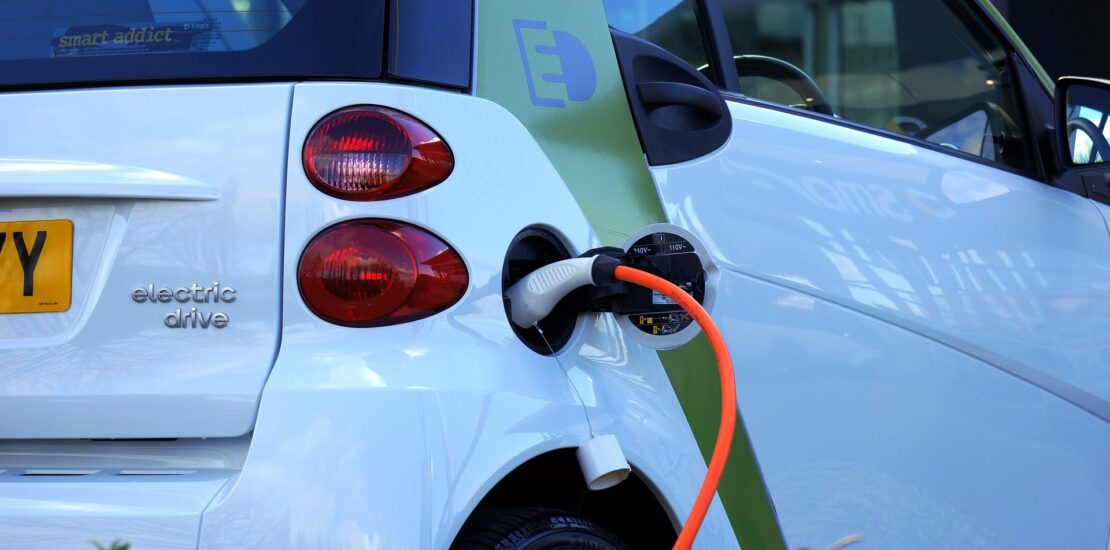
The green technology revolution has been up and running for the last couple of decades. Breakthroughs in green tech have emerged as a solution to reduce our fossil fuel consumption and carbon footprint so that we can transform into a low-carbon society. Examples of this kind of technology are energy-efficient lighting, solar panels, smartphones and electric cars that run on high-performance batteries. Despite the promising amount of energy that it can generate, along with the global emissions that it can reduce, green tech is not all good. It requires vast amounts of rare earth elements (REEs) – or technology minerals – to produce[1], and we all know that natural resources are limited.
Cheap solar panels need tellurium, a metal that is three times rarer than gold, while high-performance batteries need lithium, which is only easily extracted from the Andes.[2] Not only are technology minerals scarce, but its extraction process is just as unsustainable as other energy extraction methods. For instance, hydrogen-powered cars need platinum to turn hydrogen into energy. The extraction of platinum requires a high amount of toxic byproducts, and it already has a severe negative impact on the water and land in places like South Africa where it is mined.[3]
A study conducted by an international team of researchers claims the green tech revolution may already be dead before it can properly begin because there are not enough resources to start with.[4] The scarcity of these technology minerals is concerning since current mining operations will not be able to keep up with increasing demands.[5] These demands are bound to keep rising, considering that the “implementation of the Paris Agreement requires technologies that utilize a broad range of minerals in vast quantities” as the study concluded.[6]
If people recycle the technology they no longer use (e-waste), then the issue of scarcity could be improved. However, very little of this e-waste is recycled. According to the Solving the E-waste Problem (StEP) initiative, 49 million tons of e-waste are produced each year, from smartphones to refrigerators, of which only 10 percent is recycled.[7] In this case, the technology minerals within them are disposed rather than utilized for green tech production and help us shift into a low carbon society.
Another concern is that if technology minerals reach a low point in supply while demand stays high, then the rise in prices will be troublesome for the green tech revolution. Will green tech such as electric cars and solar panels be affordable for families who wants to reduce their carbon footprint? Even though experts are putting all they can into making green tech cheaper, there is still a potential future where technology minerals become scarce and very expensive where an even smaller percentage of people can afford.
The fact that production of green tech can lead to unfavorable consequences for the environment has proven that it is a double-edged sword. It could transform our world into a more ecologically sustainable place without having to change the systems but only substitute the fuels we use to run them.[8] But since it uses non-renewable technology minerals, the production of green tech could undermine the overall green movement itself. There needs to be an international mechanism to govern how REEs should be mined and coordinated since the issue has not yet been taken up effectively by governments and industries at the global scale.[9] Green tech producers must ensure that the energy it saves or creates is larger than the emissions and other negative impacts of the extraction and production processes. Lastly, as individuals, we need to start recycling the pieces of tech we no longer use so that technology minerals will not run out in the near future.
picture: pixabay
[1] Roberts, K. B. (2017). Sustainable Mineral Supply. [online] University of Delaware. Available at: http://www.udel.edu/udaily/2017/march/sustainable-mineral-supply/ [Accessed on 10 May 2017].
[2] Jones, N. (2013). A Scarcity of Rare Metals Is Hindering Green Technologies. [online] Yale Environment 360. Available at: https://e360.yale.edu/features/a_scarcity_of_rare_metals_is_hindering_green_technologies [Accessed on 10 May 2017].
[3] McDonald, D. (2014). SA water polluted by mines to be mapped. [online] News24. Available at: http://www.news24.com/Green/News/SA-water-polluted-by-mines-to-be-mapped-20140110 [Accessed on 10 May 2017].
[4] Malandra, O. (2017). EarthRx: Is Green Technology Really Just a Red Herring? [online]. Paste Magazine. Available at: https://www.pastemagazine.com/articles/2017/04/earthrx-is-green-technology-really-just-a-red-herr.html [Accessed on 10 May 2017].
[5] Graham, K. (2017). The world may be facing a shortage of ‘technology minerals’. Digital Journal. Available at: http://www.digitaljournal.com/tech-and-science/technology/the-world-may-be-facing-a-shortage-of-technology-minerals/article/488798#ixzz4gZOsjIW2 [Accessed on 10 May 2017].
[6] Ali, S. H. et al., (2017). Mineral supply for sustainable development requires resource governance. Nature, Volume 543, pp. 367-372.
[7] Jones, N. (2013). A Scarcity of Rare Metals Is Hindering Green Technologies. [online] Yale Environment 360. Available at: https://e360.yale.edu/features/a_scarcity_of_rare_metals_is_hindering_green_technologies [Accessed on 10 May 2017].
[8] Malandra, O. (2017). EarthRx: Is Green Technology Really Just a Red Herring? [online]. Paste Magazine. Available at: https://www.pastemagazine.com/articles/2017/04/earthrx-is-green-technology-really-just-a-red-herr.html [Accessed on 10 May 2017].
[9] Ali, S. H. et al., (2017). Mineral supply for sustainable development requires resource governance. Nature, Volume 543, pp. 367-372.
