
- 12/04/2017
- Category: Commentaries
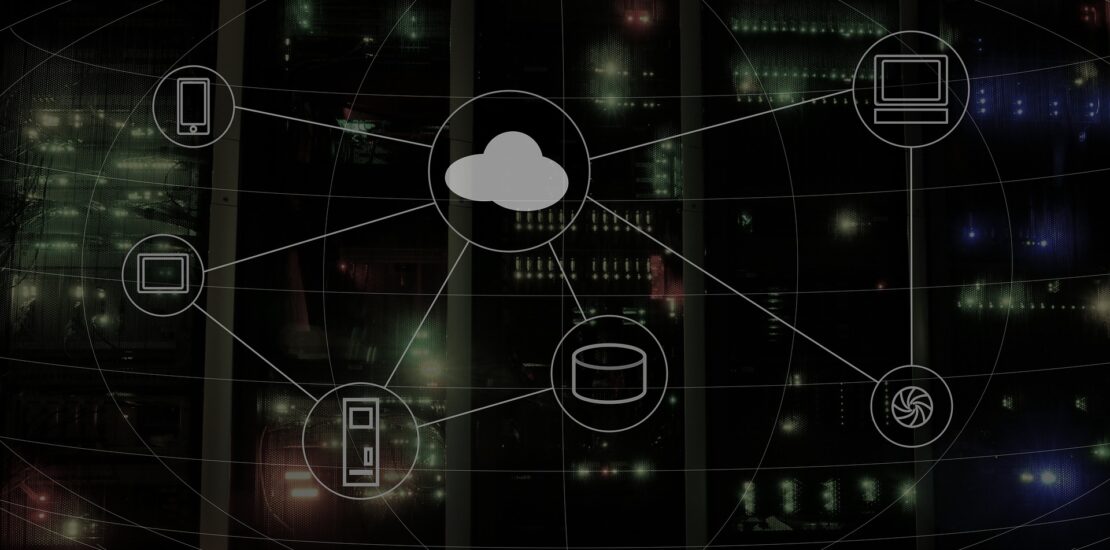
One of the most significant consequences of technology can be seen in the environment. The creation of the World Wide Web and the internet was tagged as the driving force behind the technological movement. These technologies transform our planet into a digital village and create new routers for scientific research and knowledge. On the other hand, the consequences of digital technologies are also negative. The maintenance of a huge number of computer servers and the daily use of millions of personal computers have contributed to the increase of carbon footprint. New technologies, such as cloud computing, have been noted as a hope that computing power can be harnessed so that it does not affect the environment.[i]
Cloud computing is a model to enable a shared pool of computing resources on demand that can be rapidly released with minimal management effort.[ii] The advantages of using cloud technologies are numerous. Among those, it (1) is flexible, by offering IT services, such as software updates and troubleshooting security issues; (2) allows the development of shared applications, thus promoting online collaboration; (3) enables the sharing data between different platforms.[iii]
Cloud computing is also considered as an example of green IT. Green IT is defined as the technologies that directly or indirectly promote environmental sustainability in the organization.[iv] Sustainability refers to the fair of resource distribution between the present and future generations and between agents in the current generations to maintain a scale of the current economy about the ecological system that supports it.[v]
Cloud computing provides a sociotechnical conceptualization for sustainable distributed computing.[vi] Digital ecosystems with sociotechnical system are characterized by self-organization, scalability, and sustainability.[vii] Cloud also uses the computing resources efficiently which refers to green computing. It also respects specific values for organizational success. The values are people, planet, and profit.
The sustainability of cloud can also be measured by the development of a green infrastructure. Green infrastructure defines as the abundance of landscape features that, in combination with ecological processes, contributes to human health.[viii] Cloud implements green infrastructure by respecting ecosystem services, biodiversity, social and territorial cohesion, sustainable development, and human well-being.[ix]
A lot of cloud computing business model has been developed to ensure sustainability. The cloud cube model, for instance, can enable collaboration in cloud formations used for specific business needs with the hexagon business model. Additionally, the hexagon model provides six maintain criteria including customers, investors, popularity, valuation, innovation, and get-the-job-done for business sustainability. The model presents how cloud computing performs according to these indicators.[x]
Moreover, adding to the previous explanation, cloud computing platform can be classified as a green innovation. Determining a green innovation involves the examination of how the software development life cycle can be modified to reduce the potential negative environmental impacts from the system.[xi] And, cloud computing uses knowledge management for environmental sustainability, queries on environmental reporting, and utilizes measurement and accounting systems.
However, the sustainable cloud computing applications also face some energy and environmental challenges. When transmitted over a network that is quite large, the network will be a major contributor to energy consumption.[xii] Another challenge is enhancing the awareness of the user in environmental issues. Even though cloud contributes to the sustainability of the environment, it cannot ensure that its users have awareness about environmental issues.[xiii] Looking at all elaboration above, cloud computing is concluded as a green innovation which brings foreseeable impact on environmental preservation. The innovation ensures the present and future utilization of technology without compromising the innovation part. Despite all the turnovers on energy consumption and users’ awareness, the fact that the innovation has started to contribute to the longevity of the wok with environmental considerations should be praised and appreciated. This certainly adds a brighter promise in future environment-technology discourses, in its already murky future.
gambar: Pixabay
[i] Domdouzis, Konstantions. (2015). Sustainable Cloud Computing. In Dastbaz, M., Pattinson, C., and Akhgar, B., (Eds), Green information technology, Elsevier, USA.
[ii] Mell, P., and Grance, T. (2011). The NIST definition of cloud computing—recommendations of the national institute of standards and technology. National Institute of Standards and Technology, Special Publication 800-145.
[iii] Zhang, S., Zhang, S., Chen, X., and Huo, X. (2010). Cloud computing research and development trend. Second International Conference on Future Networks (ICFN ’10), pp. 93–97.
[iv] Jenkin, T.A., Webster, J., and McShane, L. (2011). An agenda for ‘Green’ information technology and systems research. Inf. Organ, 21 (1), pp. 17–40.
[v] Costanza, R. (1994). Chapter 24: three general policies to achieve sustainability. In: Jansson, A., Hammer, M., Folke, C., Costanza, R. (Eds.), Investing in Natural Capital. Island Press, Washington, DC.
[vi] Foster, I., and Kesselman, C. (2004). The Grid: Blueprint for A New Computing Infrastructure. Morgan Kaufmann, San Francisco, CA.
[vii] Briscoe, G., 2009. Digital Ecosystems. Ph.D. dissertation, Imperial College London, London.
[viii] Weber, T., Sloan, A., and Wolf, J. (2006). Maryland’s green infrastructure assessment: development of a comprehensive approach to land conservation. Landscape Urban Plan. 77 (1–2), 94–110.
[ix] Lafortezza, R., Davies, C., Sanesi, G., and Konijnendijk, C. (2013). Green Infrastructure as a tool to support spatial planning in European urban regions. iForest 6, 102–108.
[x] Chang, V., Wills, G., and De Roure, D. (2010). Cloud business models and sustainability: impacts for businesses and research. UK e-Science All Hands Meeting 2010, p. 3.
[xi] Haigh, N., and Griffiths, A. (2008). The environmental sustainability of information systems: considering the impact of operational strategies and practices. Int. J. Technol. Manage. 43 (1/2/3), 48–63.
[xii] Garg, S.K., and Buyya, R. (2012). Green cloud computing and environmental sustainability. Murugesan, S., Gangadharan, G.R. (Eds.), Harnessing Green IT Principles and Practices. Wiley, Chichester, West Sussex, pp. 315–337.
[xiii] Domdouzis, Konstantions. (2015). Sustainable Cloud Computing. In Dastbaz, M., Pattinson, C., and Akhgar, B., (Eds), Green information technology, Elsevier, USA.
