- 27/03/2017
- Category: Commentaries
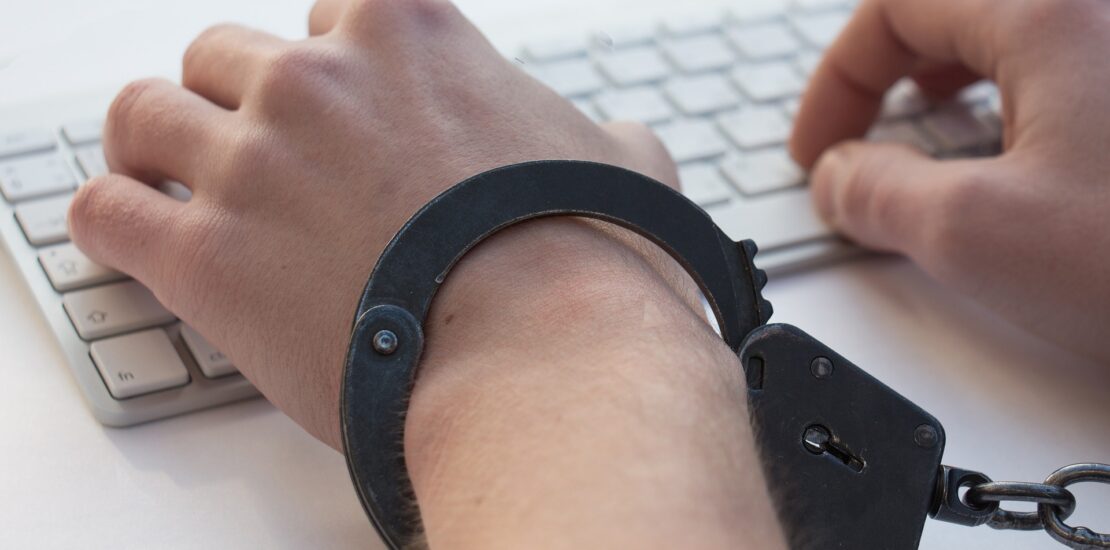
The act of plagiarism is a common enemy for the academician. For some parties, plagiarism is considered as the worst form of academic dishonesty that can be violated by students or researchers while conducting research. [i] Lester Paldy even calls plagiarism as ‘the problem that won’t go away.’[ii] In today’s era where information can be gathered quickly through the emergence of the internet, the act of plagiarism is surprisingly increasing. In the UK, for example, approximately 50,000 students were caught plagiarizing within the last three years.[iii] The ease of information gathering on the Internet has triggered the culture of copy and paste among student in high school and university, and even senior researchers as well.[iv] Nonetheless, the advance of technology itself is not always translated negatively for the academic world. On the other hand, there have been many anti-plagiarism applications developed by multiple companies. One of the leading applications is ‘Turnitin,’ which is already utilized widely in various universities across Australia, and educational institutions in 51 countries around the world today. [v]
Turnitin is working in a simple mechanism; students will be asked to upload their works to the Turnitin application. Subsequently, these works will be matched and inspected carefully with other papers that have been previously published by other authors, or journals and books which are already stored in the Turnitin’s database. All of the processes above is enabled through an internet connection and consequently can improve the effectiveness of the evaluation process. Up until today, there have been more than 500 million papers stored in the Turnitin’s database.
How does anti-plagiarism software help reducing plagiarism act among university student?
Up to this day, universities are still struggling to find the right solution to overcome the issue of plagiarism among their students. Plagiarism or cheating is still considered as the best shortcut to get a high GPA.[vi] It happens in almost every faculties, from the study of social science into language and culture. Furthermore, research by Bilic-Zulle et al. finds out that there are more plagiarism cases discovered in the study of applied and hard science, in comparison with the study of social science.[vii] At some point, it is apparent that the act of plagiarism has been seen as a prevalence among university student.
The primary concern behind the innovation of an anti-plagiarism software is for it to be a preventive solution. Such anti-plagiarism software can help preventing the papers which contain plagiarized content from being published or marked. Several teachers and lecturers acknowledge that the usage of anti-plagiarism software can assist them to conduct a more accurate plagiarism detection process, as well as shortening their work time. [viii]
Furthermore, based on what often occurs on the field, plagiarism may happen either intentionally or accidentally. As for the case of accidental plagiarism, this can occur when a writer does not know how to cite one’s work appropriately or does not realize that their work contains a plagiarized content.[ix] Here, the existence of software like Turnitin is playing an educative role, as it can influence the student to be more aware of plagiarism and citation rules, as well as improve their self-esteem to produce an original idea. Research by Marina Dodigovic and Xi’an Jiaotong find out that the usage of Turnitin can educate the user to have a sufficient paraphrasing capability, which can avoid them from plagiarism accusation.[x] Furthermore, the writer’s short interview session with one of the university student in Melbourne, Australia also discovers that anti-plagiarism software influences the student to learn harder and more creative because the screening result from the Turnitin application is also being used as an assessment’s marking composition. Hence, it can be seen here that the existence of anti-plagiarism software can shift student’s paradigm about plagiarism act in the academic world.
How is the prospect of anti-plagiarism software implementation in Indonesia?
In Indonesia, plagiarism is also the top academic violation that is often committed by students at any level. Furthermore, there is a growing concern that plagiarism act has been internalized as a standard academic deviance and does not need further attention.[xi] From initial observation, several universities around Indonesia already subscribe to anti-plagiarism software such as Turnitin. Nevertheless, in the implementation process, it can be seen that this software has not yet been used widely. UGM has promoted the use of anti-plagiarism software within its anti-plagiarism module.[xii] However, it is not yet an obligation for every student and researcher. A lot of academician and student do not know particularly about the role and existence of such software at their educational institution, while ironically, the case of plagiarism has been regulated through ministerial regulation no. 17/2010.[xiii] Therefore, it is an obligation for every university to contribute to the plagiarism eradication campaign. The usage of anti-plagiarism software in Indonesia needs to be improved even more to stop the acculturalization of plagiarism act, especially among university students, who are serving as the future of our nation.
[i] Farisi, M I 2013, ‘Ácademic Dishonesty in Distance Higher Education: Challenges and Models for Moral Education in the Digital Era’, Turkish Online Journal of Distance Education, 14(4), pp. 176-177.
[ii] Paldy, L G 1996, The problem that won’t go away: addressing the causes of cheating, Journal of College Science Teaching, 26 (1), pp. 4–6.
[iii] Ali, A 2016, UK Universities in Plagiarism Epidemic as almost 50,000 Students Caught Cheating over Last 3 Years, The Independent, available from: http://www.independent.co.uk/student/news/uk-universities-in-plagiarism-epidemic-as-almost-50000-students-caught-cheating-over-last-3-years-a6796021.html [25 March 2017].
[iv] Batane, T 2010, ‘Turning to Turnitin to Fight Plagiarism among University Students’, Educational Technology & Society, 13(7), pp. 2-3.
[v] Turnitin n.d., about us, available from: http://turnitin.com/en_us/about-us/our-company [16 March 2017].
[vi] Park, C 2003, ‘In Other (People’s) Words: Plagiarism by University Students-Literature and Lessons’, Assessment and Evaluation in Higher Education, 28(5), p. 479.
[vii] Bilic-Zulle, L, Frkovic, V, Turk, T, Azman, J, & Petrovecki, M 2005, ‘Prevalence of Plagiarism among Medical Students’, Croatian Medical Journal, 46(1), p. 129.
[viii] Sutherland-Smith, W, & Carr, R 2005, ‘Turnitin.com: Teachers’ Perspectives of Anti-Plagiarism Software in Raising Issues of Educational Integrity’, Journal of University Teaching and Learning Practice, 2(3), p. 98
[ix] Fish, R & Hura, G 2013, ‘Students’ Perceptions of Plagiarism’, Journal of the Scholarship of Teaching and Learning, 13(5), p. 42.
[x] Dodigovic, M & Jiaotong, X 2013, ‘The Role of Anti-Plagiarism Software in Learning to Paraphrase Effectively’, Computer-Assisted Languange Learning Electronic Journal, 14(2), p. 35.
[xi] Cholil, S 2012, Plagiarisme, Kultur dan Etik, Center for Religious and Cross-Cultural Studies Universitas Gadjah Mada, available from: http://crcs.ugm.ac.id/articles/512/plagiarisme-kultur-dan-etik.html [16 March 2017].
[xii] Istiani, P & Purwoko, 2013, Panduan Anti Plagiarism, Perpustakaan Universitas Gadjah Mada, available from: http://lib.ugm.ac.id/ind/?page_id=327 [25 March 2017].
[xiii] Suryono, IAS 2011, ‘Pelanggaran Etika Penulisan dan Plagiarisme: Bagaimana Menanggulanginya?’, The Medical Journal of Indonesia, 61(5), p. 194.
