- 09/03/2017
- Category: Commentaries
New Realm of Warfare
Just recently Forbes published about how 2017 is going to be the year of cyber warfare. The piece argues on how hard power has given way to soft power, which has now directed increasingly to cyber power and cyber security. Thus, it will become a new leadership challenge at every level of both the public and private sectors to protect our physical, financial, institutional and ideological assets.[i] Kevin Rudd, the former Prime Minister of Australia, described how cyber security is as powerful as a single click of a mouse that could turn withheld information to war.[ii]
When cyber security made its way into the political surface, it was just about time to see how men’s latest advancement affects the dynamics of international security. Turse defined cyber security as interchanging sustained cyberattacks designed to cripple another country’s infrastructure aimed at each other.[iii] To illustrate the danger of cyberattacks, Gordon M. Snow, assistant director of the FBI’s Cyber Division claimed that the most significant cyberthreats to the United States are those that are most likely to cause injury or death to the citizens, to illicitly acquire assets, or to illegally obtain sensitive or classified military intelligence or economic information. [iv] After seeing the definition and illustration on cyber security, how is then cybersecurity utilized by states? How much has it changed the international security game between states?
New Game, Old Rule
As many discourses on international relations have discussed, the realm of global security is dominated by the so-called great powers. Organski defined great power states as those who have the efficiency of the national government in utilizing these resources in pursuit of national goals: the combined measure of economic power, bureaucracy, the machinery of government, and the monopoly of force in a territory.[v] However, The Economist draws the game of great power politics into the game of power which is being played by Russia, People’s Republic of China, and United States who are actively taking part in the game of legitimacy and power.[vi] Through the pawns in the form of conflicts in Syria, South China Sea, and their influences in international organizations, each great powers are seen to discredit each other’s stewardship of the international order. It turns out, the cyber warfare game is indicated to be also played largely by these great powers, as cyberwarfare capability is in line with the military capacity in general. In 2014, SIPRI released the global military expenditure reports which show how the United States, China, and Russia came up with the highest military expenditures in comparison to their national GDP.[vii] The expenditure covers the maintenance of their military personnel as well as technological research and development, which includes cybersecurity advancement. Several clear examples in these countries’ involvement in the alleged cyber security activities are also noticeable.
The report released by the CIA stated possible external sabotage on the recent US presidential election by the Russians, an allegation which was denied altogether by Putin.[viii] However, at the same time, Defense Minister Sergei Shoygu also confirmed that Russia has their “information troops,” and they were involved and are currently practicing their “intelligent, effective propaganda,” even though he did not specify in what terms.[ix] The Russians also keep on accusing Chinese hackers and Chinese Defense Intelligence on several hacking activities, including cyberspace espionage activities targeting Russia’s scientific/technological assets, both civil and military. [x] On the other hand, the Pentagon also announced a massive expansion of its cyber capabilities, upping its staff number from 1,800 personnel in 2014 to 6,000 in 2016.[xi] Besides these great powers’ intensity on cyber-attacking each other, there are other potentials players which World Economic Forum classified—aside from United States, Russia, and China—as four other influential cyberwarfare powers. They are Israel, Iran, North Korea and the United Kingdom with developed cyber warfare capabilities.[xii] However, despite the rising number of states capacitating themselves with cyber powers, the great powers remain on top of the game, with very much exposed publicity on each other’s moves pushed by their already ‘great’ political presence.
What’s next?
Would 2017 be the year of cyber warfare as Forbes forecasted? Perhaps. As the famous military strategist, Sun Tzu, formulated in his book, Art of War, “It is only the enlightened ruler and the wise general who will use the highest intelligence of the army for spying, and thereby they achieve great results.”[xiii] He had regarded information as the key to winning the game of power which is currently being played by these great powers. To an extent, the notion of balance of power among these great powers, – and whoever rise to the top as the multipolar or even bipolar superpowers – as the key to peace among nations seems to be too wishful. Regardless, cyber security would be infiltrating the study of international security, at least for now, as one of the prominent discourses which are going to be debated by international relations scholars. Primarily, it is because these ‘invisible’ wars challenge many international relations liberals and idealists on the classical notion of cooperation and transparency that lead states to the peaceful condition.
It all comes back to two things: Firstly, regardless of what presented up front and how states’ behaviors that are highly constrained by ratified International laws, cyber warfare clearly shows how distrust among states persists and cyber space is being used as a platform for the great powers to demonstrate their technological prowess. States, who are infamously known to be interdependent with each other, seem to be no longer relying on cooperation and trust to drive peace. Cybersecurity ‘tempts’ every state to dig on other states’ confidentialities, and this eventually prompts chaos and wars. Secondly, attaining information has become even more important than ever. The rules have changed, but the game continues. Information moves freely and is accessible by state leaders and even students. However, gaining the right kind of information equals to advancing oneself towards one’s interest. Referring to what Rudd claimed as the challenge for ‘the brave new world,’ – when all of our information is stored in elaborate digital systems – we also enter into a new world of vulnerability.[xiv] And perhaps, adding to the forecast, in years to come, international actors would start to legally grab onto the digital realm to attach law and order in such lawless region.
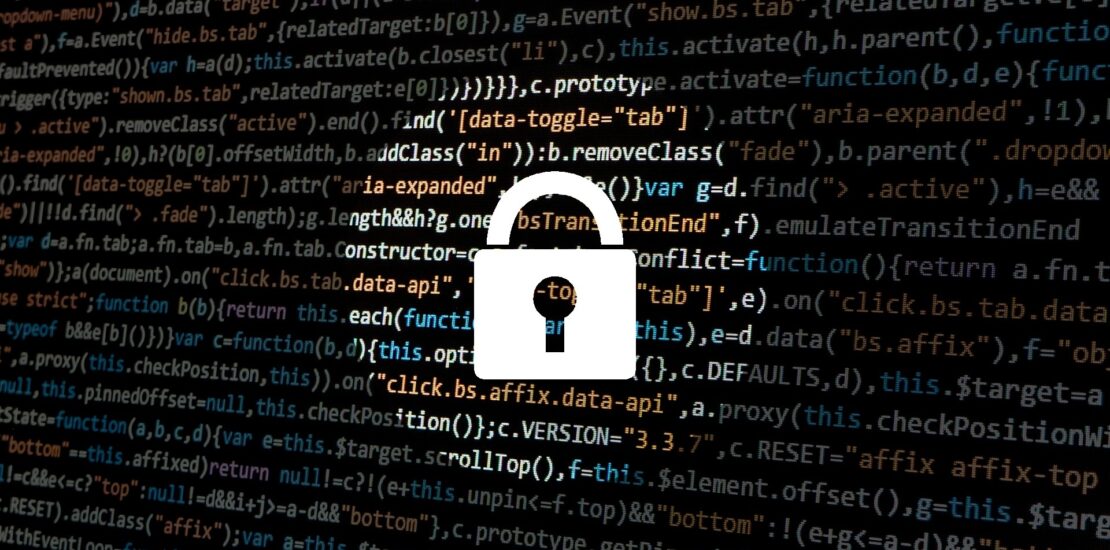
picture: pixabay
[i] Laudicina, P. (2016). 2017 Will Be The Year Of Cyber Warfare. [online] Forbes.com. Available at: https://www.forbes.com/sites/paullaudicina/2016/12/16/2017-will-be-the-year-of-cyber-warfare/#d72bea16bad0 [Accessed 4 Mar. 2017].
[ii]Rudd, K. (2011). Just a mouse click away from war. [online] dailytelegraph.com. Available at: http://www.dailytelegraph.com.au/news/opinion/just-a-mouse-click-away-from-war/news-story/9a21451a95ba8c0a01525ecf298f30fa [Accessed 4 Mar. 2017].
[iii] Turse, N. (2012). The Changing Face of Empire: Special Ops, Drones, Spies, Proxy Fighters, Secret Bases, and Cyberwarfare. 1st ed. Chicago: Haymarket Books, p.33.
[iv] Parks, P. (2012). Cyberwarfare. 1st ed. San Diego: ReferencePoint Press, p.46.
[v] Organski, A.F.K. (1968) World Politics. 2nd edn. New York: Knopf. p. 57
[vi] Economist.com. (2015). The New Game. [online] Available at: http://www.economist.com/news/leaders/21674699-american-dominance-being-challenged-new-game [Accessed 6 Mar. 2017].
[vii] Sipri.org. (2015). SIPRI Military Expenditure Database | SIPRI. [online] Available at: https://www.sipri.org/databases/milex [Accessed 7 Mar. 2017].
[viii] MacFarquhar, N. (2017). Putin Says Accusations in Trump Dossier Are ‘Clearly Fake.’ [online] nytimes.com. Available at: https://www.nytimes.com/2017/01/17/world/europe/putin-trump-memo.html?rref=collection%2Fnewseventcollection%2Frussian-election-hacking&action=click&contentCollection=politics®ion=stream&module=stream_unit&version=latest&contentPlacement=2&pgtype=collection&_r=0 [Accessed 6 Mar. 2017].
[ix] BBC Europe, (2017). Russian military admits significant cyber-war effort. [online] BBC.com. Available at: http://www.bbc.com/news/world-europe-39062663 [Accessed 6 Mar. 2017].
[x]Hough, P., Malik, S., and Moran, A. (2015) International Security Studies: Theory and practice. 1st edn. London, United Kingdom: Routledge. p. 147
[xi] RT News, (2014). Pentagon plans three-fold cybersecurity staff increase to counter attacks. [online] RT International. Available at: https://www.rt.com/usa/pentagon-triple-cyber-security-089/[Accessed 6 Mar. 2017].
[xii] Breene, K. (2016). Who are the cyberwar superpowers?. [online] World Economic Forum. Available at: https://www.weforum.org/agenda/2016/05/who-are-the-cyberwar-superpowers/ [Accessed 6 Mar. 2017].
[xiii] Tzu, S. (2006) The art of war. Edited by Lionel Giles. 1st edn. United States: Filiquarian Publishing.
[xiv] Rudd, K. (2011). Just a mouse click away from war. [online] dailytelegraph.com. Available at: http://www.dailytelegraph.com.au/news/opinion/just-a-mouse-click-away-from-war/news-story/9a21451a95ba8c0a01525ecf298f30fa [Accessed 4 Mar. 2017].
