
- 09/01/2017
- Category: Commentaries
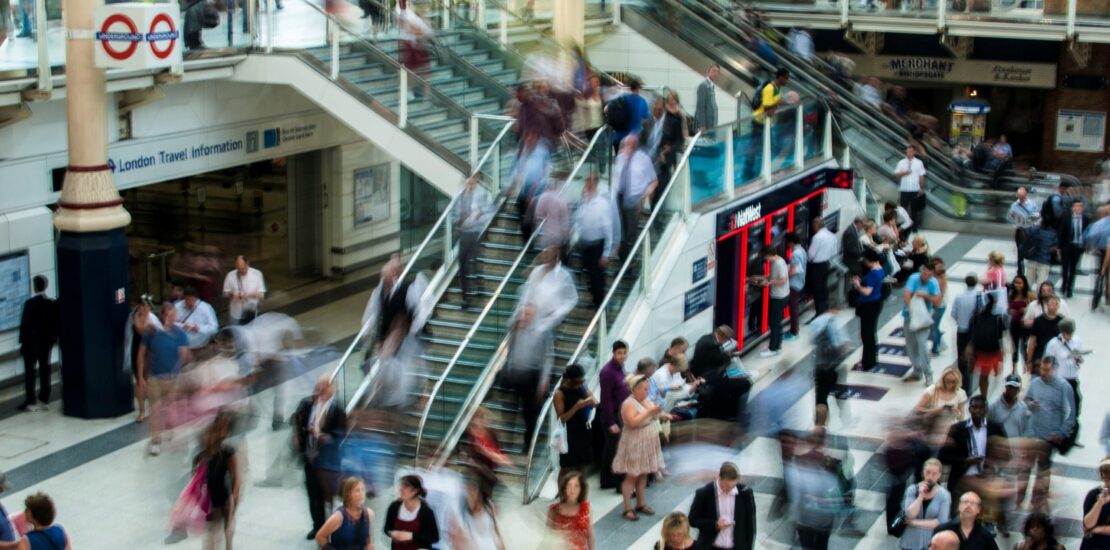
There is a reason why the world-wide term for the shift to non-physical money transactions is called cashless “society”. Going cashless is not merely about the economy, but also about the people: the subject of an economy itself. This process involves habit, trust, order, justice, and even political dynamics.
A cashless economy sounds good for our world. Faster, simpler, safer economic transactions are on our fingertips. What a lifestyle! Some even argue about its better hygiene compared to banknotes. Not to mention that it will prevent or reduce illicit activities such as criminal transactions, tax fraud, and money laundering. Sounds like a wonderful plan, at least until we understand the negative consequences it can hold.
Financial Exclusivity, Not Inclusivity
Cash transactions use probably the simplest mechanism: handing banknotes in exchange of goods/services. It works everywhere, from New York City to a poor remote villages in North Korea. Nevertheless, in order for cashless transactions to work, it requires more ‘tools’ such as banking institutions, transaction systems, the right technology, and infrastructures. Certainly, these are not available everywhere.
Let’s look at some examples of wireless communication trends: mobile phone and internet. Today’s technology is undoubtedly very advanced, allowing us to locate your ex-girlfriend’s house via Google Street and control a droid in Mars. But if humans can send a message to Mars, why do we find it hard to make a phone call from an island far away from big cities? The answer is simple: sending a message to Mars is a better investment than installing proper communication facilities for unprivileged residents in remote areas. Exploring Mars allows humans look for signs of life and investigate Mars’ geological evolution, resulting in research and methods that could be applied here on Earth,[1] or other scientific discoveries that may contributes to the future of human race’s civilization. Meanwhile, business prospect for providers to install communication facilities in certain areas does not always promise bright future.
This example portrays that technological disparity does exist and it may hamper the expansion of cashless mechanisms. We must be suspicious if, one day, the cashless movement is promoted like never before, there will be some groups of people left behind, such as those who cannot afford the technology or that their involvement in the economy will not be significant enough for the whole.
An Eye for An Account
Well documented transactions could be a good habit for personal or professional use, especially if you are an accountant. But if your transaction records can be seen by a third party, then it becomes an issue. In a cashless society, the government and banks have a bigger capacity to oversee all of the transactions happpening. They have the power to do anything whenever they want, such as freezing your account because you are suspected of doing something illegal, which could cost you an extra effort to survive the world. On the other hand, banks’ durability during financial crises are often questioned, as we could see in the case of 2008 financial crisis.[2] The case can expand to other possibilites, including financially destructive moves commited by a mistake. We might not know what to do if there is no option to withdraw physical money while the banks we trust to keep our money are in trouble.
If authorities exercise this power justly, the problem might be minimum, but since we cannot always ensure the motives and intention of authorities—as well as affirming that ‘justice’ is a relative concept—such big capability, still, possesses risks.
Hacker attacks should also be a concern. Authorities are not our only watchers. Hackers are also spying on us. Storing fundamental parts of our life online equals to inviting them to ‘interfere’. Recently, India experienced this unfortunate incident. Twenty days before the demonetization of the Indian currency, the news broke out that hackers had stolen millions of debit cards, which was followed by 600.000 debit cards blocked. A research by FireEye found that 38% of organizations in India were vulnerable to targeted advanced persistent attacks.[3]
Much Work to be Done
Cashless society is an enormous project. Complete and comprehensive preparations are a must, not only in technological feasibility, but also in justice, equality, social-political calculations, and security. The world must do its best to anticipate this upcoming cashless trend because we might never know the development of the consequences until it happens.
picture: pexels.com
References
[1] NASA.gov. (2013). NASA’s Official Website. [online] Available at: https://www.nasa.gov/exploration/whyweexplore/why_we_explore_main.html#.WHM0olN96M8 [Accessed 9 January 2017]
[2] Frisby, D (2016). Why we should fear a cashless world. [online] The Guardian. Available at: https://www.theguardian.com/money/commentisfree/2016/mar/21/fear-cashless-world-contactless [Accessed 7 January 2017]
[3] Goel, A (2016). From Cashless to Moneyless: Inviting Hackers through Demonetization !. [online] TechStory. Available at: http://techstory.in/hackers-demonetization/ [Accessed 7 January 2017].
