- 28/03/2016
- Category: Commentaries
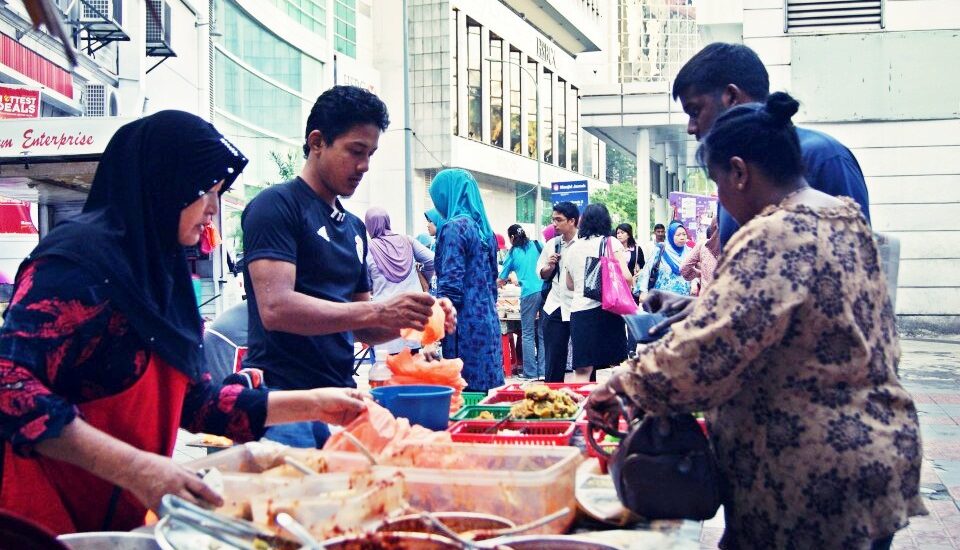
ASEAN Economic Community (AEC), an idea that took years in the making, aims to integrate Southeast Asia’s diverse economies, a region with 620 million people and a combined gross domestic product of $2.4 trillion. The AEC is defined by four pillars: creating a single market and production base, increasing competitiveness, promoting equitable economic development, and further integrating ASEAN into the global economy. To synergize the region’s markets and production hubs, this would entail the free flow of goods, services, investments, capital, and skilled labors. In short, by AEC, Indonesians must be ready to face Southeast Asia’s free market. With this statement, the competitiveness between countries in ASEAN becomes increasingly high. High competitiveness in a country marked by two things: innovation and high number of entrepreneurs. Both things are aligned and interconnected.
An entrepreneur in a free trade zone, such as ASEAN, is required to produce products that have a competitive competitiveness with other ASEAN countries. The product is expected to have a good quality, innovative, creative, dynamic, and has a competitive price. To produce a product that has such an entrepreneur’s competitiveness, it needs to be balanced with the use of technology, where these technologies can help production activities become easier, effective, and efficient. In other word, technology-based business.
In today’s business world, technology provides a very large contribution. With the advent of innovations in technology where it has opened up new opportunities and challenges for the business world. So often we hear the term Technopreneur. Technopreneur itself has contributed in improving the economy by applying the technology to create and improve products, services, and production processes. The existence of technopreneur itself help move the economy moving quickly and dynamically so that the welfare of the people will be easily realized. More number of technopreneur will further accelerate the economy of a country. If Indonesia does not prepare technopreneurs, Indonesia will be left behind by other countries.
Opportunity for technopreneurs in Indonesia is very wide open. Various applications for community is still needed. Based on the data owned by the Ministry of Cooperatives and SMEs about the growing number of startups in Indonesia which has now reached more than 1,500 startup and approximately 57.9 million small and medium enterprises (SMEs). So far, e – commerce business is growing rapidly. In Indonesia, for example, it is estimated that e – commerce transactions will penetrate a range of numbers of USD20 billion in 2016. Also, Technopreneurship development is fully supported by Jokowi. Recently during a visit to Silicon Valley, Jokowi met Mark Zuckerberg. In his visit, Jokowi stated that Facebook can help Indonesia to achieve Indonesia vision as the largest digital economy in Southeast Asia, worth US $ 130 billion by 2020. Further, Indonesia government will also make policies that support innovations, including a program to nurture 1,000 technopreneurs and provide protections for startup companies.
Nevertheless, the presence of AEC brings challenges for Indonesian technopreneurs.
- Network Readiness. Number of Internet users in Indonesia is growing very quickly in just one decade. Between 2000 and 2009, Internet users in Indonesia had grown from just 2 million users to 30 million users in just nine years. This number continues to grow to 42 million in 2010 and up to June 2012 have been recorded there were 55 million Internet users in Indonesia. Compared with the total were recorded as many as 250 million people, Indonesia has an Internet penetration of 22.1 %. This number will continue to grow from year to year. However, when compared to other ASEAN countries, Indonesia ICT development index is 97. Although it still ranks higher than Laos, Cambodia, and India but is still ranks lower than Vietnam. Whilst, the network readiness in Indonesia is still inferior to India and Thailand.[1] It can also be seen from the availability of the internet that is not maximized in all regions of Indonesia. Of course, network readiness greatly influences technopreneurs. The lack of network readiness capabilities can reduce their potential to innovate and capture the market.
- Human Resource. Technopreneurship takes a lot of skill. Startup environment challenges employees to think critically in order to create highly competitive workforce. Specific education regarding Technopreneurship to improve people skills is very much needed. Unfortunately, Technopreneurship education is still very limited in Indonesia. People often learn technopreneurship from society. In terms of education, Indonesia is still unable to compete with workers coming from Malaysia, Singapore, and Thailand as well as the industrial foundation for Indonesia alone makes Indonesia still ranks fourth in ASEAN.
- Regulations. The development of start-up encountered resistance from the government of Indonesia. Interest rates are too high for early technopreneurs. SMEs interest rates to entrepreneurs in Indonesia reached 1.5 % per month, if calculated within one year, the amount of the interest rate reaches 18 %. While Singapore and Malaysia, Indonesia’s competitors in AEC, just set the interest rate in the range of 7 % -8 % per year. In addition, the PTSP Circular Letter No. 41 of 2015, which prohibits the use co-working space and virtual office, raises concerns for SMEs and the creative economy. By not having a virtual office, business finds difficulties to make the legality of the company and other permissions. The regulation is considered to be not supporting technopreneurs. They even will hamper SMEs and the creative economy, especially startup company without physical office.
In fact, free flow of goods and services of AEC challenge technopreneurs in Indonesia, which are shown in 3 points above. Lack of network readiness, human resources that are not maximized yet, and government regulations; often hinder the development of start ups. Of course, there are still many improvements that need to be done to develop the start up ecosystem. We should be ready, no matter, for the AEC.
[1] Kementerian Komunikasi dan Informatika RI, Prospek Cerah Technopreneurship di Masa Depan , December 1 2014, https://kominfo.go.id/index.php/content/detail/4301/Prospek+Cerah+Technopreneurship+di+Masa+Depan/0/sorotan_media, accesed March 21 2014.
